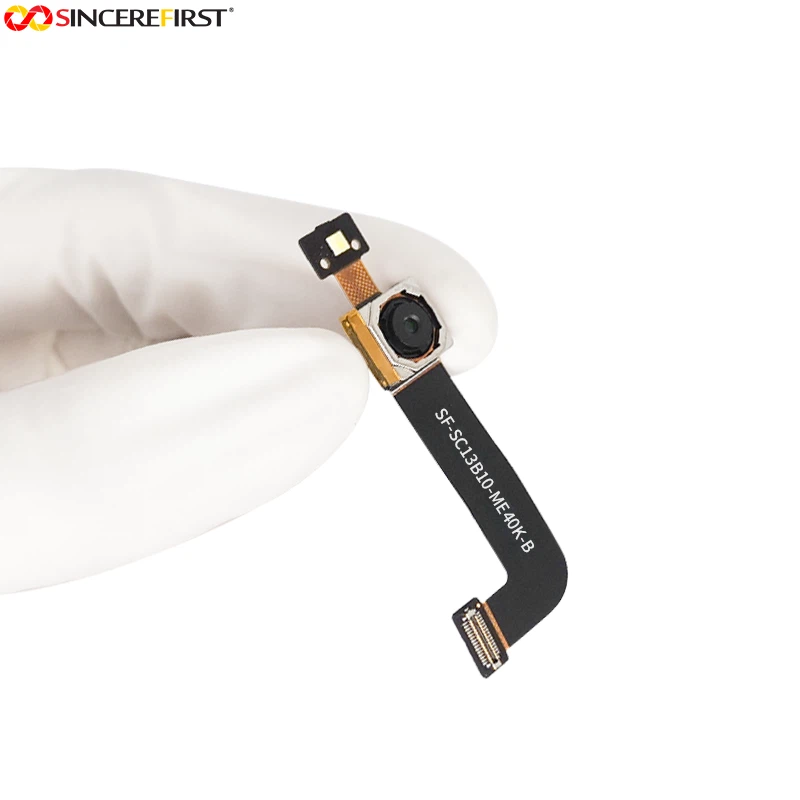
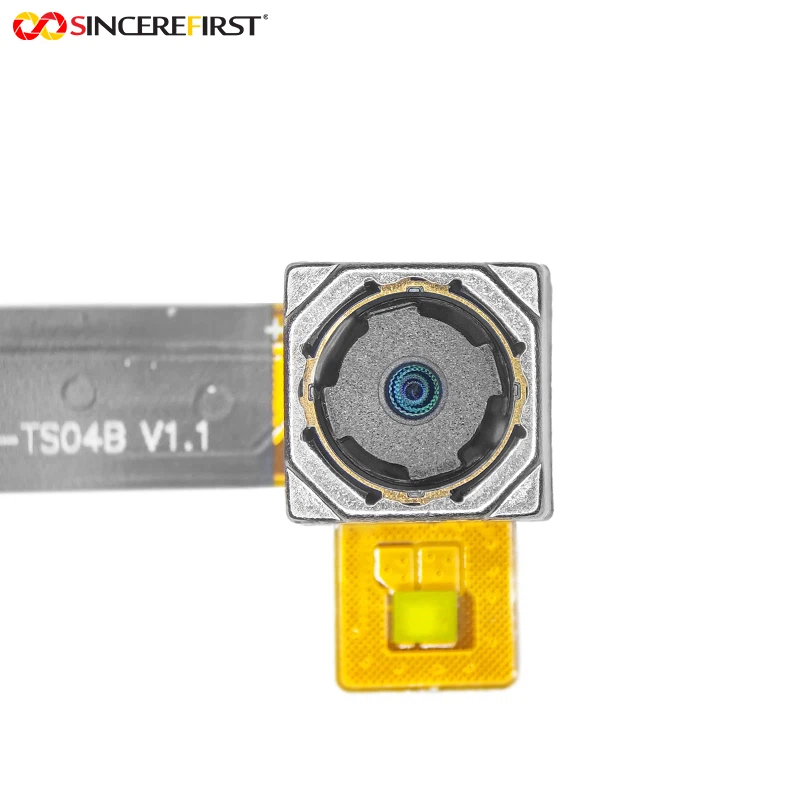
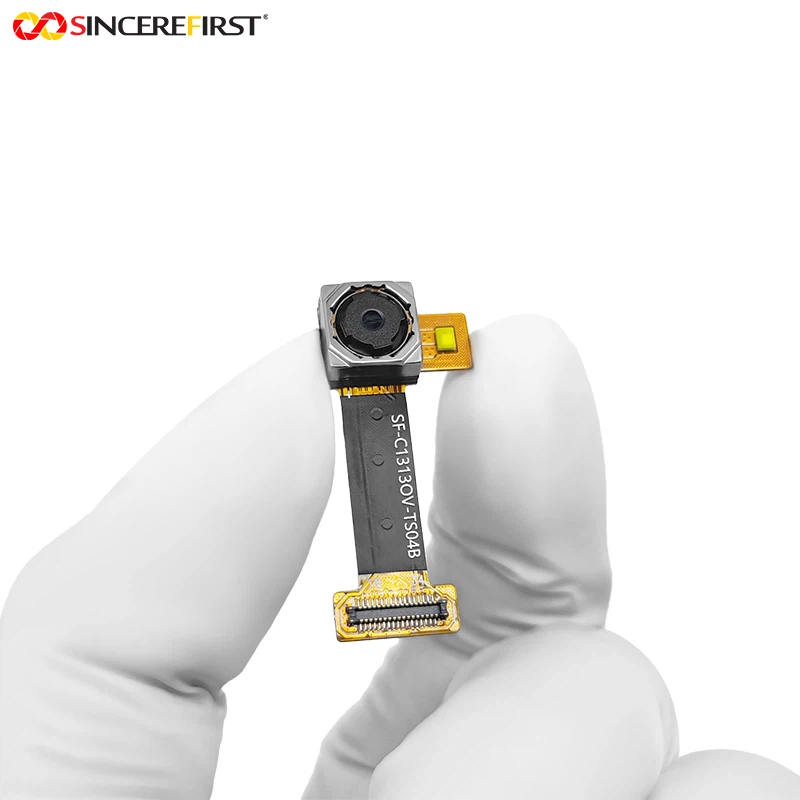
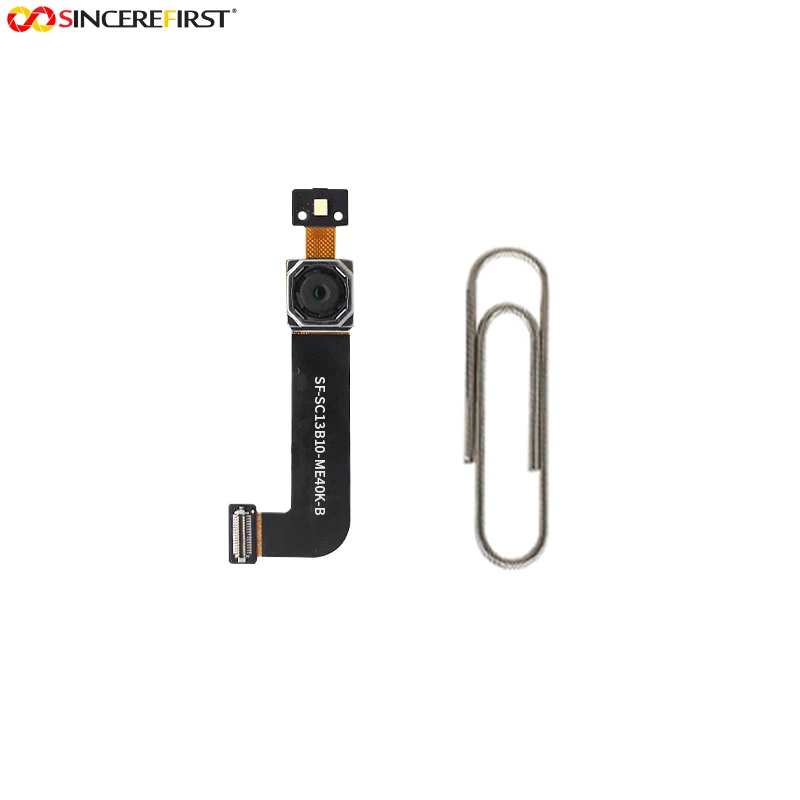
What is FPC Camera Module With LED?

The FPC camera module with LED is a miniature imaging component that integrates an image sensor and LED fill light, characterized by the use of a Flexible Printed Circuit board as the connection and carrier substrate. Typically comprising a CMOS/CCD image sensor, lens assembly, FPC flexible cable, and small LED fill light source, it leverages the flexibility of the FPC to adapt to various internal spatial layouts in devices. It is primarily used in electronic equipment with specific space and shape requirements, such as ultra-thin smartphones, tablets, laptop webcam modules, as well as in medical endoscopes, industrial borescopes, and IoT devices. Its advantages include bendable installation, slim profile, lightweight design, and the integrated LED provides instant fill light in low-light environments, significantly improving image capture in dim conditions.
Differences Between FPC Camera Module With LED and Ordinary Camera Module?
The core differences between FPC Camera Module With LED and Ordinary Camera Module stem from substrate material, function integration, and application adaptability. The following is a detailed comparison from key technical characteristics, application scenarios, and other dimensions:

Detailed Comparison Table:
|
Aspect |
FPC Camera Module With LED |
Ordinary Camera Module |
|
Core Substrate |
Adopts Flexible Printed Circuit (FPC) as the core bearing substrate |
Adopts Rigid PCB as the core bearing substrate |
|
Frame Rate & Fluidity |
60 frames per second, allowing for very smooth capture of fast-moving subjects without motion blur or stutter |
Typically 30 frames per second or lower, prone to blur and judder with fast motion |
|
Physical Properties |
Ultra-thin, lightweight, bendable, foldable. Adapts to non-planar installation and tight spaces. |
Thicker, heavier, fixed shape (usually rectangular). Requires a stable flat surface for installation. |
|
Fill Light Function |
Integrates LED fill light unit |
No integrated fill light module |
|
Design & Mounting Flexibility |
Very High. The FPC can route around components, enabling "free-form" installation and greatly freeing industrial design constraints. |
Relatively Low. Mounting location and orientation are limited by the module's rigid structure, leading to more fixed layouts. |
|
Storage Speed Requirement |
Requires high-speed storage media (e.g., UHS-II/U3 SD cards, NVMe SSD) to avoid write bottlenecks |
Lower speed requirements; a standard Class 10 card is often sufficient |
|
Integration Level |
Integrates image sensor, lens, LED fill light, and FPC substrate into one compact unit |
Core components include image sensor and lens; fill light, connection, and other functions require additional supporting components |
What are the Advantages of FPC Camera Module With LED?

High Integration and Integrated Fill Lighting
It highly integrates the image sensor, lens, LED fill light, and its drive circuit into a single flexible package. This all-in-one design not only saves internal space but also ensures precise alignment between the LED light path and the camera's field of view, providing a convenient, uniform, and efficient close-range fill lighting solution for video calls, facial recognition, and low-light scanning.
High Compatibility
The FPC substrate supports flexible interface design , which can seamlessly adapt to main control chips of different brands and models. Moreover, the modular design simplifies the integration process for equipment manufacturers, eliminating the need for additional design of fill light circuits and connection structures, reducing R&D cycles and production costs, and adapting to devices in consumer electronics, medical, industrial, smart home, and other fields.


Improved Production and Assembly Efficiency
The modular, integrated design simplifies supply chain management and the bill of materials. Its flexible nature makes alignment and fixation on the production line easier, enabling semi-automated or automated assembly, which reduces assembly complexity and improves overall production efficiency.
Meeting Diverse Needs
Customized optimization for different application scenarios: for example, modules in the medical field use biocompatible materials and are equipped with infrared LEDs to achieve non-contact detection; industrial inspection modules enhance dustproof and waterproof design, and the fill light intensity can adapt to miniature detection spaces; smart door lock modules optimize the night face recognition algorithm, and the LED fill light balances concealment and recognition accuracy, fully meeting the personalized needs of different industries.

What are the Main Application of FPC Camera Module With LED?


How to Choose FPC Camera Module With LED?
Define the Application Scenario and Specific Device Type
Identify your target device's functional requirements first. For ATM facial authentication, prioritize infrared LED modules for covert identity verification without visible flash. For smart refrigerator inventory management, select wide-angle modules with high-brightness visible LEDs to illuminate dark compartments. For laptop webcams, choose compact modules with automatic LED activation for low-light video conferencing. For foldable smartphones, specify ultra-thin modules that withstand repeated bending at the hinge area. For robot vision systems, opt for ruggedized modules with infrared LEDs for reliable night-time obstacle detection in industrial environments.
Evaluate Mechanical Flexibility and Space Constraints
Assess the installation space and bending requirements. For devices with non-planar surfaces or tight internal layouts (e.g., curved door handles in smart locks, slim bezels in laptops), ensure the FPC supports the required bend radius and dynamic flexing cycles. Verify the module thickness (typically 0.1-0.3mm) fits within your device's dimensional limits. For foldable devices, confirm the FPC can endure 200,000+ bending cycles without performance degradation.
Determine Imaging Performance Requirements
Match the sensor specifications to your use case. For fast-moving subjects (e.g., robot navigation, action recording), select modules with 60fps frame rate to avoid motion blur. For static or slow scenarios (e.g., refrigerator monitoring), 30fps may suffice. Choose appropriate resolution based on recognition needs-higher resolution for facial authentication, moderate resolution for basic surveillance. Ensure the sensor's low-light sensitivity aligns with your LED fill-light capability.
Select Appropriate LED Specifications
Choose LED type based on operational environment: visible LEDs for color-accurate imaging in consumer devices; infrared (IR) LEDs for covert night vision in security and medical applications. Evaluate LED brightness, beam angle, and control flexibility-PWM dimming and synchronization with camera shutter are essential for eliminating motion blur in high-speed inspection. For medical devices, verify LED color rendering index (CRI) meets clinical standards.
Assess Environmental and Durability Requirements
For medical endoscopes, ensure biocompatible materials and sterilization compatibility. For industrial borescopes or outdoor security cameras, require IP67/IP68 dustproof and waterproof ratings. For automotive applications, confirm the module operates reliably across -40°C to 85°C temperature ranges and resists vibration. Check that the FPC substrate uses high-temperature polyimide for harsh environments.
Verify System Integration and Compatibility
Confirm the module's interface (MIPI CSI, DVP, or USB) matches your main control chip. The FPC's flexible interface design should support seamless integration with various processors, reducing R&D cycles. For high-speed data transfer (e.g., 4K video), ensure the FPC impedance is controlled to prevent signal loss. Evaluate whether the modular design supports semi-automated or automated assembly to improve production efficiency.
Balance Cost with Performance and Production Efficiency
While FPC modules cost 2-3x more per area than rigid PCBs, they reduce overall system cost by eliminating connectors and brackets. For mass production, assess whether the integration level-combining sensor, lens, LED, and FPC-offsets the higher component cost through simplified assembly and higher yield rates. For low-volume specialized devices (e.g., medical equipment), prioritize performance and reliability over unit cost.
SincereFirst FPC Camera Module With LED Selection Guide
I. Core Selection Considerations

When selecting SincereFirst's camera module with LED, it is necessary to combine the core needs of the actual application scenario and focus on four core dimensions: resolution and frame rate, focusing performance, image enhancement capability, and LED fill light adaptability. Both stock models have 13-megapixel (13MP) high-definition resolution and 4K@30FPS video recording capability, which can meet most high-definition imaging needs; the built-in LED fill light unit can effectively improve imaging clarity in low-light environments and is suitable for dim scenarios. The core differences lie in focusing technology and image enhancement functions, which need to be accurately matched according to dynamic shooting needs and the complexity of light conditions.
II. Detailed Introduction and Selection Suggestions of Stock Models
- Core Parameters: OV13B10 CMOS sensor, 13MP, 4K@30FPS, Auto Focus, Phase Detection Auto Focus (PDAF), Built-in LED fill light
- Core Advantages: Equipped with PDAF phase detection auto-focus technology, it can real-time capture the phase difference of target light through the phase detection pixels built into the sensor, complete focus adjustment in milliseconds without repeated scanning, featuring fast focusing speed and high precision. The OV13B10 sensor adopts an optimized process, with lower power consumption, and supports small-size module design, which is easy to integrate into devices with compact space. Combined with the LED fill light unit, it can still maintain stable focusing and clear imaging in low-light environments.
- Applicable Scenarios: Suitable for scenarios that need to quickly capture dynamic targets or frequently switch focuses, such as: smart door locks (fast face recognition unlocking), conference live broadcast equipment (real-time tracking of speakers), sports smart wearables (capturing motion trajectories), in-vehicle interior monitoring (fast focusing on passenger status), etc.


- Core Parameters: OV13850 CMOS sensor, 13MP, 4K@30FPS, Auto Focus, High Dynamic Range (HDR), Wide Dynamic Range (WDR), Built-in LED fill light
- Core Advantages: Equipped with dual image enhancement technologies of HDR + WDR, it can capture details of the brightest and darkest areas in the scene at the same time, effectively solving the imaging problems of overexposure under strong light, darkening under backlight, and strong light-dark contrast. Even in complex light environments (such as direct strong light, window shadows, interleaved night lights), it can output clear and color-balanced images, and the LED fill light unit further optimizes the performance in low-light scenarios.
- Applicable Scenarios: Suitable for scenarios with complex light conditions, such as: ATM monitoring (alternating indoor and outdoor light), outdoor security cameras (coexistence of sunlight and shadows), smart refrigerators (light changes when the door is opened and closed), shopping mall/hotel entrance and exit monitoring (strong light and backlight environment), industrial testing equipment (areas with uneven light in workshops), etc.


III. SincereFirst Customization Solutions
In addition to the above two stock products, SincereFirst can also provide comprehensive customized camera module solutions to meet the personalized needs of different industries and devices. The customization scope includes but is not limited to:
Sensor customization
Adapt to different models of CMOS/CCD sensors according to imaging accuracy and power consumption requirements;
Interface and size customization
pport multiple interface adaptations such as MIPI and USB, and can customize module thickness, size and FPC flexible substrate shape according to the internal space of the device;
Fill light function customization
Provide different fill light type options such as infrared LED and high-brightness visible light LED, and can optimize fill light intensity and concealment;
Industry-specific customization
Provide biocompatible material modules for medical equipment (such as endoscopes), enhance dustproof and waterproof design for industrial equipment, and optimize anti-vibration performance for automotive equipment, etc.
Selection Summary
If your application scenario needs to quickly capture dynamic targets and has high requirements for focusing speed, prioritize SF-OC13B10-ME40K-B; if the application scenario has complex light conditions and needs to solve the problems of strong light and backlight imaging, it is recommended to choose SF-C1313OV-TS04B. If the stock models cannot meet your device requirements, please feel free to consult SincereFirst's customization service to obtain an exclusive camera module solution with LED.
Conclusion
In an era where device miniaturization and imaging performance converge, the FPC Camera Module with LED emerges as a excellent optical solution, blending unmatched mechanical flexibility with integrated intelligent illumination. As detailed throughout this guide, its superiority over ordinary modules-evident in bendable substrates, ultra-thin profiles, and synchronous LED fill-light-addresses the core challenges of modern electronics: space constraints, complex lighting, and dynamic application demands. From ATM facial authentication requiring covert IR precision to foldable smartphones demanding 200,000+ bend cycles, and from medical endoscopes navigating narrow cavities to robotic vision capturing fast-moving targets, the technology proves indispensable across industries.
SincereFirst elevates this technological foundation with five compelling differentiators that ensure customer success:
Uncompromising Production Excellence: Our Class 10/100 COB dust-free workshops and advanced AA (Active Alignment) process guarantee micron-level assembly precision, eliminating optical tilt and ensuring every module delivers stable, high-quality performance from the first unit to the millionth.
Risk-Free Partnership: With a 1-year replacement service and unprecedented 10-year warranty, we provide the industry's most robust after-sales guarantee, reflecting confidence born from over 30 years of optical device mastery and validated by our partnerships with Fortune Top 500 leaders.
Tailored Precision: Beyond the stock SF-OC13B10-ME40K-B (PDAF for speed) and SF-C1313OV-TS04B (HDR/WDR for contrast), our one-stop OEM/customization capabilities deliver sensor-specific, interface-flexible, and environmentally-hardened modules-whether biocompatible for endoscopes or IP68-rated for automotive systems.
Streamlined Integration: The modular, FPC-based design inherently simplifies supply chains and assembly, but SincereFirst amplifies this with automated production efficiency and flexible interface support (MIPI/USB), reducing your R&D cycles and accelerating time-to-market across consumer, medical, industrial, and IoT sectors.
Proven Reliability: Our deep industry experience translates into mature technical architectures that anticipate real-world challenges-vibration resistance for dashcams, thermal cycling for outdoor security, and sterilization compatibility for surgical tools.
Whether your priority is PDAF's millisecond focus for dynamic scenes or HDR/WDR's balanced exposure for challenging lighting, SincereFirst's portfolio offers a proven starting point. And when standard models don't align perfectly with your device architecture, our engineering team stands ready to co-develop exclusive solutions-from micro-size modules for wearables to multi-spectral LED arrays for industrial inspection.
Choosing SincereFirst means investing not just in a component, but in a 30-year legacy of optical innovation, Fortune-500-trusted quality, and a decade-long commitment to your product's performance. Contact us today to receive detailed datasheets, evaluation kits, and begin customizing the ideal FPC Camera Module with LED for your next breakthrough device.
FAQ
Q1: How does the integrated LED improve performance?
A: The integrated LED ensures perfect alignment with the camera's field of view, delivering uniform, efficient close-range illumination. It eliminates external lighting design, reduces assembly complexity, and provides instant fill-light for video calls, facial recognition, and low-light scanning-significantly improving image clarity in dim conditions while saving space.
Q2: What are the main differences vs. regular camera modules?
A: The core difference lies in the substrate (FPC flexible substrate vs. rigid PCB), integrated LED fill light function, and installation flexibility. FPC modules are ultra-thin, bendable, and adaptable to complex spaces, while ordinary modules are rigid and require flat installation without built-in fill light.
Q3: What customization services can SincereFirst provide?
A: One-stop OEM/customization services include sensor adaptation, interface/size adjustment, LED fill light customization, and industry-specific optimization (e.g., medical biocompatible materials).
Q4: Which industries are FPC Camera Module With LED suitable for?
A: It is widely used in consumer electronics, medical health, industrial inspection, smart home, automotive electronics and other fields.
SINCEREFIRST camera module manufacturing enterprise integrates design, development, manufacturing and sales. We can supply ready made 0.1mp to 200mp FPC & USB camera module and diameter 0.9mm~10mm endoscope camera module. Our products are widely used in various fields, such as AIoT equipment, smart home, smart medical, intSSelligent transportation, automatic driving, intelligent security, Intelligent warehousing, scanning, robot, UAV, medical endoscope, industrial endoscope, computer, intelligent terminals etc.
What sets SINCEREFIRST apart is our commitment to quality, reliability, and customer-centricity:
Premium Production Environment & Process: We operate Class 10/100 COB dust-free workshops and adopt advanced AA (Active Alignment) processes, ensuring every module meets strict quality standards and delivers stable, high-performance imaging.
Reliable After-Sales Guarantee: We provide a 1-year replacement service and a 10-year warranty, offering long-term peace of mind for both individual developers and enterprise customers.
Rich Industry Experience: With over 30 years of expertise in the optical device and camera module industry, we possess mature technical capabilities and operational efficiency to address complex customer needs.
High-Level Cooperation Resources: Our partnerships with Fortune Top 500 companies are a testament to our recognized product quality and strong brand reputation in the global market.
Comprehensive Customization Support: We offer one-stop OEM and customization solutions, enabling us to flexibly adapt to diverse application scenarios and solve unique challenges for our customers.
If you are looking for camera module or camera sensor manufacturers and suppliers, please feel free to contact us for camera module price and more detailed introduction. SINCEREFIRST is a leading high-tech company specializing in integrated optical device manufacturers and optical imaging system solution providers. There are different types of camera modules and camera sensors for sale, and they also support customization to meet all your needs and solve your problems.