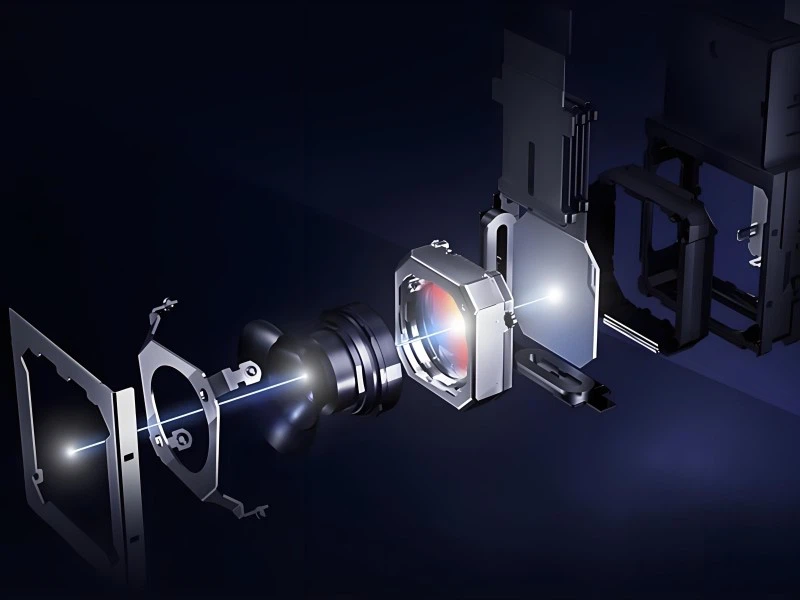
What is OIS Camera Module?
An OIS Camera Module (Optical Image Stabilization Camera Module) is a camera module that integrates optical image stabilization technology within its structure. It uses precision mechanical components and control systems-such as voice coil motors (VCM), gyroscopes, and stabilization algorithms-to detect and compensate for small movements caused by hand shake or device vibration during image capture. By physically shifting the lens or image sensor in real time, the OIS camera module effectively reduces motion blur and image jitter. Compared with electronic image stabilization (EIS), OIS provides hardware-level stabilization, delivering superior image clarity and stability, especially in low-light conditions, long-exposure photography, and video recording. As a result, OIS camera modules are widely used in smartphones, drones, security surveillance systems, automotive cameras, and embedded vision applications.


How does OIS work?

OIS (Optical Image Stabilization) works by detecting and compensating for small, unintentional camera movements in real time to maintain image stability during capture. Built-in gyroscopes continuously sense angular motion, such as pitch and yaw, caused by hand shake or device vibration, and send this data to the control circuitry. The system then drives a voice coil motor (VCM) or micro-actuator to physically shift the lens assembly or image sensor in the opposite direction of the detected movement, precisely counteracting the shake. This compensation occurs within milliseconds and operates continuously throughout photo or video capture, effectively reducing motion blur and improving image sharpness and video smoothness, especially in low-light or long-exposure scenarios.
What are the different types of OIS?
OIS (Optical Image Stabilization) can be classified into several types based on its implementation and mechanical structure, mainly including Lens-Shift OIS, Sensor-Shift OIS, and Hybrid OIS. Lens-shift OIS compensates for camera shake by physically moving the lens elements along horizontal or vertical axes and is the most commonly used solution in smartphones and compact camera modules. Sensor-shift OIS stabilizes images by moving the image sensor itself, offering high compensation accuracy and is often found in high-end cameras and professional imaging systems. Hybrid OIS combines optical stabilization with electronic image stabilization (OIS + EIS), using hardware-based correction for small movements and software algorithms to handle larger motions, delivering more robust and stable image performance in complex dynamic scenarios.
Comparison of Differences between OIS Camera Module and EIS Camera Module
OIS (Optical Image Stabilization) and EIS (Electronic Image Stabilization) are the two most widely used stabilization technologies in camera systems today. They differ significantly in working principles, implementation methods, image quality, and application scenarios.
The following is a detailed comparative analysis and parameter table:
|
Comparison Dimension |
OIS Camera Module |
EIS Camera Module |
|
Stabilization Principle |
Physically shifts the lens or image sensor to counteract motion |
Uses software algorithms to crop, shift, and align image frames |
|
Implementation |
Hardware-based stabilization using VCMs, gyroscopes, and mechanics |
Software-based stabilization using ISP or processor algorithms |
|
Response Time |
Real-time, millisecond-level physical compensation |
Max support for 1080P@30fps, severe stuttering in 4K mode |
|
Driver Compatibility |
Compatible with mainstream operating systems, dedicated drivers required for some systems in high-definition mode |
Frame-based processing with slight latency |
|
Image Quality |
Minimal image degradation, high detail retention |
Some resolution loss due to image cropping |
|
Low-Light Performance |
Excellent, supports longer exposure times |
Limited effectiveness in low-light conditions |
|
Video Stability |
Natural and smooth stabilization |
Effective for large movements but may cause distortion |
|
Hardware Complexity |
High, requires precision mechanical components |
Low, no additional mechanical structure required |
|
Power Consumption |
Relatively higher |
Relatively lower |
|
Cost |
Higher |
Lower |
|
Module Size |
Slightly larger and more complex |
More compact and lightweight |
|
Typical Applications |
High-end smartphones, industrial inspection, medical imaging |
Entry/mid-range smartphones, action cameras, surveillance systems |
Conclusion:
OIS Camera Modules are ideal for applications demanding superior image quality, strong low-light performance, and high stability, while EIS Camera Modules are preferred for cost-sensitive and space-constrained designs. In many high-end devices, OIS and EIS are combined to achieve optimal stabilization performance across a wide range of shooting conditions.
What are the Advantages of OIS Camera Module?
OIS (Optical Image Stabilization) Camera Modules provide hardware-level stabilization, delivering clear advantages in image quality and stability. They are especially well suited for applications with high imaging performance requirements. Key advantages include:
True Hardware-Based Stabilization For Superior Stability
OIS physically moves the lens assembly or image sensor to counteract motion at the source, resulting in more natural and reliable stabilization compared to software-based solutions.
Significant Reduction Of Motion Blur And Sharper Images
OIS effectively compensates for hand shake and minor vibrations, minimizing blur caused by camera movement-particularly beneficial for telephoto and high-resolution imaging.
Outstanding Low-Light Performance
By enabling longer exposure times without introducing blur, OIS allows more light to reach the sensor, improving brightness, detail, and noise performance in low-light or night-time environments.
Smoother And More Natural Video Recording
During video capture, OIS continuously provides real-time physical compensation, reducing jitter and delivering smoother, more professional-looking footage.
Minimal Image Quality Loss With High Detail Retention
Unlike EIS, which relies on image cropping, OIS maintains full resolution and field of view, preserving fine image details and overall image integrity.
Strong Compatibility With EIS For Hybrid Stabilization
OIS can work alongside EIS to form a dual-stabilization system, combining hardware and software advantages for enhanced performance in complex motion scenarios.
What are the Main Application of OIS Camera Module?

High-End Smartphones
During handheld photography and video recording, OIS effectively compensates for hand shake, significantly improving image clarity and video stability in night photography, portraits, telephoto shots, and video capture.

High-End Action Cameras
Mounted on helmets, bicycles, or vehicle frames, OIS camera modules can clearly and stably capture every detail of high-speed and high-vibration activities (e.g., skiing, off-road cycling, racing).

Automotive Camera Systems
Used in dash cameras, ADAS cameras, and digital rear-view systems, OIS helps maintain image stability under vehicle vibration and uneven road conditions, improving recognition accuracy and recording quality.

Drones & Aerial Imaging Devices
Integrated into compact drones or aerial imaging systems, OIS stabilizes images under airflow disturbance and flight vibration, delivering clearer aerial photos and smoother video footage.

Surveillance Systems
Applied in building access control systems, perimeter surveillance cameras, and high-end PTZ cameras, OIS maintains stable and sharp images in low-light or zoomed-in monitoring scenarios, enhancing facial recognition and evidence capture.

Telephoto Imaging Devices
Adopted in portable telephoto cameras used by wildlife photographers, the OIS camera module can offset the hand shakes during handheld long-exposure shooting of distant wild animals. It enables photographers to capture clear, non-blurred images of targets without relying on heavy tripods, improving the flexibility of field shooting.
How to Choose OIS Camera Module?

Clarify Specific Application Scenarios and Imaging Requirements
First, define the target device and its actual shooting needs. For high-end smartphones, prioritize OIS camera modules that excel in handheld low-light photography and telephoto shooting to ensure clear night shots and sharp zoomed images. For automotive camera systems (e.g., dash cameras, ADAS cameras), select modules with strong vibration resistance to maintain stable imaging under vehicle jolts and uneven road conditions. For drones and aerial imaging devices, opt for lightweight yet high-stability OIS modules that can offset airflow disturbance during flight. For surveillance systems like building access control and perimeter monitoring, choose modules optimized for low-light long-exposure performance to enhance facial recognition and evidence capture accuracy.
Evaluate Core Performance Indicators
Focus on three key performance parameters: first, stabilization response time-prioritize modules with millisecond-level real-time compensation, as this ensures instant offset of hand shake or device vibration, which is critical for smooth video recording and long-exposure photography. Second, low-light imaging capability-select modules that support longer exposure times without motion blur, as this directly improves brightness, detail retention, and noise reduction in dark environments. Third, image quality retention-confirm that the module maintains full resolution and field of view without pixel cropping, which distinguishes OIS from EIS and guarantees high-detail imaging for high-resolution shooting needs.


Inspect Hardware Configuration and Driver Compatibility
Check the quality and specifications of core hardware components: the module should be equipped with high-precision voice coil motors (VCM) and sensitive gyroscopes to ensure accurate detection and compensation of tiny movements. Meanwhile, verify driver compatibility-choose modules that are compatible with mainstream operating systems; for devices requiring high-definition shooting modes, confirm that the supplier provides dedicated drivers to avoid compatibility issues. Avoid modules with shoddy mechanical structures, as they may cause unstable compensation and shortened service life.
Balance Cost, Power Consumption and Practical Needs
OIS camera modules have higher costs and power consumption compared to EIS modules due to their complex hardware structure. For high-end products that prioritize imaging quality (e.g., flagship smartphones, professional medical endoscope cameras), the higher cost is acceptable for superior performance. For portable devices with strict power constraints (e.g., lightweight drones), select OIS modules with optimized power consumption designs to avoid excessive battery drain. For cost-sensitive projects, evaluate whether a hybrid OIS+EIS solution can meet needs, as it balances performance and cost efficiency.


Confirm Module Size Compatibility with Target Devices
OIS camera modules are slightly larger and more complex in structure due to additional hardware components like VCM and gyroscopes. Before selection, measure the installation space of the target device: for compact devices (e.g., slim smartphones, mini action cameras), choose miniaturized OIS module designs that fit the internal layout without affecting the device's overall size. For industrial equipment with ample installation space (e.g., large PTZ surveillance cameras), module size can be a secondary consideration, with priority given to performance.
Prioritize Modules Supporting OIS+EIS Hybrid Stabilization
As hybrid stabilization combines the hardware-level precision of OIS and the algorithmic flexibility of EIS, it delivers optimal performance in complex motion scenarios (e.g., high-speed action shooting, drone aerial photography). When selecting, confirm whether the module supports seamless integration with EIS algorithms; such modules can compensate for large-amplitude movements that pure OIS may struggle with, while avoiding the pixel loss issue of pure EIS, thus meeting more diverse shooting needs.

SincereFirst OIS Camera Module Selection Guide
For applications that demand superior image stability, low-light performance, and high-quality video output, selecting the right OIS (Optical Image Stabilization) camera module is essential. Leveraging mature OIS design expertise and extensive sensor integration experience, SincereFirst offers both ready-to-ship OIS camera modules and flexible custom solutions for diverse industries.

The SF-4X5860IS3Y is a high-performance OIS camera module currently available from SincereFirst, designed for applications requiring high resolution, high frame rates, and reliable optical stabilization:
- CMOS Sensor: Sony IMX586
- Sensor Size: 1/2 inch
- Resolution: 8000 × 6000 (48MP)
- Pixel Size: 0.8 μm × 0.8 μm
- Video Output: Up to 4K @ 60 FPS
- Imaging Technologies: Quad Bayer pixel binning, HDR
- Focus & Stabilization: VCM Auto Focus + OIS
- Optical Specifications:
- Aperture: F1.79
- Focal Length: 4.71 mm
- Depth of Field: 10 cm ~ Infinity
- Focus Distance: 1000 cm
- Field of View (FOV): D79° / H67°
- Distortion: < 1%
- Interface: High-speed MIPI CSI-2
Core Benefits of SF-4X5860IS3Y:
- Superior Low-Light Performance: Quad Bayer technology enables 4-pixel binning, effectively converting 0.8μm pixels to 1.6μm equivalent, significantly improving sensitivity in dark environments
- Stable 4K Video: OIS stabilization ensures smooth video recording even during movement, while 4K@60FPS output provides ultra-high definition detail
- High Image Fidelity: <1% distortion rate and F1.79 large aperture deliver sharp, true-to-life images with accurate colors and minimal artifacts
- Versatile Application: Suitable for high-end smartphones, action cameras, surveillance systems, and industrial inspection equipment

2. Customized OIS Solutions from SincereFirst
Beyond our standard SF-4X5860IS3Y module, SincereFirst offers comprehensive customization capabilities to meet unique project requirements:
Sensor Customization: Support for multiple OIS-compatible CMOS sensors with tailored lens and optical designs
Mechanical Design: Custom module dimensions, mounting interfaces, and structural optimization for specific device integration
Optical Configuration: Adjustable aperture, focal length, and field of view to match application needs
Function Enhancement: Integration of additional features such as IR cut filters, temperature compensation, and specialized image processing
Software Adaptation: Custom driver development, ISP tuning, and OIS+EIS hybrid stabilization algorithms for optimal performance in complex motion scenarios
Environmental Optimization: Ruggedized designs for extreme temperatures, vibration resistance, and waterproofing for specialized industrial and outdoor applications
3. SincereFirst OIS-Compatible CMOS Sensor Portfolio
SincereFirst has developed OIS integration capabilities for a wide range of high-performance CMOS sensors, ensuring compatibility with diverse project requirements:
|
Brand |
Sensor Model |
Key Features |
|
Sony |
IMX363 |
12MP, 1.4μm pixels, excellent low-light performance |
|
Sony |
IMX586 |
48MP, Quad Bayer, 0.8μm pixels |
|
Sony |
IMX686 |
64MP, improved DR, enhanced autofocus |
|
Sony |
IMX766 |
50MP, 1.0μm pixels, advanced HDR |
|
OmniVision |
OV3660 |
3.6MP, low power consumption |
|
OmniVision |
OV50A40 |
50MP, 1.0μm pixels, high dynamic range |
|
OmniVision |
OV50B40 |
50MP, global shutter option |
|
OmniVision |
OV50C40 |
50MP, enhanced low-light sensitivity |
4. SincereFirst OIS Custom Solution Capabilities
In addition to standard products, SincereFirst offers one-stop OIS camera module customization, including:
Custom combinations of CMOS sensors + OIS
OIS travel, response speed, and algorithm tuning
Lens customization (FOV, aperture, focal length)
Interface and platform adaptation (MIPI CSI-2, various ISP/SoC platforms)
Application-level optimization for automotive, surveillance, drones, and industrial imaging
With ready-to-ship models such as SF-4X5860IS3Y and comprehensive OIS customization and technical support capabilities, SincereFirst enables customers to deploy stable, high-quality imaging solutions efficiently across a wide range of applications.
Conclusion
In conclusion, OIS Camera Modules, with their hardware-level optical image stabilization, deliver irreplaceable advantages in image clarity, low-light performance, and video stability, making them a critical component in high-end smartphones, automotive imaging systems, drones, surveillance equipment, and professional vision applications. Backed by over 30 years of experience in the optical device and camera module industry, SincereFirst leverages Class 10/100 COB dust-free workshops, an advanced Active Alignment (AA) manufacturing process, and 100% quality control across the entire production flow to ensure consistent and reliable product performance. With a large-scale manufacturing capacity of 10 million units per month across 10 production lines, SincereFirst supports both ready-to-ship OIS camera modules and high-end customized solutions ranging from 1MP to 200MP. Certified with the prestigious "OEM For Well-Known Brands" qualification and trusted by multiple Fortune Top 500 partners, SincereFirst further strengthens customer confidence through a 1-year replacement policy, 10-year warranty service, and a six-star 7×24 professional support system. Combining technical expertise, manufacturing strength, and comprehensive customization capabilities, SincereFirst stands as a reliable long-term partner for high-quality OIS camera module solutions.
FAQ
Q1: What is the main difference between OIS and EIS?
A: OIS (Optical Image Stabilization) physically moves the lens or image sensor to compensate for camera shake in real time, providing hardware-level stabilization with minimal image quality loss.
EIS (Electronic Image Stabilization) relies on software algorithms to crop and align image frames, which may reduce resolution and is less effective in low-light conditions.
Q2: In which scenarios is an OIS camera module necessary?
A: OIS is essential for applications that require high image clarity and stability, such as low-light photography, telephoto shooting, vehicle-mounted cameras, drones, and high-end surveillance systems where vibration or hand shake cannot be avoided.
Q3: Does OIS affect image resolution or field of view?
A: No. Unlike EIS, OIS does not rely on image cropping, so it maintains full sensor resolution and original field of view while stabilizing the image.
Q4: What types of OIS are commonly used today?
A: The main types include Lens-Shift OIS, Sensor-Shift OIS, and Hybrid OIS (OIS + EIS).
Some compact devices also adopt piezoelectric OIS, which uses piezo actuators instead of VCMs for faster response and smaller module size.
Q5: Is OIS suitable for compact or space-limited devices?
A: Yes. With advances in miniaturization, compact OIS solutions-such as piezoelectric OIS-are now suitable for slim smartphones, mini action cameras, and other space-constrained devices.
SINCEREFIRST camera module manufacturing enterprise integrates design, development, manufacturing and sales. We can supply ready made 0.1mp to 200mp FPC & USB camera module and diameter 0.9mm~10mm endoscope camera module. Our products are widely used in various fields, such as AIoT equipment, smart home, smart medical, intSSelligent transportation, automatic driving, intelligent security, Intelligent warehousing, scanning, robot, UAV, medical endoscope, industrial endoscope, computer, intelligent terminals etc.
What sets SINCEREFIRST apart is our commitment to quality, reliability, and customer-centricity:
Premium Production Environment & Process: We operate Class 10/100 COB dust-free workshops and adopt advanced AA (Active Alignment) processes, ensuring every module meets strict quality standards and delivers stable, high-performance imaging.
Reliable After-Sales Guarantee: We provide a 1-year replacement service and a 10-year warranty, offering long-term peace of mind for both individual developers and enterprise customers.
Rich Industry Experience: With over 30 years of expertise in the optical device and camera module industry, we possess mature technical capabilities and operational efficiency to address complex customer needs.
High-Level Cooperation Resources: Our partnerships with Fortune Top 500 companies are a testament to our recognized product quality and strong brand reputation in the global market.
Comprehensive Customization Support: We offer one-stop OEM and customization solutions, enabling us to flexibly adapt to diverse application scenarios and solve unique challenges for our customers.
If you are looking for camera module or camera sensor manufacturers and suppliers, please feel free to contact us for camera module price and more detailed introduction. SINCEREFIRST is a leading high-tech company specializing in integrated optical device manufacturers and optical imaging system solution providers. There are different types of camera modules and camera sensors for sale, and they also support customization to meet all your needs and solve your problems.