


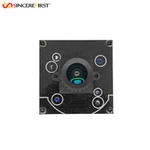
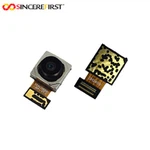
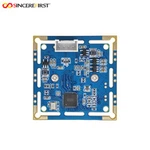
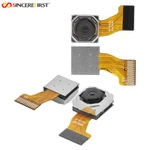
Camera Raspberry PI
Your Professional Camera Module Manufacturer
Guangzhou Sincere Information Technology Ltd. is a professional and high-tech leading company in integrated optical device manufacturer and optical imaging system solution provider since 1992's foundation. We specialize in the production of various camera modules to help you create highly customized camera module solutions, including 0.1mp to 200mp MIPI camera modules and USB camera modules as well as endoscope camera modules with a diameter of 0.9mm~10mm.
Quality Assurance
All our camera modules must be inspected by professional QC, and the products are inspected in strict accordance with national standards before shipment. And the entire process is strictly implemented in accordance with the ISO9001 quality system.
01
Advanced Equipment
Professional AA (Active Alignment) equipment manufacturing, COB 100 level dust-free workshop.
02
Professional Technical Team
We have been manufacturing camera modules for over 30 years. And we have top professional R&D talents, management talents and sales elites with rich experience.
03
Good Service
We provide 1-year replacement and 10-year warranty services. Additionally, we can provide training on how to use the camera module.
04
Reasonable Price
We offer competitive price to achieve win-win.
05


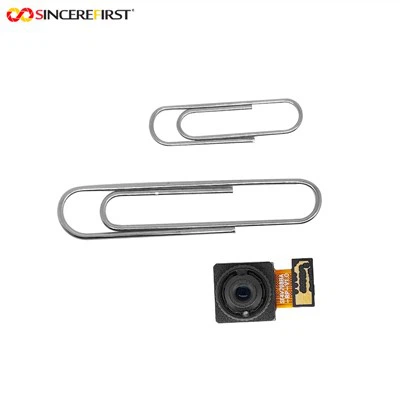

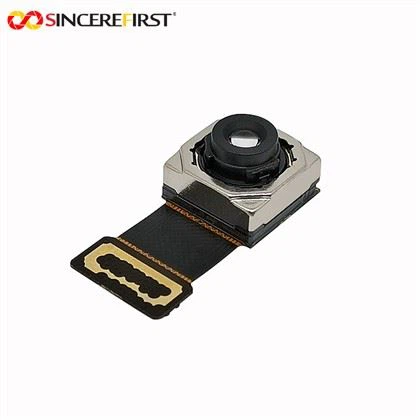
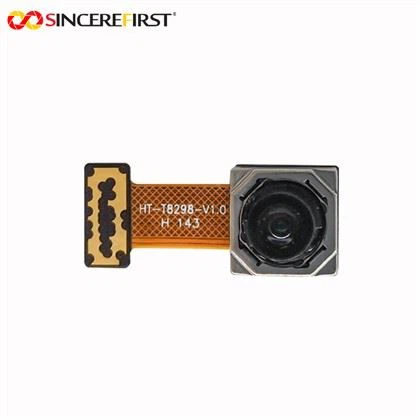
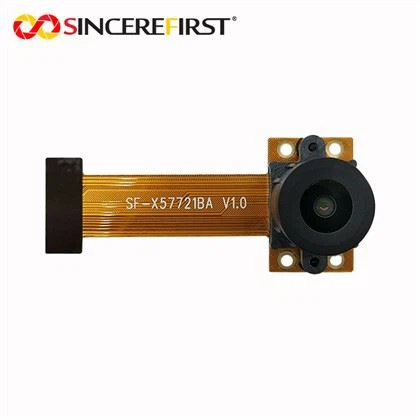
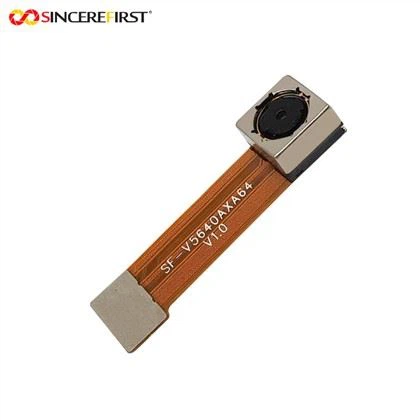
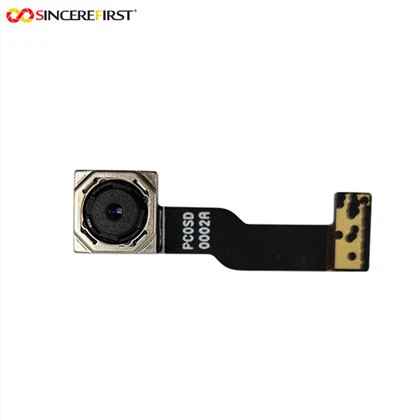

The Raspberry Pi Camera Module is an official add-on camera board designed for Raspberry Pi single-board computers. It connects via a dedicated CSI (Camera Serial Interface) port and comes in different versions (like standard, NoIR for infrared, or high-quality variants). These compact cameras typically offer 8MP to 12MP resolution, support HD video recording (up to 4K in newer models), and are programmable through Python or other languages. They're widely used for DIY projects, robotics, surveillance, timelapse photography, and machine vision applications due to their affordability and Pi compatibility.
Advantages Of Raspberry PI Camera Module
Lorem ipsum dolor sit, amet consectetur adipisicing elit.
Official Compatibility: It is an official add-on designed specifically for Raspberry Pi single-board computers, ensuring seamless integration.
Dedicated Connection: Connects via a dedicated CSI (Camera Serial Interface) port, optimizing data transmission for camera functionality.
Versatile Versions: Available in different variants (e.g., standard, NoIR for infrared, high-quality models) to suit various needs.
Good Resolution and Video Support: Offers 8MP to 12MP resolution and supports HD video recording (up to 4K in newer models).
Programmable Flexibility: Can be programmed through Python and other languages, enabling customization for diverse projects.
Cost-Effective and Multipurpose: Affordable and widely applicable in DIY projects, robotics, surveillance, timelapse photography, and machine vision.
Types of Raspberry PI Camera Module

Raspberry Pi Camera Module V1
As the first official camera module, it is equipped with a 5MP sensor, supports 1080p video recording, and features a fixed-focus design.
Raspberry Pi Camera Module V2
Upgraded to an 8MP sensor, the video recording performance has been enhanced. It supports 1080p shooting at higher frame rates. The fixed focal length design is maintained, resulting in richer image details. It is compatible with Raspberry Pi series devices.


Raspberry Pi Camera Module V3
Equipped with a 11.9MP sensor, it further enhances the resolution and image quality, supports HDR mode, and can present more delicate colors and dynamic range.
Auto Focus Raspberry Pi Camera Module
It features automatic focusing function, enabling it to quickly and accurately focus on objects at different distances, thus eliminating the limitation of fixed focal length.


Wide Angle Raspberry Pi Camera Module
It has a wider field of vision than standard modules, can capture a larger range of images at one time, provides more comprehensive environmental information, and is also suitable for photography projects that require the presentation of grand scenes.
IR Cut Filter Raspberry Pi Camera Module
The built-in infrared cut-off filter can effectively block infrared light, ensuring accurate color reproduction and a realistic and natural image when shooting during the day. When switching to the night mode, the filter can be turned off to receive infrared light, and in combination with an infrared light source, it can achieve night vision functionality.

Application of Raspberry PI Camera Module

Home Surveillance
Wide-angle or IR cut filter modules enable low-cost 24/7 monitoring, with night vision and motion alerts for home security.

Education
V1/V2 modules teach coding and image processing in schools, letting students program photo capture and object tracking for STEM learning.

Robotics
Auto-focus and wide-angle modules aid robot navigation—auto-focus for close-up scans, wide-angle for broad environmental awareness.

Wildlife Monitoring
IR cut filter modules capture day/night footage, helping observe animals without disturbance, with night vision for nocturnal activity.

Time-Lapse Photography
High-res modules like V3 (with HDR) document processes like plant growth or weather changes through detailed, vibrant time-lapses.

Industrial Inspection
Auto-focus modules check product defects in small-scale manufacturing, integrating into tight spaces for automated quality checks.
Process of Raspberry PI Camera Module
Design
- Requirement Gathering: Define target uses (e.g., surveillance, education) and ensure compatibility with Raspberry Pi models via CSI.
- Circuit & Mechanical Design: Integrate key components (sensors, power units) on PCBs; design compact, lightweight form with easy CSI connection.
Procurement
- Component Sourcing: Source high-quality parts (e.g., Sony sensors, PCBs) from reliable suppliers.
- Quality Checks: Inspect components (sensors for resolution, PCBs for defects) to meet standards.
Production
- SMT Process: Apply solder paste to PCBs, place components (sensors, resistors) via machines, then reflow solder for secure connections.
- AA Process: For auto-focus modules, align lenses with sensors using specialized equipment, optimizing focus; fix lenses with adhesives.
Testing
- Functionality Tests: Verify image/video capture, auto-focus (if applicable), and correct color/frame rates.
- Performance Tests: Check resolution, low-light/IR performance (for relevant models) against specs.
Shipping
- Packaging: Seal tested modules in anti-static bags, then box with cushioning for protection.
- Distribution: Ship to retailers/end-users with manuals and warranty docs via reliable carriers.
Components of Raspberry PI Camera Module
Image Sensor
Core component (e.g., Sony IMX series) converting light to electrical signals, determining resolution (5MP to 12MP) and low-light performance.
Lens Assembly
Includes fixed-focus (V1/V2) or auto-focus (V3) lenses; some variants offer wide-angle or IR-sensitive (NoIR) options.
Printed Circuit Board (PCB)
Integrates all components, with traces for data/power transfer and a CSI connector for Raspberry Pi compatibility.
Power Management Components
Regulates voltage to ensure stable operation of sensors and other parts, optimizing power use.
Image Signal Processor (ISP)
Processes raw sensor data (e.g., converting to RGB, adjusting exposure) for better image output.
Optional Add-ons
IR cut filter (for accurate daytime color), RP2040 microcontroller (in AI models for neural network management), etc.
How To Cooperate With Us?
Demand Analysis
Communicate requirements with customers
Design Scheme
Design solutions that meet customer needs
Establish Cooperation
Provide camera module drawings and establish cooperation
Make Samples
Camera module proofing according to the design plan
Camera Module Test
Send out samples, and customers will test
Mass Production
After the samples pass the customer's test, mass production begins
Certifications
RoHS, REACH, ISO, CE, FCC

CE

FCC

ISO 9001

REACH

RoHS
FAQ
Q: What is compact camera module?
A: Compact camera modules are widely used in electronic devices such as mobile phones and tablet computers. In order to reduce both the size and number of elements required the optical design will typically incorporate several highly aspheric surfaces.
Q: What is a Raspberry Pi Camera Module?
A: It is an official add-on camera board designed for Raspberry Pi single-board computers, connecting via a CSI port. It supports various resolutions, video recording (up to 4K in newer models), and is widely used in DIY projects, robotics, and more.
Q: What are the main types of Raspberry Pi Camera Modules?
A: Common types include V1, V2, V3 (with upgrades in resolution and features), auto-focus, wide-angle, and IR cut filter modules, each suited for different scenarios like general use, dynamic shooting, or 24/7 monitoring.
Q: What advantages does it offer?
A: Key advantages include official Raspberry Pi compatibility, dedicated CSI connection, versatile versions, good resolution/video support, programmable flexibility, and cost-effectiveness for multiple applications.
Q: Can it be used for night vision?
A: Yes. NoIR modules (without infrared filters) or IR cut filter modules (with switchable filters) can capture images in low light when paired with IR lighting, making them ideal for night surveillance.
Q: How is the Raspberry Pi Camera Module produced?
A: The process includes design (defining specs and compatibility), procurement (sourcing quality components), production (using SMT for component mounting and AA for lens alignment), testing (functionality and performance checks), and shipping (secure packaging).
Q: What are its main components?
A: Core components are the image sensor (converting light to signals), lens assembly (fixed or auto-focus), PCB (integrating parts), power management components, ISP (processing image data), and optional add-ons like IR cut filters.
Q: What is a sensor module?
A: Sensor module is a device developed to detect the presence of an insert in overmolding injection process. The device is easy to apply and allows for a setting of the reading distance from the parting line. The sensor module is available with an embedded magnet.
Q: What are the importance components of camera module?
A: Among the main components of the camera module, the most important is the image sensor, because the sensor is the most important for image quality. The Sensor converts the light transmitted from the lens into an electrical signal, which is then converted to a digital signal by an internal DA.