


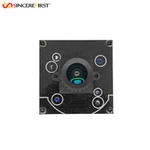
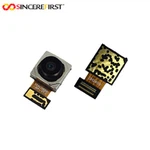
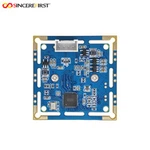
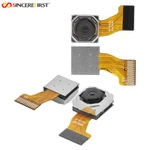
Fixed Focus Module
Fixed Focus USB Camera Modules for Consistent Capture at Set Working Distances
SincereFirst offers fixed focus USB camera modules for devices that capture subjects within a defined viewing area. This category helps OEM teams select a camera around repeatable object positioning, an established focus setting and USB image output.


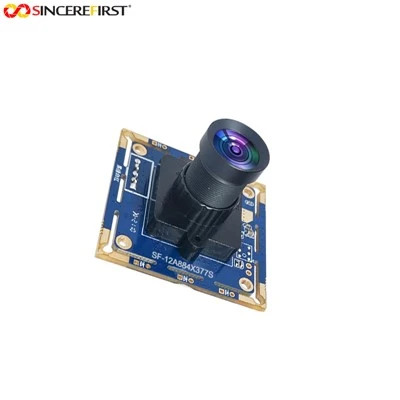
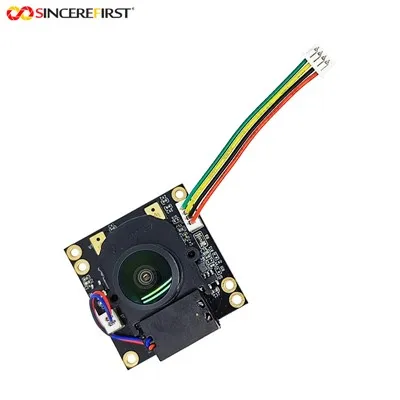


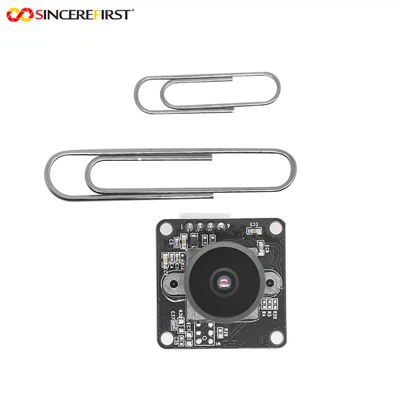

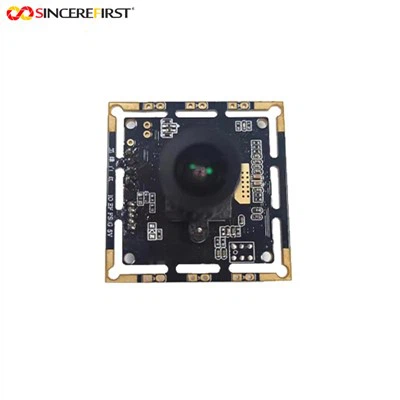


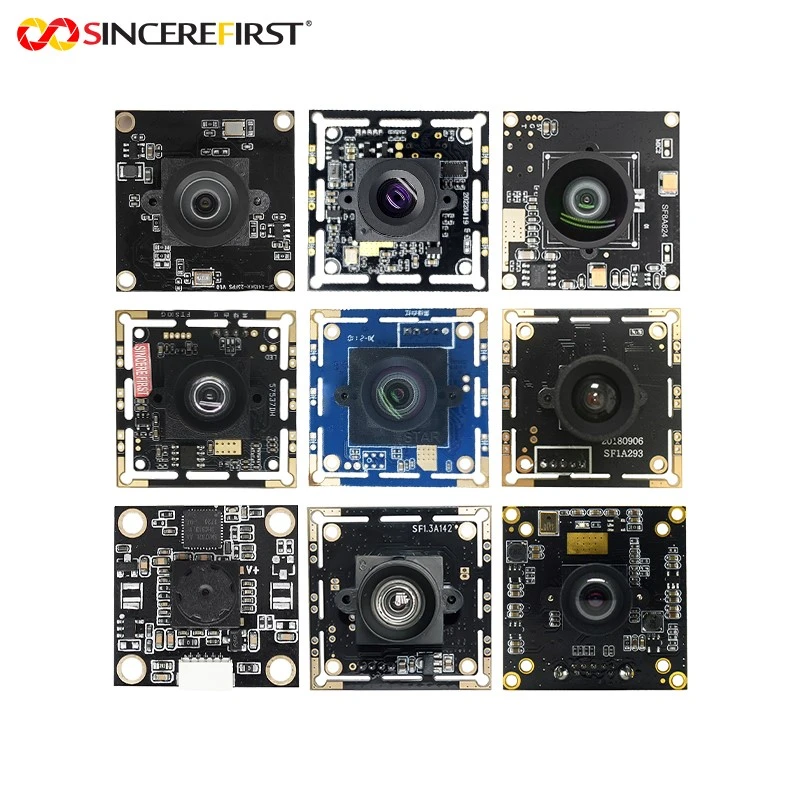
A fixed focus USB camera module captures images through a lens whose focus setting remains unchanged during normal operation. It sends image data to a host through USB.
The lens is selected and set for the intended working distance, with depth of field determining the range that appears acceptably sharp. Some lens assemblies allow adjustment during setup; this does not mean the camera automatically refocuses during use.
Why Choose Fixed Focus USB Camera Modules?
A Consistent Focus Setting
The camera retains its chosen focus setting as objects enter and leave the scene. This keeps the intended capture plane as the optical reference, rather than allowing changing scene content to trigger refocusing.
No Autofocus Search
A fixed focus design does not search for a new focus position before each image. When subjects remain within the established sharpness range, the capture sequence does not need to accommodate autofocus settling.
A Simpler Focus Mechanism
Fixed focus does not require a motor-driven autofocus assembly. This suits devices whose optics are set during manufacture or installation and remain at that setting throughout normal operation.
Less Dependence on Focus Controls
The host application can acquire images without issuing focus commands or monitoring autofocus status. This reduces the focus-control requirements for devices with a defined capture area and established optical setup.
Types of Fixed Focus USB Camera Module

IR-CUT Switcher Fixed Focus USB Camera Module
IR-CUT switcher fixed focus USB camera module is a camera module that combines infrared cut-off filter switching technology to provide clear, vivid and detailed images under different lighting conditions.

Macro Fixed Focus USB camera module
The micro-fixed focal length USB camera module is designed for close-range shooting, featuring macro shooting capabilities and the ability to clearly capture small objects such as electronic components, insects, and jewelry.

High Frame Rate Fixed Focus USB camera module
High frame rate camera modules typically support 60fps or higher, such as 120fps, which makes video more fluid, especially when shooting fast-moving objects or motion capture, effectively avoiding stuttering and trailing.

Face Recognition Fixed Focus USB camera module
Face recognition fixed focus USB camera module is a camera module with face recognition technology, mainly used for face recognition and verification to improve security and convenience.

VGA Sensor Fixed Focus USB camera module
VGA sensor fixed focus USB camera module is a camera module that connects to a computer or other device via a USB interface, with a resolution of 640x480 pixels, and is commonly used in scenarios where medium-resolution video capture is required. It is small, light, portable and easy to use.

POS Machine Fixed Focus USB Camera Module
POS machine fixed focus USB camera module is a camera device integrated into POS machines, mainly used for video communication, payment verification and security monitoring functions.
Choose a Fixed Focus USB Camera Module by Requirement

Repeated Capture at a Defined Position
Choose fixed focus when a fixture, document surface or device layout keeps the subject at a repeatable distance. Check placement and assembly tolerances rather than testing only one ideal camera-to-object position.

Coverage Across a Defined Object Depth
Consider fixed focus when the required features occupy different depths but must remain usable without refocusing. Evaluate the nearest and farthest features together, including raised components or uneven surfaces, to confirm that the selected optics cover the task.

One Focus Setting Throughout Observation
Fixed focus is relevant when a camera must keep observing the same plane while objects or background content change. Check that the important features remain sharp across the capture area without requiring the camera to select a new focus target.

Operation Without Routine Lens Adjustment
Choose this approach when users should not adjust the lens during normal operation and the device can keep subjects within a defined viewing zone. Validate that zone in the finished enclosure before confirming the optical configuration.
Choose a Fixed Focus USB Camera Module by Application

Document and Label Capture

Inspection Fixtures

Self-Service Terminals

Fixed Equipment Observation
Custom Fixed Focus USB Camera Module Options
Lens and Mount Selection
Selected module platforms offer lens and mount options that can be evaluated against working distance, target size and scene coverage. The chosen optics should be checked at the intended focus setting before the assembly is confirmed.
Board Layout and USB Connection
Available board layouts, cable arrangements and connectors can be reviewed for the selected platform. Provide the lens-opening position, mounting points and USB cable route so that the camera assembly can be assessed against the enclosure.
Optical Filter Selection
Filter options are available for review on selected designs. Define whether the task requires visible-light color imaging or another spectral response before confirming the filter and lens combination.
Engineering and Manufacturing Support
Our support starts with the capture geometry: where the camera sits, where the subject appears and what must remain visible. The selected configuration then moves through five stages.
Requirement Review
We review the capture area, object-position variation, required detail and USB host.
01
Module Recommendation or Design Proposal
We identify a fixed focus platform and optical direction suited to the intended mounting arrangement.
02
Sample Evaluation
Samples are evaluated with representative objects at the nearest, nominal and farthest expected positions.
03
Adjustment and Confirmation
Applicable lens, filter and mechanical changes are reviewed, and the focus setting and assembly configuration are confirmed.
04
Production Support
The approved optical and mechanical configuration becomes the reference for production preparation and supply discussions.
05
Certifications
Available public support includes ISO quality system information and product compliance directions such as RoHS, REACH, CE and FCC where applicable. Final certification or compliance requirements should be confirmed according to the product model and target market.

CE

FCC

ISO 9001

REACH

RoHS
FAQ
Q: Does fixed focus mean the same thing as fixed focal length?
A: No. Fixed focus describes a focus setting that remains unchanged during use. Fixed focal length describes a lens that does not provide optical zoom; such a lens may still allow focusing at different distances.
Q: Can a fixed focus module provide automatic exposure or white balance?
A: Yes, where those functions are supported by the selected module. Focus, exposure and white balance are separate controls. A fixed focus lens does not mean that image brightness and color must also remain fixed.
Q: Need a Fixed Focus USB Camera Module for a Defined Capture Position?
A: Share the target object, smallest detail to capture, nominal working distance and expected position variation. Include the required capture area, USB host, output requirements, available mounting space and expected quantity so SincereFirst can help identify a configuration for evaluation.