


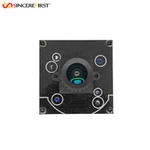
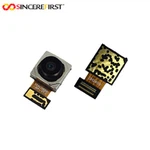
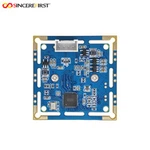
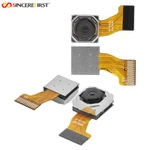
Fixed Focus Camera Module
Your Professional Camera Module Manufacturer
Guangzhou Sincere Information Technology Ltd. is a professional and high-tech leading company in integrated optical device manufacturer and optical imaging system solution provider since 1992's foundation. We specialize in the production of various camera modules to help you create highly customized camera module solutions, including 0.1mp to 200mp MIPI camera modules and USB camera modules as well as endoscope camera modules with a diameter of 0.9mm~10mm.
Quality Assurance
All our camera modules must be inspected by professional QC, and the products are inspected in strict accordance with national standards before shipment. And the entire process is strictly implemented in accordance with the ISO9001 quality system.
01
Advanced Equipment
Professional AA (Active Alignment) equipment manufacturing, COB 100 level dust-free workshop.
02
Professional Technical Team
We have been manufacturing camera modules for over 30 years. And we have top professional R&D talents, management talents and sales elites with rich experience.
03
Good Service
We provide 1-year replacement and 10-year warranty services. Additionally, we can provide training on how to use the camera module.
04
Reasonable Price
We offer competitive price to achieve win-win.
05

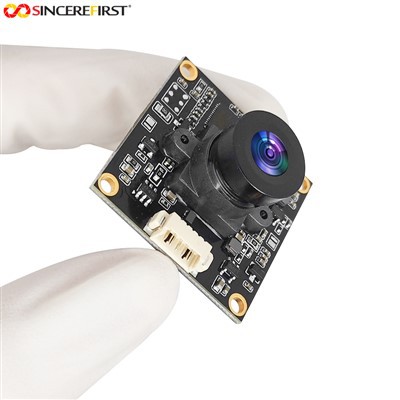
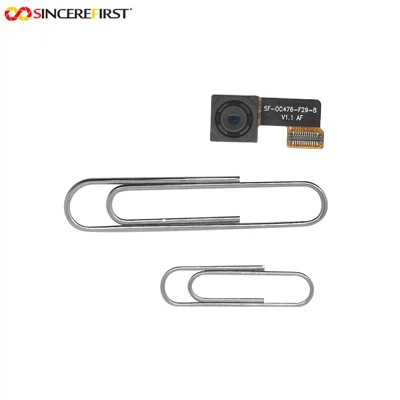


What Is Fixed Focus Camera Module?
The Fixed Focus FPC Camera Module is a compact imaging component that integrates a fixed-focus lens, an image sensor, a Flexible Printed Circuit (FPC), and related electronic elements. Its core feature lies in the "fixed focus" design: the lens has a fixed focal length and does not require an autofocus (AF) mechanism, enabling clear imaging within a preset specific distance range (typically 10cm to infinity). This design results in a relatively simple structure, lower cost, and high stability. The adoption of "FPC" (Flexible Printed Circuit) endows it with excellent flexibility, allowing it to be bent, folded, or adapted to narrow and irregular installation spaces. These characteristics make it widely applicable to devices with strict space constraints and requirements for cost-effectiveness and stability, such as the front/rear auxiliary cameras of smartphones, tablets, smart wearable devices (e.g., smartwatches), smart home devices (e.g., smart door locks, surveillance cameras), and some industrial testing equipment. While meeting basic imaging needs (such as video calls, daily photography, and scene monitoring), it also helps terminal products achieve miniaturized and slim designs.
Advantages Of Fixed Focus Camera Module
High Cost-Effectiveness: Due to its simple structure, which eliminates complex components like the voice coil motor (VCM) required for autofocus, the production and manufacturing costs are significantly lower than those of autofocus modules, offering high price competitiveness.
Compact and Small Form Factor: Without additional moving parts for focus adjustment, the entire module can be designed to be very thin and small. Especially when combined with a flexible printed circuit (FPC), it easily fits into the internal space constraints of modern ultra-thin electronic devices.
High Reliability and Long Lifespan: The fixed focus means there are no moving focusing parts, thereby reducing the risk of wear and tear, jamming, or malfunction caused by mechanical movement. It has better shock resistance and overall stability, resulting in a longer operational life.
Low Power Consumption: It does not require driving current for a focus motor and only consumes power during imaging. Therefore, its power consumption is much lower than that of autofocus cameras, which constantly require focus calculations, making it highly suitable for battery-powered portable devices.
Fast Imaging with No Focus Delay: Since the focus is preset, it doesn’t need time to find the focus like an autofocus camera does. It enables "instant capture," with almost no delay in image capture, ensuring fast imaging speed.
Simplified Design and Production Assembly: For manufacturers, the fixed optical design simplifies the overall product hardware design and debugging process. On the production line, it is also easier to install and calibrate, improving assembly efficiency and the yield rate of mass production.
Types of Fixed Focus Camera Module

Wide-angle Fixed Focus Camera Module
A fixed-focus module characterized by a "large Field of View (FOV)". Through a short focal length lens design, it achieves a wider image coverage than standard lenses. No manual/automatic focusing is required, and the preset focal length is usually suitable for medium and long-distance scenarios.
Global Shutter Fixed Focus Camera Module
A fixed-focus module adopting "global shutter" technology. Unlike conventional "rolling shutter", it enables simultaneous exposure of the entire frame, avoiding "motion blur/rolling shutter effect" when shooting moving objects. The focal length is fixed and preset to a clear range suitable for dynamic scenes.


HDR Fixed Focus Camera Module
A fixed-focus module integrated with HDR technology. It solves the problem of detail loss in scenes with "excessive brightness contrast" through the synthesis of multiple frames with different exposure levels. The focal length is fixed and suitable for clear ranges in complex light environments.
MIPI Fixed Focus Camera Module
A fixed-focus module using MIPI CSI-2 as the data transmission interface. It features "high-speed serial transmission" as its core advantage, suitable for devices requiring high-definition, low-latency image transmission. The focal length is fixed with no additional focusing operations required.


DVP Fixed Focus Camera Module
A fixed-focus module using DVP (Digital Video Parallel Interface) as the data transmission interface. It boasts "low cost and simple protocol" as its core advantages, suitable for devices with low transmission rate requirements and limited budgets. The focal length is fixed with low operational complexity.
IR-CUT Filter Fixed Focus Camera Module
A fixed-focus module integrated with an "IR-CUT (Infrared Cut-off) filter" switching mechanism. It can automatically switch "filter modes" according to ambient light—blocking infrared light during the day to ensure color accuracy, and allowing infrared light to pass through at night to achieve "night vision function". The focal length is fixed and suitable for day and night scenarios.

Application of Fixed Focus Camera Module

Home Panoramic Surveillance
Home panoramic surveillance cameras rely on it for wide-field view coverage, capturing the entire living room or bedroom in a single frame without blind spots, which eliminates the need for additional cameras and simplifies daily home security setup.

Industrial Assembly Line Part Inspection
Industrial assembly line part-inspection devices rely on it to shoot high-speed moving gears or small parts, avoiding motion blur and rolling shutter effect, thus ensuring accurate identification of product surface defects in dynamic production processes.

Smart Peephole Doorbell
Smart peephole doorbells rely on it to handle the extreme light contrast between outdoor sunlight and indoor dimness, preventing overexposed doorways or underexposed visitor faces and ensuring clear imaging of visitors at any time of the day.

AR Glasses
AR glasses rely on it for high-definition, low-latency transmission of real-time environmental images. Its MIPI interface ensures smooth, lag-free display of surrounding scenes (e.g., recognizing real-world markers for AR overlays), avoiding motion sickness caused by delayed visuals and meeting the device’s demand for compact, low-power imaging.

Children’s Toy Cameras
Children’s toy cameras rely on it for low-cost, easy integration. Its simple DVP protocol fits the toy’s low-performance main board, and fixed focus lets kids take photos directly—meeting basic entertainment needs while keeping the toy affordable.

Outdoor Surveillance
24-hour community outdoor surveillance cameras rely on it to automatically switch IR-CUT filters: blocking infrared light during the day to ensure accurate color reproduction (e.g., distinguishing passersby’s clothing colors) and allowing infrared light at night to realize clear night vision, covering all-day security needs.
Process of Fixed Focus Camera Module
1. Requirement Definition & Design Stage
This stage clarifies the module’s application scenarios and technical indicators, laying the foundation for subsequent development:
Requirement Analysis: Confirm core needs based on the target product (e.g., children’s toy cameras need low cost/small size; industrial detection cameras need anti-interference/clear outline imaging). Define key parameters: resolution (e.g., 2MP/5MP), focal length (fixed to target shooting distance), interface type (e.g., DVP/MIPI), and environmental adaptability (e.g., temperature range for toys: 0-40°C).
Optical Design: Select matching lens (fixed focal length, low distortion) and image sensor (e.g., CMOS for low power consumption). Calculate the lens-sensor distance to fix the focal point (ensuring clear imaging at the target distance, no manual adjustment needed).
Structural & Circuit Design: Design the module’s shell (fit the target product’s size) and PCB (layout of sensor, driver chip, and interface). Develop driver programs (match the interface protocol, ensure normal data transmission between the module and the main board).
2. Prototype Development & Verification
Turn design plans into physical samples and verify feasibility:
Prototype Fabrication: Purchase sample components (lens, sensor, PCB), assemble the first prototype (manual soldering of key components, lens bonding).
Preliminary Testing: Test optical performance (check if the fixed focal point meets requirements, e.g., clear imaging at 30-50cm for toy cameras) and electrical functions (whether the module can output images normally via the interface, no stuck/garbled screens).
Design Iteration: Adjust the lens position, PCB layout, or driver code based on test issues (e.g., if imaging is blurry, optimize the lens-sensor bonding accuracy).
3. Supply Chain Preparation & Incoming Quality Control (IQC)
Ensure stable supply of mass-produced components and eliminate defective materials:
Supplier Selection: Screen qualified suppliers for lenses, sensors, PCBs, etc. (verify their production capacity and quality certificates, e.g., ISO 9001).
Incoming Inspection: Check 100% of incoming components:
Optical parts (lens surface scratches, transmittance);
Electronic parts (sensor pixel defects, PCB short circuits);
Reject unqualified batches (e.g., lenses with bubbles).
4. Mass Production Line Setup & Process Standardization
Prepare for large-scale production:
Production Line Construction: Deploy equipment (SMT machines for PCB component mounting, automatic lens bonding machines, testing jigs).
Process Standardization: Formulate operating guidelines (e.g., SMT soldering temperature: 220-240°C, lens bonding pressure: 5N) and QC standards (e.g., "imaging clarity must reach ≥80% of the design standard").
Staff Training: Train operators on equipment operation and defect identification (e.g., how to spot misaligned lenses).
5. Mass Production & In-line Testing
Execute large-scale assembly and real-time quality monitoring:
Component Mounting: Use SMT machines to attach driver chips, resistors, and capacitors to PCBs; then manually or automatically bond the sensor and fixed-focus lens to the PCB.
Module Calibration: For fixed focus, use calibration jigs to confirm the lens position (ensure the focal point is fixed at the target distance, no deviation).
In-line Testing: Test each module after assembly:
Functional test (connect to the main board, check if images are output normally, no color cast);
Optical test (use test charts to verify imaging sharpness);
Appearance test (check for shell scratches, component misalignment).
6. Final Quality Assurance (QA) & Reliability Testing
Conduct batch sampling and long-term performance verification:
Batch Sampling Inspection: Randomly sample 3-5% of modules from each production batch for retesting (recheck focal accuracy, interface stability).
Reliability Testing: Test sampled modules under simulated working environments:
High/low temperature test (e.g., -10-60°C for industrial modules, 0-40°C for toy modules) to check if imaging is stable;
Vibration test (simulate transportation) to ensure parts do not fall off.
Defect Analysis & Improvement: If defective products are found (e.g., imaging blur after high-temperature test), trace the root cause (e.g., lens adhesive failure) and adjust the production process (replace high-temperature-resistant adhesive).
7. Packaging, Outgoing Inspection (OQC) & Shipment
Ensure products are protected during transportation and meet delivery requirements:
Packaging: Use anti-static bags (prevent electrostatic damage to electronic components) and cartons with foam (shockproof) to package modules; mark batch numbers and specifications on the outer box.
Outgoing Inspection (OQC): Check the packaged products:
Quantity verification (match the delivery order);
Package integrity (no damage to cartons/bags);
Randomly open boxes to recheck module appearance/function.
Shipment & Documentation: Arrange logistics (e.g., express for small batches, freight for large batches); provide supporting documents (QC report, delivery note, component certification) to the customer.
Components of Fixed Focus Camera Module
Optical Lens System
A set of precision lenses designed with a fixed focal length, responsible for converging light onto the image sensor. Unlike auto-focus modules, its focal length is pre-calibrated for specific shooting distances (e.g., 30cm to 5m for daily use), eliminating the need for adjustment mechanisms. Lens materials (plastic for cost-sensitive devices, glass for better transmittance) and anti-reflective coatings directly influence light intake and image sharpness, while the overall design determines key parameters like field of view and distortion levels.
Image Sensor
Typically a CMOS sensor, chosen for its low power consumption, compact size, and cost-effectiveness—ideal for fixed focus modules in consumer and industrial devices. It converts light signals into electrical signals, with performance metrics such as pixel count (0.3MP to 12MP) and pixel size (affecting low-light sensitivity) tailored to the module’s use case. Its active area is precisely aligned with the optical lens system during production to ensure the pre-set focal plane captures clear images.
IR-CUT Filter
An optical component placed between the lens and image sensor to block infrared light. It ensures accurate color reproduction by filtering out non-visible IR rays that would otherwise cause color distortion (e.g., unnatural tint in daylight). For modules needing night vision, some integrate a switchable IR-CUT filter (allowing IR light to pass in low light), but the core function remains aligned with the fixed focus design—no dynamic adjustments beyond basic light adaptation.
PCB
A substrate that connects all electrical components via conductive traces, serving as the module’s "nervous system." It integrates circuits for power management, signal transmission, and interface compatibility (e.g., DVP or MIPI), with a simplified layout compared to auto-focus modules (no need for actuator control circuits). Its design prioritizes compactness for small devices and anti-interference features for industrial environments.
Driver IC
Manages the image sensor’s operations, including power supply regulation, analog-to-digital signal conversion, and basic image processing (e.g., noise reduction, white balance). Unlike auto-focus modules, it lacks actuator control functions, focusing instead on stable data output and compatibility with the host device’s main control system.
Housing/Mechanical Structure
A protective casing (plastic or metal) that secures the lens, sensor, and PCB in rigid alignment. Critical for fixed focus performance, it prevents shifts in the lens-sensor distance—any displacement would blur images, as there’s no auto-correction mechanism. The structure also shields internal components from dust, moisture, and physical impact, with design variations to fit target devices (e.g., toy cameras, security monitors).
Basic Control Software
Embedded firmware that enables core functionality without complex auto-focus logic. It optimizes exposure settings, adjusts for lighting conditions, and ensures consistent image output (e.g., avoiding overexposure in bright light). The software is streamlined to match the module’s simplicity, focusing on reliability rather than dynamic focus adjustments.
How To Cooperate With Us?
Demand Analysis
Communicate requirements with customers
Design Scheme
Design solutions that meet customer needs
Establish Cooperation
Provide camera module drawings and establish cooperation
Make Samples
Camera module proofing according to the design plan
Camera Module Test
Send out samples, and customers will test
Mass Production
After the samples pass the customer's test, mass production begins
Certifications
RoHS, REACH, ISO, CE, FCC

CE

FCC

ISO 9001

REACH

RoHS
FAQ
Q: What is compact camera module?
A: Compact camera modules are widely used in electronic devices such as mobile phones and tablet computers. In order to reduce both the size and number of elements required the optical design will typically incorporate several highly aspheric surfaces.
Q: What is a Fixed Focus Camera Module?
A: A Fixed Focus Camera Module is a compact imaging component with a pre-calibrated fixed focal length—its lens position is set during production for clear imaging within a specific distance range (e.g., 30cm to 5m), and it has no moving parts for focus adjustment.
Q: How is it different from an Auto-Focus (AF) Camera Module?
A: The key difference from AF modules is: AF modules use actuators (like VCM) to dynamically adjust lens position for focusing on different distances, while fixed focus modules eliminate this mechanism. This makes fixed focus modules simpler in structure, lower in cost, smaller in size, and more energy-efficient, though they can’t adjust focus after production.
Q: What does "Fixed Focus" mean?
A: "Fixed Focus" means the lens's focal length is preset at the factory and cannot change. Unlike auto-focus cameras, it does not have a motor to adjust the lens position. It is designed to provide clear images within a specific pre-calibrated distance range.
Q: How do I choose between MIPI and DVP interfaces?
A: Choose MIPI Interface: If your device requires high-resolution, high-frame-rate video transmission (e.g., smartphone auxiliary cameras, advanced embedded systems like Jetson, Raspberry Pi). It offers higher bandwidth and better anti-interference.
Choose DVP Interface: If your project is very cost-sensitive and has lower transmission rate requirements (e.g., children's toys, simple monitoring devices). It is cheaper and has a simpler protocol.
Q: Can it be used for facial recognition?
A: Yes, but with limitations. It is suitable for basic facial recognition in fixed scenarios, such as smart door locks where the user's face is at a roughly predetermined distance. It is not suitable for scenarios where the distance changes significantly or requires high-precision recognition.
Q: What are its main components?
A: Core components are the image sensor (converting light to signals), lens assembly (fixed or auto-focus), PCB (integrating parts), power management components, ISP (processing image data), and optional add-ons like IR cut filters.
Q: What is a sensor module?
A: Sensor module is a device developed to detect the presence of an insert in overmolding injection process. The device is easy to apply and allows for a setting of the reading distance from the parting line. The sensor module is available with an embedded magnet.
Q: What are the importance components of camera module?
A: Among the main components of the camera module, the most important is the image sensor, because the sensor is the most important for image quality. The Sensor converts the light transmitted from the lens into an electrical signal, which is then converted to a digital signal by an internal DA.