


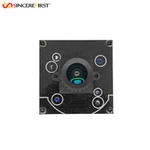
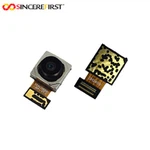
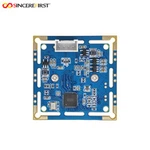
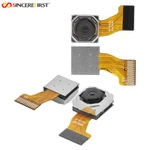
Integrated Endoscope Camera Module
Your Professional Camera Module ManufacturerManufacturer
Guangzhou Sincere Information Technology Ltd. is a professional and high-tech leading company in integrated optical device manufacturer and optical imaging system solution provider since 1992's foundation. We specialize in the production of various camera modules to help you create highly customized camera module solutions, including 0.3mp to 108mp MIPI camera modules and USB camera modules as well as endoscope camera modules with a diameter of 0.9mm ~8.0mm.
Quality Assurance
All our camera modules must be inspected by professional QC, and the products are inspected in strict accordance with national standards before shipment. And the entire process is strictly implemented in accordance with the ISO9001 quality system.
01
Advanced Equipment
Professional AA (Active Alignment) equipment manufacturing, COB 100 level dust-free workshop.
02
Professional Technical Team
We have been manufacturing camera modules for over 30 years. And we have top professional R&D talents, management talents and sales elites with rich experience.
03
Good Service
We provide 1-year replacement and 10-year warranty services. Additionally, we can provide training on how to use the camera module.
04
Reasonable Price
We offer competitive price to achieve win-win.
05




Wide Range Of Applications
Specializing in machine vision, we provide cutting-edge camera modules that support a wide range of applications in various industries, meeting the needs of everything from agriculture to healthcare, industrial automation to retail, SINCEREFIRST is the trusted partner that fuels these applications with unparalleled machine vision excellence.

What is Integrated Endoscope Camera Module?
An Integrated Endoscope Camera Module is a compact, all-in-one device that integrates core endoscopy functions—including high-precision imaging (via image sensors and micro lenses), targeted illumination (miniature LEDs), real-time signal processing, and external data interfaces—into a single unified unit. Unlike traditional endoscopes with separate components (e.g., external light sources, bulky cables), the Integrated Endoscope Camera Module is designed for miniaturization and ease of use, enabling minimally invasive observation, diagnosis, or detection of internal spaces (such as human/animal bodies, industrial equipment pipelines, or electronic components) across medical, industrial, and veterinary fields.
Advantages Of Integrated Endoscope Camera Module
High Integration: Eliminates the need for separate external light sources, signal transmission cables, or processing units, simplifying the overall system structure and reducing operational clutter.
Extreme Miniaturization: Probe diameters can be as small as 2–5mm, allowing access to narrow or delicate spaces (e.g., human blood vessels, tiny industrial pipelines) that traditional endoscopes cannot reach, supporting true minimally invasive operations.
Durability and Reliability: With fewer external connectors and cables, the integrated module is less prone to damage from accidental drops or rough handling, leading to a longer lifespan and greater reliability in a busy clinical environment.
Strong Adaptability: The Integrated Endoscope Camera Module can be customized with rigid/flexible probes, specialized spectra, or wireless connectivity, adapting to diverse needs in medical, industrial, and veterinary fields.
Versatile Connectivity: Offers multiple output options (HDMI, USB, SDI) for seamless connection to various external monitors, recording devices, and integration with operating room IT systems for telemedicine and documentation.
Enhanced Image Quality: Provides superior high-resolution (HD, 4K/8K) imaging with accurate color reproduction and advanced image processing for improved diagnostic clarity.
Types of Integrated Endoscope Camera Module

Bare Integrated Endoscope Camera Module
A core, unencapsulated functional unit designed for OEM integration, offering maximum design flexibility for custom medical devices and prototypes.
Steel Shell Integrated Endoscope Camera Module
Encased in a medical-grade stainless steel shell for superior durability, chemical resistance, and the ability to withstand repeated high-temperature sterilization.


Auto Focus Integrated Endoscope Camera Module
Incorporates an advanced system that automatically adjusts focus in real-time, ensuring consistently clear images and simplifying the physician's workflow.
LED Integrated Endoscope Camera Module
Features integrated high-brightness LEDs, providing a compact, all-in-one lighting solution that eliminates the need for external light sources and fiber cables.


Wide-Angle Integrated Endoscope Camera Module
Equipped with a specially designed lens that offers an exceptionally broad field of view, significantly reducing visual blind spots during procedures.
Glass Lens Integrated Endoscope Camera Module
Utilizes precision-ground optical glass for superior light transmission, image sharpness, color fidelity, and long-term durability compared to polymer lenses.

Application of Integrated Endoscope Camera Module

Gynecological Hysteroscope
It clearly captures intrauterine lesions (such as polyps and adhesions) and avoids diagnostic delays caused by manual focusing. It is a key tool in gynecology for investigating abnormal uterine bleeding and identifying causes of infertility.

Thoracoscope
It can cover a large area inside the thoracic cavity (including lung lobes and pleura) in one go, reducing irritation to thoracic tissues caused by repeated probe movements. It assists doctors in accurately locating and resecting lung cancer lesions, and is a commonly used device in minimally invasive lung cancer surgery in thoracic surgery.

Nasopharyngoscope
This is a slender, flexible endoscope used for examining the nasal cavity, nasopharynx, and larynx. The entire device is very lightweight and flexible, greatly facilitating doctors to quickly perform upper respiratory tract examinations in outpatient or emergency settings.

Pipeline Robot
This is a detection device designed for precision pipelines or complex mechanical structures. In municipal engineering, it is used to inspect underground pipelines for internal corrosion and blockages.

Fundus Examination Lens
It clearly displays tiny vascular lesions in the fundus retina (such as microaneurysms and hemorrhagic spots), accurately identifying retinal damage caused by diabetes. It requires no invasive operation and is a routine tool for screening diabetic complications in ophthalmology.

Automotive Maintenance Endoscope
This is a durable industrial endoscope used to inspect the internal conditions of automotive components such as engine cylinders, fuel tanks, and gearboxes. It can withstand the harsh working environment of automotive repair workshops and frequent use, and is resistant to repeated wiping with industrial cleaning agents, boasting an extremely long service life.
Process of Integrated Endoscope Camera Module
1.Design and R&D Phase
The process of Integrated Endoscope Camera Module starts with design and R&D, where the R&D team first conducts demand analysis based on target application scenarios to confirm core parameters such as module resolution, probe diameter, light source type, and material standards. Then, they complete schematic design (including circuit layout for image sensors and signal processing units), structural design, and optical design, and produce prototype modules through 3D printing and small-batch processing. The prototypes are further tested for imaging clarity, size adaptability, and basic performance, and the design scheme is optimized repeatedly until it meets the preset technical indicators.
2. Core Component Procurement and Incoming Inspection
After the design is finalized, the procurement team selects qualified suppliers to purchase core components, including high-precision CMOS/CCD image sensors (medical-grade ones need to meet ISO 13485 standards), optical glass lenses (or wide-angle lenses for panoramic scenarios), miniature LEDs, stainless steel/plastic structural parts, and PCB boards. All components undergo strict incoming inspection: for example, image sensors are tested for pixel integrity and signal stability, glass lenses are checked for transmittance and distortion, and medical-grade structural parts are verified for biocompatibility. Only components that pass the inspection are put into the production link to avoid affecting the final product quality.
3. Core Production in Dust-Free Workshop
The core production of the module is carried out in Class 10/100 COB dust-free workshops to prevent dust from interfering with precision components. First, the SMT (Surface Mount Technology) process is used to mount small components such as chips, resistors, and capacitors onto the PCB board with high precision, ensuring stable electrical connections. Next, the COB (Chip on Board) process is adopted to directly bind the image sensor chip to the substrate, which improves the module’s integration, reduces volume, and enhances heat dissipation performance—critical for ultra-miniature medical probes. Finally, the AA (Active Alignment) process is implemented: the lens group is automatically adjusted and aligned with the image sensor through professional equipment, ensuring that the light focus is accurately projected onto the sensor to avoid imaging blur, and the aligned components are fixed with high-temperature glue to ensure long-term stability.
4. Module Assembly and Integration
After the core components are produced, the assembly stage begins: workers (or automated equipment) integrate the COB/SMT-processed PCB board, the AA-aligned lens group, the built-in LED light source, and the structural shell into a complete module. For medical modules, special attention is paid to the fit between components to ensure that the shell can withstand subsequent sterilization; for industrial modules, waterproof gaskets are installed at the connection points to meet IP67/IP68 protection standards. During assembly, real-time sampling inspection is conducted to check whether the module’s appearance, size, and component installation meet the requirements.
5. Performance and Reliability Testing
The assembled modules enter the testing phase, which includes two major categories: performance testing and reliability testing. Performance testing covers imaging clarity (testing resolution up to 4K/8K), auto-focus speed, LED brightness uniformity, signal transmission latency, and interface compatibility. Reliability testing is scenario-specific: medical modules undergo repeated high-temperature autoclaving or ethylene oxide sterilization tests to verify sterilization resistance; industrial modules are tested for high-temperature resistance, low-temperature resistance, and drop resistance. In addition, medical modules also need to pass electrical safety tests to ensure patient safety.
6. Sterilization, Packaging, and Pre-Shipment Inspection
For medical-grade modules that pass the test, they are sent to a professional sterilization workshop for final sterilization, and then sealed in sterile packaging with sterilization indicators to prevent secondary pollution. Industrial modules are packaged with shockproof and dustproof materials to adapt to transportation environments. Before shipment, all modules undergo a final pre-shipment inspection: sampling is conducted to re-test key performance indicators, and the packaging integrity and label information are checked. Medical modules also need to be accompanied by compliance documents such as CE/FDA certificates. Finally, the qualified modules are sorted according to orders and delivered to customers through logistics channels that meet the requirements.
Components of Integrated Endoscope Camera Module
Optical Lens Assembly
The core optical component of the module is a lens assembly composed of multiple precision-polished glass or resin lenses. Its design directly determines the focal length, field of view, and resolution of the imaging system. It is responsible for collecting reflected light from the target area and focusing it clearly onto the image sensor, forming the foundation for image quality.
Image Sensor
Typically, a high-performance CMOS or CCD image sensor chip is used. It converts the optical image captured by the lens into digital electrical signals. Its size, pixel count, and low-light performance directly determine the final image resolution, noise control, and dynamic range of the module.
Illumination System
To provide necessary illumination within dark cavities, a ring of high-brightness, low-heat LED chips or their light-guiding structures is integrated around or near the front of the module. This system includes driver circuitry for stable brightness adjustment, ensuring the observed tissue is evenly and adequately illuminated.
Main Control Circuit Board
This is a highly integrated flexible or rigid PCB that carries the image sensor, LED driver IC, main processor, and various interface components. It is responsible for powering the entire module, controlling sensor exposure and data readout, processing image signals, and enabling communication with external host devices.
Structural and Sealing Components
Including precision metal or engineering plastic casings, connectors, and waterproof sealing rings, etc., they provide mechanical protection and electromagnetic shielding for the internal precise optical and electronic components, and ensure that the entire module reaches protection levels such as IPX8, capable of withstanding strict disinfection or cleaning processes.
Data Cable and Interface
Typically a flexible cable wrapped in a metal shield, containing power and data transmission lines. It terminates in a standardized electrical interface used to connect to an external video processor or display, undertaking the tasks of power delivery and stable transmission of high-speed image data streams.
How To Cooperate With Us?
Demand Analysis
Communicate requirements with customers
Design Scheme
Design solutions that meet customer needs
Establish Cooperation
Provide camera module drawings and establish cooperation
Make Samples
Camera module proofing according to the design plan
Camera Module Test
Send out samples, and customers will test
Mass Production
After the samples pass the customer's test, mass production begins
Certifications
RoHS, REACH, ISO, CE, FCC

CE

FCC

ISO 9001

REACH

RoHS
FAQ
Q: What is an endoscope camera used for?
A: Endoscopy is the use of cameras to relay images from inside the body. The device used, known as an endoscope, is a long, thin, and flexible tube that has a camera at one end as well as a light source. An endoscopy can be used to diagnose a wide range of conditions, and the results are interpreted by a specialist.
Q: What is the difference between a borescope and an endoscope camera?
A: Endoscopes are more flexible, they cost more and they are used most commonly in medicine and veterinary care. Borescopes are less flexible, they cost less, they offer a better field of view and they are used much more widely across many different industries.
Q: What is an Integrated Endoscope Camera Module?
A: It is a compact, all-in-one imaging device that combines a miniature camera, illumination (LEDs), and processing electronics into a single unit. It enables real-time visual inspection of internal spaces without relying on external light sources or bulky hardware.
Q: What makes a separated endoscope camera module "separated"?
A: It splits the camera unit (lens, sensor) from the control circuit, cables, and other components, enabling flexible operation and easy disinfection.
Q: What’s the typical lens diameter of such modules?
A: As small as 0.9mm, allowing access to ultra-narrow spaces like tiny pipelines or delicate body cavities.
Q: How is it different from traditional endoscopes?
A: Traditional endoscopes rely on separate external light sources, bulky cables and independent processing units. This module is fully integrated, so it eliminates clutter from extra components. It is also much smaller, with probe diameters as small as 2–5mm, and easier to use. It can even access narrow spaces that traditional endoscopes cannot reach.
Q: Where is it commonly used?
A: Typical applications include medical scenarios like gynecological hysteroscopes for uterine exams and thoracoscopes for lung surgery, industrial scenarios like pipeline robots for underground pipe inspections and automotive maintenance endoscopes for checking engine cylinders, fuel tanks and gearboxes, and ophthalmology scenarios like fundus examination lenses for diabetic retinal complication screening.
Q: What output interfaces does it support?
A: HDMI, USB, SDI, or wireless streaming for compatibility with monitors, recorders, and software systems.
Q: How to ensure sterility for medical use?
A: The detachable camera unit can be thoroughly disinfected, and some use medical-grade materials to lower infection risks.
Q: Why is the AA Process important?
A: It precisely aligns the lens and sensor via automation, ensuring clear, distortion-free imaging.
Q: Why choose an integrated module over traditional endoscopes?
A: It reduces system complexity, enhances portability, and improves reliability by integrating critical functions into one robust, scalable unit.