


FPC Camera Module
Your Professional Camera Module Manufacturer
Guangzhou Sincere Information Technology Ltd. is a professional and high-tech leading company in integrated optical device manufacturer and optical imaging system solution provider since 1992's foundation. We specialize in the production of various camera modules to help you create highly customized camera module solutions, including 0.1mp to 200mp MIPI camera modules and USB camera modules as well as endoscope camera modules with a diameter of 0.9mm~10mm.
Quality Assurance
All our camera modules must be inspected by professional QC, and the products are inspected in strict accordance with national standards before shipment. And the entire process is strictly implemented in accordance with the ISO9001 quality system.
01
Advanced Equipment
Professional AA (Active Alignment) equipment manufacturing, COB 100 level dust-free workshop.
02
Professional Technical Team
We have been manufacturing camera modules for over 30 years. And we have top professional R&D talents, management talents and sales elites with rich experience.
03
Good Service
We provide 1-year replacement and 10-year warranty services. Additionally, we can provide training on how to use the camera module.
04
Reasonable Price
We offer competitive price to achieve win-win.
05





Wide Range Of Applications
Specializing in machine vision, we provide cutting-edge camera modules that support a wide range of applications in various industries, meeting the needs of everything from agriculture to healthcare, industrial automation to retail, SINCEREFIRST is the trusted partner that fuels these applications with unparalleled machine vision excellence.


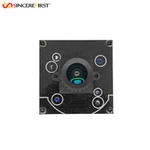
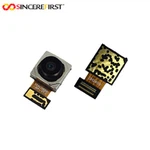
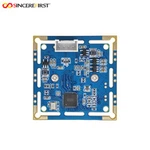
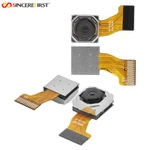
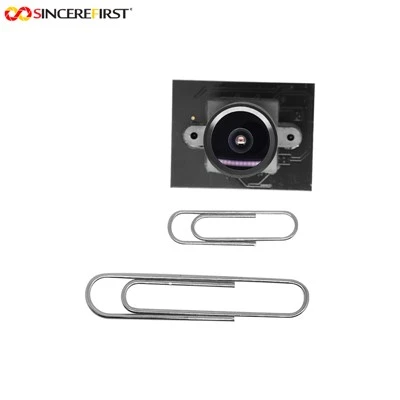
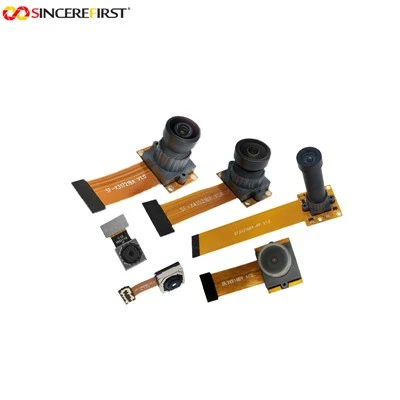
FPC camera module is a small size camera module mounted on the flexible circuit board. It's small, easy for design and assembly to mechanic. There's only the sensor and camer lens mounted then connect to the processor by flexible printed circuit(FPC) board.
Advantages Of FPC Camera Module
Customization
FPC camera modules can be customized to fit the unique form factors and design requirements of different devices, increasing camera performance without sacrificing space or functionality.
Flexibility
Being flexible, they can bend and twist to fit into tight spaces or conform to the curves of a device, enabling cameras to be assembled into a variety of shapes and sizes.
Size
With compact structure and light weight, it is very suitable for use in AIoT equipment, smart homes, smart medical care, smart transportation, smart security, smart warehousing, scanning, robots, drones and other fields.
Durability
Made of high-quality materials that resist damage caused by humidity, temperature, shock and other environmental factors.
Cost-Effective
FPC camera modules are cost-effective due to their streamlined design, simple assembly and lower material costs.
High-Quality Images
FPC camera modules provide high-performance image capture capabilities for clear, sharp, and detailed images.
Types of FPC Camera Module
VGA Camera Module
VGA Camera Modules are low-resolution camera modules. They typically offer a resolution of 640 x 480 pixels and are suitable for basic image and video capture.
01
CMOS Camera Module
CMOS Camera Modules are widely used in modern devices such as smartphones. They offer better image quality and low power consumption. They are also more affordable than other camera modules.
02
CCD Camera Module
CCD Camera modules are commonly used in professional cameras and medical equipment. They offer high image quality and better color reproduction, making them suitable for high-end applications.
03
Autofocus Camera Module
Autofocus Camera Modules are designed to adjust focus on their own. They are commonly used in high-end smartphones and digital cameras, providing users with sharp and clear images.
04
Infrared (IR) Camera Module
Infrared Camera Modules are specialized modules used for capturing images in low light conditions. They use infrared illumination to capture images and are used in security systems, surveillance cameras, and other specialized applications.
05
Application Of FPC Camera Module
In industrial settings, machine vision camera modules are used for activities such as quality control, inspection, and object recognition. These modules feature high-speed sensors, durable construction, and compliance with industrial protocols.
These modules enhance security systems, smart doorbells, and other home automation devices by providing visual input.
In urban surveillance and traffic management systems, FPC camera modules contribute to real-time monitoring and data collection.
Medical imaging devices, endoscopes, and diagnostic tools often incorporate FPC camera modules for precise visualization.
Closed-circuit television (CCTV) cameras and surveillance systems rely on these modules to capture and transmit video footage.
FPC camera modules can be programmed to detect and track objects, allowing robots to navigate and operate autonomously.
For hobbyists and makers, Raspberry Pi camera modules are popular. These modules are used in projects requiring photography, video recording, or computer vision. They allow enthusiasts to explore creative applications.
Process of FPC Camera Module
The first step in the manufacturing process of FPC camera modules is to design the circuit layout and component layout. The placement of components depends on the functionality required of the camera, such as autofocus, stabilization, and zoom capabilities. Once the design is complete, manufacturers will produce the FPC by laminating a flexible copper or polyimide circuit layer on top of a flexible substrate.
The next step is to connect the camera sensor to the FPC, which is done using a process called SMT (Surface Mount Technology). SMT involves attaching surface mount components, such as camera sensors, to the surface of a circuit board. The manufacturer will use a special adhesive to secure the camera sensor to the FPC and then trim the FPC to remove any excess material.
Once all components are installed on the FPC, the manufacturer tests the module to ensure it meets the required specifications. These tests typically include verifying the electrical characteristics of the module, verifying image quality, and checking for any defects.
After testing, the modules are assembled into the camera system and undergo further testing to ensure that all functions such as zoom, autofocus and image stabilization are working properly.
Components of FPC Camera Module
The main components of the camera module are:
Flexible Printed Circuit (FPC) Cable
This is the primary component of the FPC camera module, which provides the necessary connections between the camera module and the main printed circuit board.
Image Sensor
The image sensor is the component that captures and generates the image output. It is responsible for converting light into electrical signals, which are then processed and converted into digital images.
Lens
The lens is responsible for focusing the light onto the image sensor. The quality of the lens is critical in determining the quality of the image captured.
Camera Control IC
This IC is responsible for controlling the camera’s functions, including focus, exposure, and white balance. It also handles the processing of the image data.
Cover Glass
The cover glass is used to protect the lens from dust, scratches, and other damage.
LED Flash Module
The LED flash module is responsible for providing additional light in low-light conditions. It works by emitting a burst of light that illuminates the subject being photographed.
How To Cooperate With Us?
Demand Analysis
Communicate requirements with customers
Design Scheme
Design solutions that meet customer needs
Establish Cooperation
Provide camera module drawings and establish cooperation
Make Samples
Camera module proofing according to the design plan
Camera Module Test
Send out samples, and customers will test
Mass Production
After the samples pass the customer's test, mass production begins
Certifications
RoHS, REACH, ISO, CE, FCC

CE

FCC

ISO 9001

REACH

RoHS
FAQ
Q: What is FPC in camera?
Q: What is MIPI camera module?
Q: What is the Raspberry Pi camera module?
Q: What does a camera module do?
Q: What does a camera module do?
Q: What is in a camera module?
Q: What is the difference between DVP and MIPI?
Q: What is the difference between AF and FF camera?
Definition: AF cameras automatically adjust the focus to keep the subject sharp.
Mechanism: They use an electromagnet to move a magnet attached to a free-moving lens. The lens adjusts its position to achieve accurate focus.
Application:
AF is commonly used in modern digital cameras, including DSLRs and mirrorless cameras.
It ensures sharp images by continuously adjusting focus as needed.
Ideal for scenarios where subjects are at varying distances or in motion.
Trade-offs:
In high-vibration environments, AF may result in blurry or distorted images due to lens movement.
FF (Fixed-Focus):
Definition: FF cameras have a fixed focus distance that cannot be adjusted.
Mechanism: The lens is set to a specific focus point (usually hyperfocal distance) during manufacturing.
Application:
FF is commonly found in early mobile phone cameras, surveillance cameras, and some industrial lenses.
Cost-effective and straightforward.
Best suited for scenarios where subjects are at a consistent distance (e.g., wide-angle shots).
Trade-offs:
Limited flexibility; cannot adjust focus for different distances.
Well-suited for stable environments but not ideal for dynamic scenes.
Q: How does MIPI camera work?
Q: What is ESP32 CAM module?