


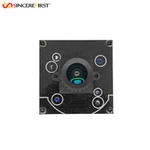
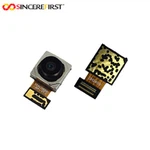
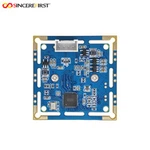
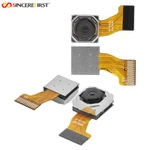
Auto Focus Module
Auto Focus USB Camera Modules for Changing Subject Distances
SincereFirst offers fixed focus USB camera modules for devices that capture subjects within a defined viewing area. This category helps OEM teams select a camera around repeatable object positioning, an established focus setting and USB image output.
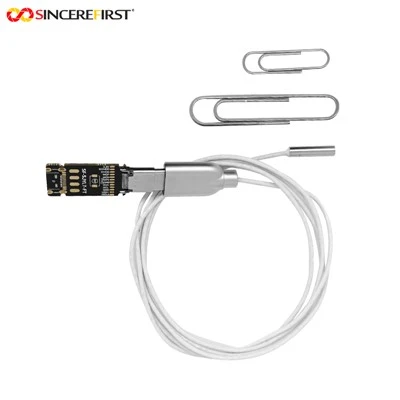
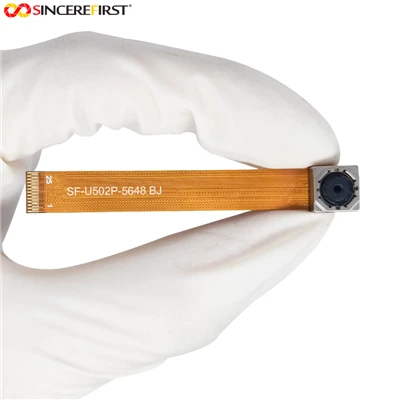
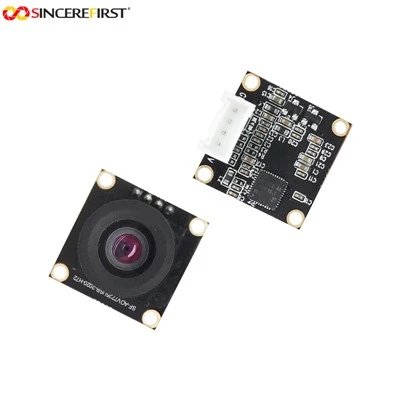


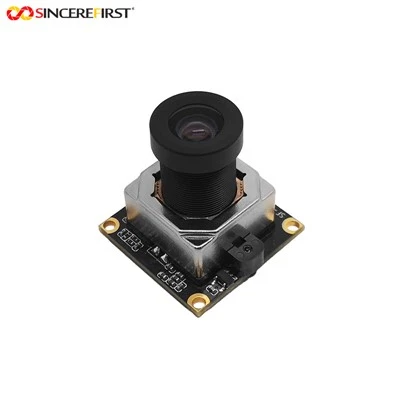


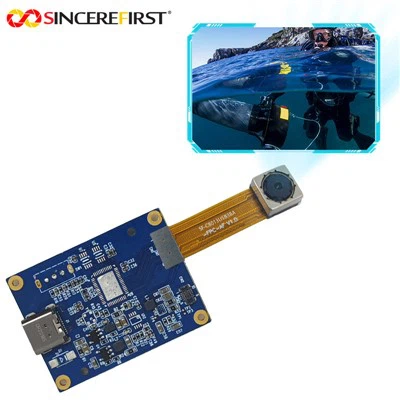


An auto focus USB camera module adjusts its optical focus to bring a subject into focus and transfers image data through USB. The selected design determines its focus range, focusing method and available controls.
USB video operation and autofocus control should be checked together on the intended host. Receiving an image does not by itself confirm that the application can access every focus function.
Why Choose Auto Focus USB Camera Modules?
Adaptation to Changing Distances
Autofocus adjusts the optical focus as the required subject distance changes. Within the selected module’s supported range, this provides an alternative when one fixed focus setting cannot cover the intended use.
Less Manual Lens Handling
Users can reposition a subject or handheld device without turning the lens for each new distance. This helps keep attention on presenting the object or operating the device rather than adjusting the camera.
More Freedom in Subject Placement
An autofocus configuration can reduce the need to place every subject at one precise distance. This gives product teams more flexibility when defining a practical interaction zone, while still respecting focus-range and framing limits.
Several Capture Tasks in One Device
A suitable autofocus configuration can serve tasks that use different viewing distances, such as a wider view followed by closer detail capture. This can reduce the need for separate focus setups for each task.
Types of Auto Focus USB Camera Module

4K Ultra HD Auto Focus USB Camera Module
Professional-grade 4K resolution camera module with hybrid autofocus system, supporting laser + phase + contrast triple focus technology, with the fastest focusing speed of 0.15 seconds. The ability to ensure that every minute detail is clearly visible, thereby improving detection accuracy and diagnostic accuracy.

High Frame Rate Auto Focus USB Camera Module
The high frame rate USB autofocus camera module can capture more images, thereby improving the speed and accuracy of recognition. Typically it has a frame rate of 30 frames per second or higher, capable of providing smooth video capture in dynamic scene.

1080P High Speed Auto Focus USB Camera Module
Full HD 1080P@60fps high-speed camera module, optimized for dynamic scenes. Integrated intelligent tracking and focusing algorithm, supports automatic face and object recognition and tracking. Built-in 3D noise reduction and HDR function to maintain excellent image quality under complex lighting.

Ultra Miniature Auto Focus USB Camera Module
Our smallest USB camera modules are 25mm x 25mm, have 1MP to 13MP pixels, support 720P and 1080P HD resolutions, and are designed for applications where space is extremely limited. Designed for extremely space-constrained application scenarios such as wearable devices and micro robots.

High Pixel Auto Focus USB Camera Module
The high pixel USB camera module uses high-quality image sensors, such as CMOS sensors, to provide stable and high quality images . It usually has a higher resolution, such as 1080P or higher. High resolution can capture sharper and more detailed images, thus improving the accuracy and reliability of recognition.

Low Light Auto Focus USB Camera Module
The low-light autofocus USB camera module is a professional imaging device designed for dark-light environments. It utilizes a large aperture lens and a high sensitivity sensor to present clear images even in extremely low light. The module integrates infrared fill light function to effectively improve the image quality in dark light environment.
Choose an Auto Focus USB Camera Module by Requirement

Users Present Subjects at Different Distances
Choose autofocus when users cannot be expected to place a face, document or object at one repeatable distance. Establish the closest and farthest intended positions, then test whether focusing completes within the time the interaction allows.

One Camera Handles Several Capture Positions
Consider autofocus when the same camera alternates between a nearby detail and a more distant view. Test transitions using actual subjects and lighting, including low-contrast surfaces that may be difficult to focus on.

Refocusing Is Needed After Repositioning
Autofocus is relevant when a camera or handheld device changes position during use and its lens is not intended for manual adjustment. Define whether the image must be usable during movement or only after the device stops.

Capture Must Follow a Focus Step
Choose an autofocus platform when the application needs to request focusing before taking an image. Confirm that the required focus action is available and that the capture workflow can determine when focusing is complete; support depends on the module and host software.
Choose an Auto Focus USB Camera Module by Application

Handheld Inspection Tools

Document and Object Capture

Interactive Terminals

Video Communication Devices
Custom Auto Focus USB Camera Module Options
Lens and Focus-Range Evaluation
Selected autofocus platforms support evaluation of lens coverage and working-distance requirements. The assessment should include subject size and focus transitions, rather than relying only on a lens-angle specification.
Camera and USB Board Placement
Selected designs allow the imaging section and USB processing board to occupy different positions. A separated autofocus USB camera configuration provides one layout to evaluate when the lens opening cannot sit beside the USB board.
Connection and Image-Behavior Review
Connector, FPC and applicable image-setting adjustments can be reviewed on supported platforms. Autofocus behavior must be evaluated with the actual host and application before a configuration is confirmed.
Engineering and Manufacturing Support
We evaluate autofocus as part of the capture task, including distance changes, subject appearance and the time available before an image is taken.
Requirement Review
We review how the subject and camera move, the required focus range and the host-side capture workflow.
01
Module Recommendation or Design Proposal
We select an autofocus platform and board arrangement for the intended interaction and enclosure.
02
Sample Evaluation
Samples are tested through representative distance changes, lighting conditions and capture sequences.
03
Adjustment and Confirmation
Applicable optical, connection and image-setting changes are reviewed, and the required focus behavior is checked on the target host.
04
Production Support
The confirmed camera configuration and evaluation conditions provide the reference for production planning.
05
Certifications
Available public support includes ISO quality system information and product compliance directions such as RoHS, REACH, CE and FCC where applicable. Final certification or compliance requirements should be confirmed according to the product model and target market.

CE

FCC

ISO 9001

REACH

RoHS
FAQ
Q: Does autofocus also provide optical zoom?
A: No. Autofocus adjusts focus for subject distance. Optical zoom changes focal length to change framing; it requires a lens and mechanism designed for that function.
Q: Can autofocus be disabled after the subject is in focus?
A: This depends on the module, firmware and host controls. If the application needs to acquire focus once and then hold it, confirm that operation specifically. Continuous autofocus, a single autofocus action and a fixed focus position are different control requirements.
Q: Need an Auto Focus USB Camera Module for Changing Capture Distances?
A: Share the nearest and farthest subject positions, how quickly those positions change and when the image must be captured. Include the target object, lighting, USB host, required focus controls and camera mounting space so SincereFirst can help select a sample configuration.