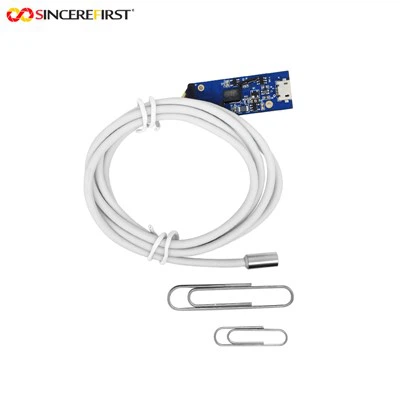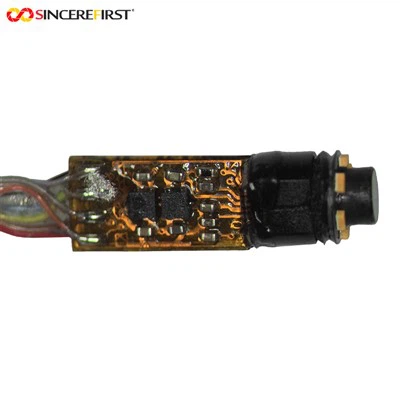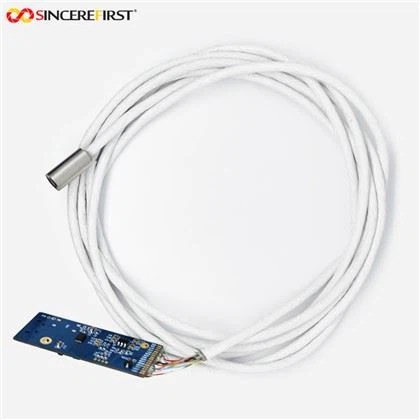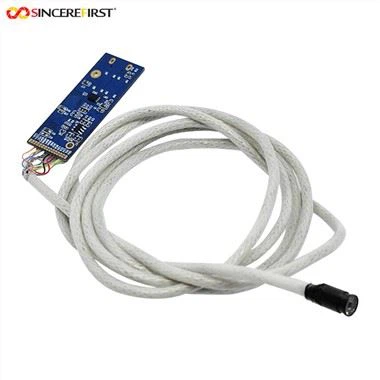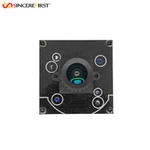
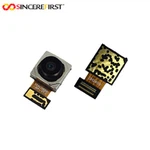
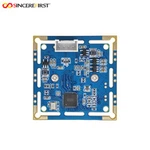
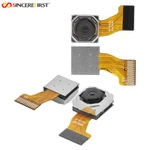
2MP 1080P Endoscope Camera Module
Your Professional Camera Module Manufacturer
Guangzhou Sincere Information Technology Ltd. is a professional and high-tech leading company in integrated optical device manufacturer and optical imaging system solution provider since 1992's foundation. We specialize in the production of various camera modules to help you create highly customized camera module solutions, including 0.3mp to 108mp MIPI camera modules and USB camera modules as well as endoscope camera modules with a diameter of 0.9mm ~8.0mm.
Quality Assurance
All our camera modules must be inspected by professional QC, and the products are inspected in strict accordance with national standards before shipment. And the entire process is strictly implemented in accordance with the ISO9001 quality system.
01
Advanced Equipment
Professional AA (Active Alignment) equipment manufacturing, COB 100 level dust-free workshop.
02
Professional Technical Team
We have been manufacturing camera modules for over 30 years. And we have top professional R&D talents, management talents and sales elites with rich experience.
03
Good Service
We provide 1-year replacement and 10-year warranty services. Additionally, we can provide training on how to use the camera module.
04
Reasonable Price
We offer competitive price to achieve win-win.
05
Wide Range Of Applications
Specializing in machine vision, we provide cutting-edge camera modules that support a wide range of applications in various industries, meeting the needs of everything from agriculture to healthcare, industrial automation to retail, SINCEREFIRST is the trusted partner that fuels these applications with unparalleled machine vision excellence.

What is 2MP 1080P Endoscope Camera Module?
A 2MP 1080P Endoscope Camera Module is a compact, integrated device that combines a 2-megapixel image sensor (delivering 1920×1080 full HD resolution) with optical lenses, miniature illumination systems, signal processing components and data interfaces into a single unit. It enables high-definition, minimally invasive observation of internal or hard-to-reach spaces—such as human tissues, industrial equipment pipelines and electronic components—by capturing clear real-time images with 1080P clarity. This makes it widely applicable in medical diagnostics, industrial inspection and precision engineering fields.
Advantages Of 2MP 1080P Endoscope Camera Module
High-Definition Imaging: 1920×1080 resolution provides sharp details, allowing clear visualization of small structures like tiny lesions in medical exams or micro-defects in industrial parts.
Broad Compatibility: Supports universal output formats such as MJPG and YUV, and interfaces like USB 2.0, easily connecting to monitors, computers or mobile devices for seamless integration.
Compact Design Flexibility: Miniaturized sensors and lens assemblies allow access to narrow spaces like engine cylinders or nasal cavities.
Efficient Data Transmission: Balances image quality and bandwidth demand, enabling stable real-time streaming at 30fps without lag—critical for dynamic scenarios like surgical operations.
Cost-Effective Performance: Offers superior clarity compared to lower-resolution modules while remaining more affordable than 4K alternatives, suitable for budget-conscious applications.
High Color Reproduction Accuracy: Excellent color reproduction capability, which can effectively prevent the occurrence of color distortion, uneven color distribution, and color bias, and truly reproduce the color and details of the tissue.
Types of 2MP 1080P Endoscope Camera Module

Bare 2MP 1080P Endoscope Camera Module
A core imaging module with a housing-free design, specifically for deep customization by equipment manufacturers. While maintaining 1080P high-definition image quality, it offers maximum integration flexibility and can be directly embedded into various medical or industrial endoscopic devices, supporting custom optical parameters and interface protocols.
Steel Shell 2MP 1080P Endoscope Camera Module
A high-reliability module encapsulated in a full metal shell, made of medical-grade stainless steel. Special sealing technology achieves an IP67 protection rating, designed specifically for reusable medical endoscopes requiring strict disinfection.


USB 2MP 1080P Endoscope Camera Module
A plug-and-play solution integrated with a USB 3.0 high-speed transmission interface, supporting data transfer rates up to 5 Gbps. The built-in image processing chip enables real-time color correction and noise reduction, delivering high-quality images without additional processors.
LED 2MP 1080P Endoscope Camera Module
Innovatively designed with a ring LED layout to provide shadowless illumination. An intelligent dimming system automatically adjusts brightness based on object distance, preventing overexposure and ensuring clear, evenly lit images in various cavities.


Wide-Angle 2MP 1080P Endoscope Camera Module
Equipped with an ultra-wide-angle optical system offering a field of view exceeding 120°, along with distortion correction algorithms to eliminate edge deformation. Particularly suitable for large-cavity inspections, enabling coverage of larger areas in a single capture and improving inspection efficiency.
Side View 2MP 1080P Endoscope Camera Module
Designed with a 90° lateral viewing angle and a prism refraction system. Optimized for applications such as pipe wall inspections and lateral lesion observation, it allows clear visualization of lateral structures without changing the probe direction.

Application of 2MP 1080P Endoscope Camera Module

Veterinary Endoscope
It is used for examining the digestive tract or respiratory tract of small animals such as hamsters and birds. This device adopts a 1.2mm ultra-thin bare module design, can integrate a temperature sensor to monitor the internal environment in real time, and is equipped with a flexible probe to reach narrow organs. For example, it can observe gastric ulcers in hamsters without anesthesia, avoiding the damage to fragile organisms caused by traditional surgery.

Welding Inspection Endoscope
It adopts a 90° side-view angle design and is specially used to inspect the quality of pipeline welding joints. It can clearly observe weld integrity, air holes, and other defects without adjusting the probe direction, and is a key tool for high-standard welding inspection of oil pipelines, nuclear power equipment, and other facilities.

Laparoscope
It is a rigid endoscope that enters the abdominal cavity through a small incision. Its high-definition camera module enclosed in a stainless steel shell can withstand high-temperature and high-pressure sterilization, providing surgeons with a clear and stable surgical field of view. It supports minimally invasive surgeries such as cholecystectomy and appendectomy, and is a core device in modern operating rooms.

Industrial UV Leak Detector
It is used to detect Freon leakage in industrial refrigeration systems. Equipped with a 365nm UV LED, this device can accurately locate tiny leak points when used with fluorescent leak detection agents. For example, during the maintenance of automotive air-conditioning compressors, UV light makes the leaking area emit fluorescence, enabling quick judgment of the aging degree of seals.

Aviation Borescope
It is used to detect wear on the tenon grooves of aircraft engine turbine blades. With a ±30° adjustable side-view lens and a sapphire anti-reflection coating, this device can clearly observe cracks or deformations on the side of tenon grooves. For instance, during regular maintenance of civil aviation airliners, it can quickly determine the safety status of core engine components, ensuring flight safety.

Anatomical Endoscope
It is a portable teaching tool that connects directly to projection devices via USB. It can be inserted into the lumen of anatomical specimens to display high-definition anatomical structures in real time, and is widely used in anatomy teaching and surgical operation training courses in medical colleges and universities.
Process of 2MP 1080P Endoscope Camera Module
1. Design and R&D Phase
The process of 2MP 1080P Endoscope Camera Module starts with 1080P-specific demand optimization—the R&D team first targets scenario-based pixel application needs: for medical use, it focuses on 2MP resolution’s ability to capture micro-lesions; for industrial use, it emphasizes 1920×1080 pixel distribution to balance detail and transmission bandwidth. Optical design is tailored to 2MP sensor pixel density: it uses 4-element glass lenses to reduce chromatic aberration, ensuring 1080P images don’t lose edge details. Meanwhile, 1080P dynamic frame rate (30fps) pre-debugging is conducted—by optimizing signal processing algorithms, it avoids motion blur when capturing moving targets. Prototypes are tested with 1080P resolution test cards to verify pixel integrity, and the design is adjusted until micro-details are clearly displayed.
2. Core Component Procurement and Incoming Inspection
Component procurement centers on 2MP 1080P performance matching: 2MP image sensors are selected for low-noise models; lenses adopt high-resolution optical glass with ≥92% transmittance; LEDs are customized for 1080P brightness—medical modules use 500lux warm white LEDs, while industrial UV modules use 365nm LEDs with adjustable intensity. Incoming inspection adds 2MP-specific tests: image sensors are checked for dead pixel rates; lenses are tested for MTF (Modulation Transfer Function) values; only components meeting these 2MP standards enter production.
3. Core Production in Dust-Free Workshop
Core production in Class 10/100 COB dust-free workshops adds 1080P precision control links: During SMT, it uses high-precision placement machines to solder 1080P signal processing chips onto PCBs, and adds impedance matching tests for signal lines—ensuring 1080P data transmission doesn’t suffer from signal attenuation. The COB process uses low-pressure binding technology to attach 2MP sensors to substrates, avoiding pixel damage caused by excessive force. The AA process is upgraded to pixel-level alignment: it uses machine vision to calibrate the lens and 2MP sensor’s pixel positions one by one, ensuring light hits the correct pixel points—solving the problem of local blurriness in 1080P wide-angle images.
4. Module Assembly and Integration
Assembly focuses on 1080P imaging anti-interference design: For medical modules, the stainless steel shell is processed with electromagnetic shielding coatings to prevent external signals from interfering with 1080P data transmission; for industrial UV modules, a 2mm spacing is reserved between UV LEDs and 2MP sensors. Assembly also adds 1080P focal length pre-calibration: before sealing the module, workers use a micro-adjustment tool to set the default focal length, ensuring users don’t need to re-focus frequently. Real-time sampling inspection includes 1080P field-of-view verification—using a standard target to check if the module’s viewing range matches 1080P’s display ratio, avoiding stretched images.
5. Performance and Reliability Testing
Testing adds 1080P scenario-based verification: Performance testing includes dynamic blur test—capturing moving objects at 30fps to ensure 1080P videos have no trailing; low-light 1080P test—in 10lux environments, verifying that the module’s SNR (Signal-to-Noise Ratio) is ≥40dB. Reliability testing for 2MP modules is more stringent: Medical modules undergo 20 cycles of sterilization to test if 2MP sensor pixels remain intact after repeated high temperatures; industrial modules are tested for 1080P performance retention—after 1,000 hours of continuous operation, checking if resolution drops by ≤5%.
6. Sterilization, Packaging, and Pre-Shipment Inspection
Sterilization and packaging target 2MP sensor protection: Medical modules use ethylene oxide sterilization with a lower temperature (≤55℃) to prevent 2MP sensor thermal aging; packaging adds anti-static shielding bags (for all modules) to avoid electrostatic discharge damaging the 2MP sensor’s pixel circuit. Pre-shipment inspection includes 1080P full-image sampling: For each batch, 10% of modules are randomly selected to capture standard test charts, and the images are analyzed via software (e.g., ImageJ) to confirm 1920×1080 pixel completeness and gray scale accuracy. Medical modules also include a 1080P imaging report (with test chart photos) in the delivery documents, allowing customers to directly verify performance. Finally, logistics use shock-absorbing packaging with a vibration frequency test (≤50Hz) to prevent 2MP lens displacement during transportation.
Components of 2MP 1080P Endoscope Camera Module
High-Definition Optical Lens Assembly
Utilizes a combination of 4-6 precision spherical/aspherical glass lenses with anti-reflection coating technology to effectively control spherical/chromatic aberrations and achieve >90% light transmittance, ensuring distortion-free 1080P high-definition image output within an f/2.0-f/2.8 aperture range.
Image Sensor
Equipped with a low-power 2MP CMOS sensor supporting 1920×1080@30fps video output, featuring >72dB high dynamic range and <2.5e- readout noise to guarantee excellent signal-to-noise ratio for imaging in low-light cavity environments
Miniaturized Illumination System
Integrates 4-8 high CRI (Color Rendering Index) LED chips arranged in a circular light source configuration, enabling stepless dimming through drive circuitry. Combined with diffuse optical design to eliminate hotspot effects, it ensures >85% illumination uniformity.
Multi-Function Main Control Circuit
Incorporates a high-performance Image Signal Processor (ISP) supporting real-time white/black balance, gamma correction, and edge enhancement algorithms. Processed video streams are output via USB 2.0 interface.
Environment-Adaptive Structural Components
Medical version employs stainless steel housing with medical-grade silicone sealing rings, capable of withstanding high-temperature and high-pressure sterilization. Industrial version features aluminum alloy housing with fluororubber seals, achieving IP67 protection rating and chemical corrosion resistance.
Intelligent Temperature Control System
Built-in temperature sensor and smart heat dissipation algorithm dynamically adjust LED brightness and sensor frame rates during continuous operation to maintain housing temperature below <41°C or <65°C.
How To Cooperate With Us?
Demand Analysis
Communicate requirements with customers
Design Scheme
Design solutions that meet customer needs
Establish Cooperation
Provide camera module drawings and establish cooperation
Make Samples
Camera module proofing according to the design plan
Camera Module Test
Send out samples, and customers will test
Mass Production
After the samples pass the customer's test, mass production begins
Certifications
RoHS, REACH, ISO, CE, FCC

CE

FCC

ISO 9001

REACH

RoHS
FAQ
Q: What is an endoscope camera used for?
A: Endoscopy is the use of cameras to relay images from inside the body. The device used, known as an endoscope, is a long, thin, and flexible tube that has a camera at one end as well as a light source. An endoscopy can be used to diagnose a wide range of conditions, and the results are interpreted by a specialist.
Q: What is the difference between a borescope and an endoscope camera?
A: Endoscopes are more flexible, they cost more and they are used most commonly in medicine and veterinary care. Borescopes are less flexible, they cost less, they offer a better field of view and they are used much more widely across many different industries.
Q: What is a 2MP 1080P Endoscope Camera Module?
A: It's a compact imaging device that captures full HD (1920×1080) video through a miniature camera, integrated lighting, and processing electronics in a single unit.
Q: Why pick it over a 1MP module?
A: Its 1080P resolution lets you spot tiny details that 1MP modules miss, such as small lesions in medical exams or micro-cracks in industrial parts. It also balances quality and cost, being cheaper than 4K modules and ideal for budget-conscious needs.
Q: What’s the typical lens diameter of such modules?
A: As small as 0.9mm, allowing access to ultra-narrow spaces like tiny pipelines or delicate body cavities.
Q: How to choose the right type like steel shell or USB?
A: Choose based on your use case: Steel shell types are for medical tools that need repeated high-temperature sterilization, such as laparoscopes; USB types are for portable scenarios like anatomical teaching tools, as they plug directly into computers or projectors without extra equipment; bare types are for custom devices like miniature veterinary endoscopes.
Q: Where is it commonly used?
A: Typical applications include medical scenarios like gynecological hysteroscopes for uterine exams and thoracoscopes for lung surgery, industrial scenarios like pipeline robots for underground pipe inspections and automotive maintenance endoscopes for checking engine cylinders, fuel tanks and gearboxes, and ophthalmology scenarios like fundus examination lenses for diabetic retinal complication screening.
Q: What are its main advantages?
A: 1.Full HD clarity at affordable cost
2.Compact size for narrow spaces
3.Works with standard USB interfaces
4.Suitable for medical and industrial use
Q: How to ensure sterility for medical use?
A: The detachable camera unit can be thoroughly disinfected, and some use medical-grade materials to lower infection risks.
Q: Why is the AA Process important?
A: It precisely aligns the lens and sensor via automation, ensuring clear, distortion-free imaging.
Q: Why choose an integrated module over traditional endoscopes?
A: It reduces system complexity, enhances portability, and improves reliability by integrating critical functions into one robust, scalable unit.