


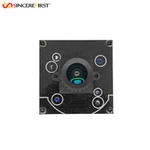
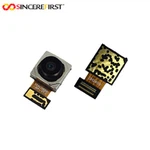
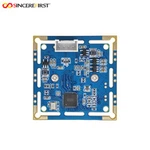
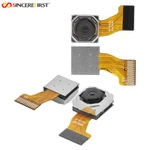
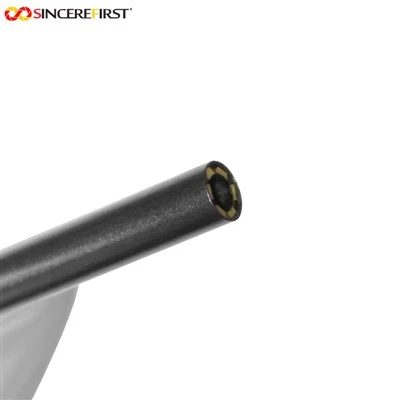
1MP 720P Endoscope Camera Module
Your Professional Camera Module Manufacturer
Guangzhou Sincere Information Technology Ltd. is a professional and high-tech leading company in integrated optical device manufacturer and optical imaging system solution provider since 1992's foundation. We specialize in the production of various camera modules to help you create highly customized camera module solutions, including 0.3mp to 108mp MIPI camera modules and USB camera modules as well as endoscope camera modules with a diameter of 0.9mm ~8.0mm.
Quality Assurance
All our camera modules must be inspected by professional QC, and the products are inspected in strict accordance with national standards before shipment. And the entire process is strictly implemented in accordance with the ISO9001 quality system.
01
Advanced Equipment
Professional AA (Active Alignment) equipment manufacturing, COB 100 level dust-free workshop.
02
Professional Technical Team
We have been manufacturing camera modules for over 30 years. And we have top professional R&D talents, management talents and sales elites with rich experience.
03
Good Service
We provide 1-year replacement and 10-year warranty services. Additionally, we can provide training on how to use the camera module.
04
Reasonable Price
We offer competitive price to achieve win-win.
05


Wide Range Of Applications
Specializing in machine vision, we provide cutting-edge camera modules that support a wide range of applications in various industries, meeting the needs of everything from agriculture to healthcare, industrial automation to retail, SINCEREFIRST is the trusted partner that fuels these applications with unparalleled machine vision excellence.

A 1MP 720P endoscope camera module is a compact imaging device used for capturing real-time high-definition video in narrow, hard-to-reach spaces. The core parameter "1MP" indicates a sensor with approximately 1 million pixels, while "720P" specifies an output resolution of 1280×720 pixels, balancing basic clear imaging requirements with data processing efficiency. It typically incorporates a CMOS sensor, an ISP (Image Signal Processor), adjustable LED illumination, and connects to devices via USB 2.0. With its small size and low cost, it is widely used in basic medical examinations (such as ENT and dentistry), industrial inspections (e.g., pipeline and mechanical defect detection), and consumer-grade home maintenance. However, limited by its specifications, its low-light sensitivity, dynamic range, and transmission frame rate (often 30 FPS under USB 2.0 bandwidth constraints) have certain limitations, making it more suitable for applications where ultimate image quality is not critical, but cost-effectiveness and portability are prioritized.
Advantages Of 1MP 720P Endoscope Camera Module
Lower Cost: Material costs are lower, and the production process is more mature, significantly reducing the overall procurement and application costs. It is more suitable for budget-constrained scenarios, eliminating the need to pay extra for redundant pixel performance.
Smaller Size: The sensor and lens structure are more streamlined, enabling a smaller overall size. It can be more easily inserted into narrow spaces such as pipelines, mechanical gaps, and human body cavities, meeting the core requirement of "accessibility" for endoscopes.
Lower Power Consumption: The 1MP 720P module generates a smaller volume of data and has lower requirements for processor performance, making it easier to integrate into portable or power-sensitive devices. The design complexity, power consumption, and heat generation of the entire system are better controlled.
Stronger Compatibility and Usability: It supports the universal UVC (USB Video Class) protocol, which is directly compatible with mainstream systems such as Windows, Linux, macOS, and Android. No additional drivers need to be installed, enabling plug-and-play functionality. This lowers the usage threshold for non-professional users (such as home users and frontline technicians) and adapts to devices in more scenarios.
Smaller Data Volume: When recording videos or capturing still images, the file size generated by the 720P resolution is much smaller than that of high-resolution files. This directly saves device storage space and makes file transfer and sharing much faster, which is particularly beneficial for scenarios requiring long-term recording or frequent data export.
Meets Basic Needs: For most industrial endoscopes and basic medical observation applications, the clarity of 720P is sufficient to accurately determine whether "defects exist" or "conditions are normal". In such cases, choosing a higher-pixel module may result in overkill in performance, leading to paying extra for unnecessary specifications.
Types of 1MP 720P Endoscope Camera Module

Separated 1MP 720P Endoscope Camera Module
This is a design where the camera probe is physically separated from the main control circuit board. Its core features include exceptional integration flexibility and a miniaturized probe size, allowing the ultra-small probe to be embedded in devices like medical endoscopes that have strict requirements for front-end size. However, it requires users to resolve connection and assembly issues on their own.
Integrated 1MP 720P Endoscope Camera Module
This is an all-in-one design that encapsulates the camera sensor and processing circuit in a complete housing. Its core features are robustness, durability, and plug-and-play functionality—users do not need to conduct secondary development, which significantly reduces usability barriers. The trade-off is that the probe size is generally larger than that of separated modules.


USB 1MP 720P Endoscope Camera Module
It specifically refers to modules using USB (especially the UVC protocol) as the video output interface. Its core features include broad compatibility and user-friendliness: it can be directly connected to smart devices such as computers and mobile phones to achieve plug-and-play functionality and lossless digital signal transmission, and it also facilitates software control and data recording. It is the most mainstream type in modern applications.
AV Interface 1MP 720P Endoscope Camera Module
It specifically refers to modules that output analog composite video signals. Its core feature is dedicated compatibility with legacy devices, such as CRT monitors, in-vehicle screens, or certain specialized industrial equipment, enabling image display without a digital system. Its drawbacks include average image quality, susceptibility to interference, and the need for an additional capture card when connecting to a computer.


Wide-Angle 1MP 720P Endoscope Camera Module
It refers to modules equipped with a lens featuring an ultra-wide field of view (typically >120°). Its core features are a broad field of view, which allows it to capture a larger scene in one go, significantly improving inspection efficiency and reducing blind spots. It is highly suitable for inspecting pipe inner walls or open cavities, though noticeable distortion may occur at the image edges.
Side View 1MP 720P Endoscope Camera Module
It refers to modules where the optical axis of the camera lens forms a 90° (or specific angle) with the module tube body. Its core feature is the ability to directly observe the side walls directly ahead—there is no need to bend the probe to inspect pipe welds, side openings, or avoid front obstacles. It is a specialized solution for addressing inspection challenges in specific directions.

Application of 1MP 720P Endoscope Camera Module

Pipeline Endoscope
Utilizes the endoscope's extension cable and waterproof performance to access the interior of pipes that are not directly visible to the human eye. It enables one-time observation of a larger area of the pipe wall, allowing for quick identification of blockages, cracks, joint detachment, or internal corrosion. It is widely used for the inspection and maintenance of municipal drainage pipes, building ventilation ducts, and industrial oil pipelines.

Otoscope
Allows doctors to clearly observe the condition of a patient's ear canal and tympanic membrane, such as the presence of inflammation, fluid accumulation, perforation, or cerumen impaction, enabling painless and accurate diagnosis.

Veterinary Endoscope
Used to examine the oral cavity, ear canal, or body surface of small and medium-sized pets. It helps veterinarians perform internal diagnostics without invasive surgery, such as retrieving swallowed foreign objects or checking dental health.

Engine Inspection
The endoscope is inserted through the spark plug hole or a dedicated access point to inspect the cylinder wall for wear, carbon buildup, scratches, and the condition of the piston top. This application requires the probe to withstand high temperatures and often utilizes a side-view lens to observe vertical cylinder walls.

Ecological Observation
The endoscope is carefully inserted into sensitive habitats such as nests, burrows, or tree crevices. Its discreet nature allows researchers to observe the natural behaviors of wildlife (e.g., birds, insects, small mammals), including nesting and breeding activities, without causing disturbance.

Gap Inspection
Used to examine narrow spaces such as behind furniture, inside walls, ceiling voids, or door and window gaps. Users can explore these hard-to-reach areas to locate lost items, check for termite traces, assess structural integrity, or troubleshoot wiring issues.
Process of 1MP 720P Endoscope Camera Module
1. Pre-Production: Design & Material Preparation
Confirm requirements: Define parameters like 1MP sensor type (e.g., OV9734), 720P output, interface (USB/AV), and environmental resistance (IP67 waterproof).
Design: Complete optical (lens selection), structural (miniature probe) and circuit (PCB + ISP) design.
Material inspection: Test core components (sensor, lens, PCB) for defects (e.g., dead pixels, lens scratches) to ensure compliance.
2. Core Production: Manufacturing in Dust-Free Workshop
All steps are done in Class 10/100 COB dust-free workshops (≤10/100 particles ≥0.5μm per cubic foot) to avoid contamination.
SMT process: Print solder paste on PCBs, mount 1MP sensors, ISP chips, LEDs via high-precision machines, then reflow solder and inspect defects with AOI.
COB packaging: Fix the 1MP sensor on the PCB, connect it to the board with gold wires, and coat with epoxy resin for protection.
AA process: Align the lens with the sensor using an AA machine (adjust position until 720P image is clear), then fix the lens with UV adhesive.
3. Testing & Calibration
Optical test: Verify 720P resolution, lens FOV, and color accuracy.
Functional test: Check interface compatibility (e.g., USB UVC protocol) and LED dimming.
Reliability test: Test waterproof (IP67), high/low temperature (-20~80℃) and vibration resistance.
4. Module Assembly
Assemble based on type: For integrated modules, encapsulate core parts (sensor + lens + ISP) into one housing; for separated modules, connect the probe to the control board via cables.
5. Final Inspection & Packaging
Visual inspection: Check appearance (no scratches) and confirm accessories (cables, manuals).
Packaging: Put modules in anti-static bags, then into shockproof cartons with labels (model, batch).
6. Shipment
Conduct OQC (randomly test 10% of each batch).
Arrange logistics, and provide test reports/certifications (CE, FCC) for delivery.
Components of 1MP 720P Endoscope Camera Module
Imaging Core Components
- 1MP CMOS Image Sensor: The "imaging eye" of the module, typically using models like OV9734 (1/9-inch) or NT99141. Converts optical signals (light from the observed object) into digital signals, directly determining 1MP resolution and 720P (1280×720) video output. Its small size enables the module’s miniature probe design.
- Matching Lens Group: Determines the field of view (FOV) and imaging range. For standard modules, it’s a 4-6mm fixed-focus lens; for wide-angle modules, it’s a ultra-wide lens ; for side-view modules, it’s a side-facing lens (optical axis perpendicular to the probe). Made of glass/plastic to ensure 720P image sharpness and low distortion.
Signal Processing Components
- ISP (Image Signal Processor) Chip: The "image optimizer," e.g., HI3516EV200. Processes digital signals from the CMOS sensor—adjusts auto-exposure (AE), auto-white balance (AWB), and reduces noise—ensuring 720P video has no color cast, no overexposure, and clear details in low light.
- PCB Circuit Board: The "signal transmission hub," a miniaturized rigid/flexible board (size ≈20mm×15mm). Welds the CMOS sensor, ISP chip, resistors, and capacitors; transmits data between components and connects to external interfaces (USB/AV). Its compact design fits the endoscope’s narrow probe.
Supplementary Lighting Components
- SMD LED Beads: 2-4 ultra-small LED beads (size 0201/0402) mounted around the lens. Provide adjustable brightness (10%-100%) to illuminate dark spaces (e.g., pipe interiors, ear canals), ensuring 720P images are visible.
- LED Driver Circuit: Controls LED brightness via the ISP chip. Prevents overcurrent damage to LEDs and ensures stable light output (no flickering), avoiding interference with 720P video quality.
Connection & Interface Components
- Data/Power Interface: Matches the module type—USB interface (Type-A/C/Micro-USB) for USB modules (transmits 720P digital signals and supplies power); AV interface (RCA lotus head) for AV modules (transmits analog video signals).
- Connection Cables (for Separated Modules): Ultra-thin shielded cables (diameter 0.5-1mm) connect the miniature probe (with sensor/lens) to the main control board. Ensures signal transmission stability while allowing the probe to enter narrow spaces (e.g., engine spark plug holes)
Structural & Protective Components
- Probe Housing/Shell: The outer shell of the imaging end, made of PC/ABS plastic or stainless steel. For waterproof modules (IP67), it’s sealed to prevent water/dust ingress; its diameter is 3.9-8mm (adapted to endoscope "narrow space entry" needs).
- Lens Holder & Fixing Adhesives: A plastic/metal holder fixes the lens above the CMOS sensor; UV-curable adhesive (transparent, high-temperature resistant) locks the lens in place (after AA alignment) to avoid displacement affecting 720P focus.
Auxiliary Components
- Antistatic Elements: ESD protection diodes on the PCB prevent electrostatic damage to the CMOS sensor/ISP chip during production/use.
- Connector Terminals: Miniature terminals (e.g., Micro-USB connectors) on the module for plugging into external devices (computers, monitors), ensuring stable connection and easy operation.
How To Cooperate With Us?
Demand Analysis
Communicate requirements with customers
Design Scheme
Design solutions that meet customer needs
Establish Cooperation
Provide camera module drawings and establish cooperation
Make Samples
Camera module proofing according to the design plan
Camera Module Test
Send out samples, and customers will test
Mass Production
After the samples pass the customer's test, mass production begins
Certifications
RoHS, REACH, ISO, CE, FCC

CE

FCC

ISO 9001

REACH

RoHS
FAQ
Q: What is an endoscope camera used for?
A: Endoscopy is the use of cameras to relay images from inside the body. The device used, known as an endoscope, is a long, thin, and flexible tube that has a camera at one end as well as a light source. An endoscopy can be used to diagnose a wide range of conditions, and the results are interpreted by a specialist.
Q: What is the difference between a borescope and an endoscope camera?
A: Endoscopes are more flexible, they cost more and they are used most commonly in medicine and veterinary care. Borescopes are less flexible, they cost less, they offer a better field of view and they are used much more widely across many different industries.
Q: What is a 1MP 720P endoscope camera module?
A: It is a compact imaging device for real-time HD video capture in narrow/hard-to-reach spaces. "1MP" and "720P" output resolution. It usually includes a CMOS sensor, ISP chip, adjustable LED lights, and connects via USB. It’s cost-effective and small, suitable for basic medical checks, industrial inspections, and home maintenance.
Q: What’s the difference between separated and integrated types?
A: Separated type: Probe (sensor+lens) is physically separated from the main control board (connected by cables). It has an ultra-small probe (good for tiny spaces like ear canals) but requires user assembly.
Integrated type: All components (sensor, circuit, lens) are in one housing. It’s durable, plug-and-play, but the probe is larger than the separated type.
Q: What’s the typical lens diameter of such modules?
A: As small as 0.9mm, allowing access to ultra-narrow spaces like tiny pipelines or delicate body cavities.
Q: How to choose the right type like steel shell or USB?
A: Choose based on your use case: Steel shell types are for medical tools that need repeated high-temperature sterilization, such as laparoscopes; USB types are for portable scenarios like anatomical teaching tools, as they plug directly into computers or projectors without extra equipment; bare types are for custom devices like miniature veterinary endoscopes.
Q: Compared with higher-definition 1080P or 4K modules, what are its main advantages?
A: Its main advantage lies in high cost performance. It outperforms high-pixel modules in terms of cost, power consumption, data volume and system integration difficulty. Moreover, the clarity of 720P can already meet the needs of most industrial inspections and basic medical observations, avoiding paying for "excessive performance".
Q: Why is the USB interface module popular?
A: It uses USB (Type-A/C/Micro-USB) for data transmission and power, supports the UVC protocol—no extra drivers needed, plug-and-play with computers/phones. It enables stable digital signal transmission and easy software control, making it the most mainstream type.
Q: How to ensure sterility for medical use?
A: The detachable camera unit can be thoroughly disinfected, and some use medical-grade materials to lower infection risks.
Q: Why is the AA Process important?
A: It precisely aligns the lens and sensor via automation, ensuring clear, distortion-free imaging.
Q: Why choose an integrated module over traditional endoscopes?
A: It reduces system complexity, enhances portability, and improves reliability by integrating critical functions into one robust, scalable unit.