


In the rapidly evolving world of industrial automation and embedded systems, the terms "camera module" and "machine vision camera" are often used interchangeably. However, for an engineer or a procurement manager, understanding the nuances between these two is critical for project success.
Choosing the wrong imaging component can lead to integration headaches, system instability, or unnecessary costs. As a Camera Module manufacturer with over 30 years of experience, SincereFirst has seen how the lines between these technologies blur. In this article, we will break down the technical differences and help you decide which is right for your application.
1. Defining the Core Concepts
To understand the difference, we must first look at their physical and functional DNA.
What is a Camera Module?
A camera module is the "raw" imaging component. It typically consists of a sensor, a lens (or lens mount), and supporting circuitry integrated onto a small Printed Circuit Board (PCB) or a Flexible Printed Circuit (FPC camera Module).

It is designed to be embedded into a larger device. Think of it as the "eye" without the "body." Because they lack a protective outer shell and a standard interface housing, they are incredibly compact and cost-effective for mass production.
What is a Machine Vision Camera?
A machine vision camera is a complete, standalone imaging system. It includes the camera module inside but adds a rugged housing, advanced onboard processing (like an FPGA), and standardized industrial interfaces (such as GigE Vision or USB3 Vision). These are designed for harsh industrial environments where reliability and "plug-and-play" functionality are paramount.
2. Key Differences: A Technical Deep Dive
While both capture images, their design philosophies are worlds apart.
Form Factor and Integration
The most immediate difference is size. An FPC camera Module is often no larger than a postage stamp and extremely thin, making it ideal for space-constrained devices like handheld medical scanners or slim-line door entry systems.
In contrast, machine vision cameras are bulky. They are designed to be bolted onto robotic arms or assembly lines. If your project requires a custom fit, a Machine Vision camera module provides the industrial performance of a vision camera but in the compact form factor of a module.
Interface and Connectivity
Machine vision cameras usually rely on standardized industrial protocols to ensure data integrity over long distances. However, for embedded AI and IoT devices, the usb camera Module has become the gold standard.
- USB Camera Modules offer "UVC" (USB Video Class) compatibility, meaning they work instantly with Windows, Linux, or Android without custom drivers.
- FPC Camera Modules often use MIPI CSI-2 interfaces, which connect directly to the processor for ultra-low latency, though they require more complex driver development.
Image Quality and Resolution
In the past, camera modules were seen as "lower quality" compared to industrial cameras. That is no longer true. With the advent of the 4K Camera Module, embedded systems can now capture 8-megapixel (and up to 200MP) images with extreme clarity.
The difference lies in consistency. Machine vision cameras are calibrated for high-speed "Global Shutter" performance to capture moving objects without distortion. High-end camera modules now also offer Global Shutter sensors, bridging the gap between consumer-grade and industrial-grade imaging.
3. The Manufacturing Factor: Why the Process Matters
The performance of a Machine Vision camera module depends heavily on how it is built. This is where many low-cost suppliers fail.
In machine vision, the sensor must be perfectly aligned with the lens. Even a micron of tilt can cause one side of the image to be blurry. SincereFirst utilizes the Active Alignment (AA) Manufacturing Process. Unlike traditional manual assembly, AA uses automated robots to adjust the lens in real-time while the sensor is active, ensuring the sharpest focus across the entire image plane.
This level of precision is mandatory for a 4K Camera Module, where the high pixel density makes even the slightest alignment error visible.
4. Durability and Longevity
In the European and North American industrial markets, "Product Lifecycle" is a major concern.
- Machine Vision Cameras are built to last, but they are expensive.
- Standard Camera Modules (like those in smartphones) change every 12–18 months.
For industrial clients, SincereFirst bridges this gap by offering a 10-year warranty and long-term availability. This ensures that if you design a medical device today using a specific usb camera Module, you can still buy the exact same part a decade from now.
5. Summary: Which Should You Choose?
| Feature | Camera Module (FPC/USB) | Machine Vision Camera |
| Size | Ultra-compact & Lightweight | Bulky & Rugged |
| Cost | Cost-effective for scale | High per-unit cost |
| Integration | Embedded (requires engineering) | Standalone (Plug-and-play) |
| Customization | High (Lens, FPC, Sensor) | Low (Fixed housing) |
| Best For | IoT, Medical, Robotics, OEM | Factory automation, QC lines |
6. Conclusion: The "Embedded Vision" Revolution
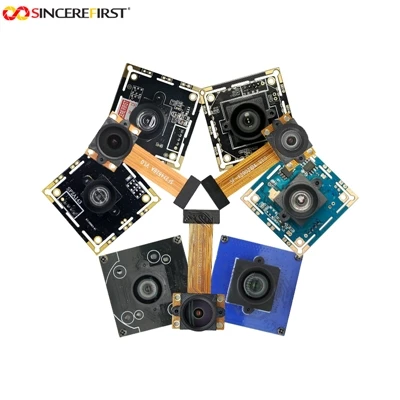
The boundary between these two technologies is disappearing. We are entering the era of Embedded Vision, where the power of machine vision is being packed into the small, efficient form factor of a camera module.
Whether you need a flexible FPC camera Module for a wearable device or a high-performance 4K Camera Module for automated optical inspection (AOI), the key is to partner with a Camera Module manufacturer that understands both the physics of light and the rigors of industrial application.
Why Choose SincereFirst?
With 30 years of expertise and Class 10/100 dust-free COB workshops, SincereFirst provides the "Intelligent Eyes" for the world's most demanding brands. We don't just sell components; we provide overall optical imaging solutions tailored to your specific (Western) market requirements.


