


For engineers, procurement managers, and tech innovators, choosing the right camera module is the foundation of a successful product. In the imaging world, the debate often centers on two primary sensor technologies: CMOS and CCD.
While CCD (Charge-Coupled Device) was once the gold standard for high-end imaging, the cmos camera module has evolved to become the dominant choice for nearly every modern application, from industrial automation to medical devices. Understanding the technical differences between these two is critical for selecting a solution that balances performance, cost, and longevity.
1. The Fundamental Technical Difference
At their core, both CCD and cmos sensor technologies do the same thing: they convert light (photons) into electrical signals (electrons). However, the way they process those electrons is fundamentally different.
CCD Sensors: The Serial Approach
In a CCD sensor, the pixels act as "buckets" that hold a charge. After exposure, the charge from every pixel is shifted across the chip and read at one corner of the array. An external analog-to-digital converter (ADC) then turns that charge into a digital value.
- The Result: High uniformity and low noise, but at the cost of speed and high power consumption.
CMOS Sensors: The Parallel Approach
In a cmos sensor, each pixel has its own transistor that converts the charge into voltage right then and there. This data is then output digitally.
- The Result: Massive speed advantages and significantly lower power requirements. Because each pixel handles its own conversion, the camera module can process data in parallel, which is essential for high-resolution video.
2. Power Consumption and Integration
One of the most practical reasons the industry has shifted toward the cmos camera module is power efficiency.
- CCD: Requires multiple high-voltage power supplies to "clock" the charge across the chip. This generates heat and drains batteries quickly.
- CMOS: Uses standard, low-voltage silicon processes. This allows manufacturers to integrate the sensor, the timing logic, and the image processing onto a single piece of silicon.
For 24/7 industrial monitoring or battery-powered IoT devices, CMOS is the clear winner. It allows for a more compact camera module design because it doesn't require the bulky peripheral circuitry that CCD demands.
3. Speed and Resolution: 1080P vs. 4K
As the demand for high-definition data grows, the "speed" of the sensor becomes a bottleneck.
The 1080P Camera Module
For standard surveillance, video conferencing, or basic machine vision, a 1080P camera module (Full HD) is often the sweet spot. At this resolution, CMOS sensors can easily achieve high frame rates (60fps or more) with minimal lag. While CCD could achieve 1080P, doing so at high speeds caused the sensor to overheat.
The 4K Camera Module
When we move to high-precision fields like medical surgery or micro-defect inspection, a 4K camera module is required. Capturing 8 million pixels 30 to 60 times per second requires the massive parallel processing power of a cmos sensor. Modern CMOS technology has surpassed CCD in its ability to handle these massive data loads without sacrificing image clarity or introducing "smear" (a common CCD artifact where bright lights create vertical streaks).
4. Image Quality and Noise: Closing the Gap
Historically, CCD was preferred because it had better "dynamic range" (the ability to see details in both very dark and very bright areas) and lower noise.
However, over the last decade, CMOS technology has undergone a "quantum leap." Advanced manufacturing processes, such as Back-Side Illumination (BSI), have allowed CMOS sensors to capture more light than ever before. Today, a professional-grade cmos camera module can match or exceed CCD performance in almost every environment, including low-light conditions.
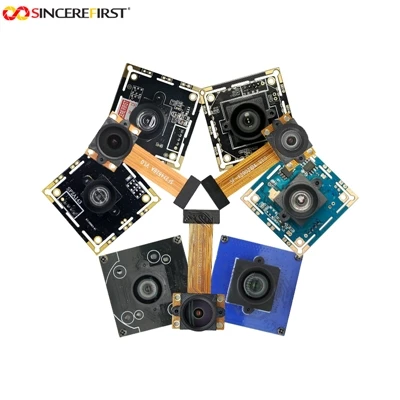
5. Why Manufacturing Quality Matters (The SincereFirst Edge)
A common misconception is that all CMOS modules are created equal. Because CMOS sensors are easier to mass-produce, the market is flooded with low-quality options. For industrial and professional use, the difference lies in the manufacturing process.
The Problem with "Passive" Assembly
In many standard modules, the lens is simply dropped into a housing over the cmos sensor. If the lens is tilted by even a fraction of a degree, one side of your image will be sharp while the other is blurry. This is unacceptable for a 4K camera module where every pixel counts.
Active Alignment (AA) Technology
At SincereFirst, we utilize Active Alignment (AA). During the assembly of the camera module, the sensor is powered on and focused in real-time. A robotic system adjusts the lens in 6 degrees of freedom (X, Y, Z, and tilts) until the optical axis is perfectly centered. This ensures that the high resolution of your 1080P camera module or 4K module is consistent across the entire frame.
Durability and Cleanliness
Dust is the enemy of imaging. SincereFirst operates Class 10/100 dust-free COB (Chip on Board) automatic production workshops. This ensures that when you receive a module, the cmos sensor is pristine. Combined with our 10-year warranty, this provides a level of reliability that "consumer-grade" suppliers cannot offer.
Summary: Which Should You Choose?
| Feature | CCD | CMOS |
| Power Consumption | High | Low |
| Data Speed | Slow | Very Fast (Supports 4K/8K) |
| Integration | Low (Requires many chips) | High (System-on-Chip) |
| Cost | Expensive | Cost-Effective |
| Smear/Blooming | Susceptible | Immune |
For 99% of modern applications-including automotive, medical imaging, and industrial AI-the cmos camera module is the superior choice. It offers the speed required for 4K camera module performance and the power efficiency needed for long-term deployment.
Conclusion
The shift from CCD to CMOS wasn't just about cost; it was about capability. As we move toward "Adding Intelligent Eyes for All Things," the flexibility and power of the cmos sensor remain unmatched.
SincereFirst brings 30 years of optical expertise to this field. We don't just provide a component; we provide a high-tech imaging solution backed by advanced AA manufacturing and a commitment to quality that spans a decade.
Are you looking for a specific customization for your next project? Whether you need a high-speed 1080P camera module or a specialized 4K solution, SincereFirst is your first choice.


