


High-Precision PS5268L Sensor Camera Module Empowers Evidence-Based Breathalyzer
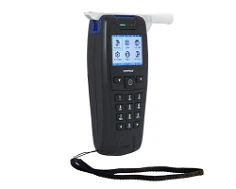
In the domains of traffic safety and fair law enforcement, the integrity, non-repudiation, and traceability of evidence are core requirements. The NAM19 professional breath alcohol tester for evidence purposes not only requires precise measurement of blood alcohol concentration but, more critically, must enforce a tamper-proof binding of measurement results to a specific driver's identity. This establishes a closed-loop evidence chain where "the driver who breathes in bears responsibility." The core of this functionality lies in whether its identity verification module can rapidly, accurately, and reliably complete driver facial recognition and evidence capture within complex vehicle environments, varying lighting conditions, and strict time windows. Our high-precision USB camera module, optimized for industrial recognition applications, precisely meets the stringent requirements of the NAM19 system for identity verification and evidence collection. Featuring stable high-definition imaging, wide-angle coverage, a compact and rugged industrial design, and flexible secondary development interfaces, it serves as the critical visual component for building a trustworthy law enforcement evidence system.
I. Large Aperture HD Imaging & Wide-Angle Coverage: Ensuring Precise Facial Capture in Complex Vehicle Environments
Alcohol testing often occurs at night, roadside, or inside vehicles, presenting challenges like insufficient lighting, backlighting (e.g., oncoming headlights), and overhead lighting. Simultaneously, while the driver's position is relatively fixed, their posture may vary slightly, requiring the camera to stably capture clear facial images within a defined angle and distance range.
This module employs an F2.0 large-aperture lens, significantly increasing light transmission. This enables it to capture bright, low-noise images even in low-illuminance nighttime conditions or dimly lit vehicle interiors, providing high-quality input for facial recognition algorithms. Combined with its 1/2.6-inch-class sensor, it ensures sufficient pixel detail. More importantly, the lens boasts a wide 90° diagonal field of view (approximately 82° horizontal and 51° vertical). This expansive view effortlessly covers the space from the driver's seat to the testing device. Even if the driver leans forward slightly or turns their head, their entire face remains fully within the frame. This eliminates recognition failures caused by narrow angles, significantly boosting the system's first-time recognition success rate and adaptability in real-world law enforcement scenarios.
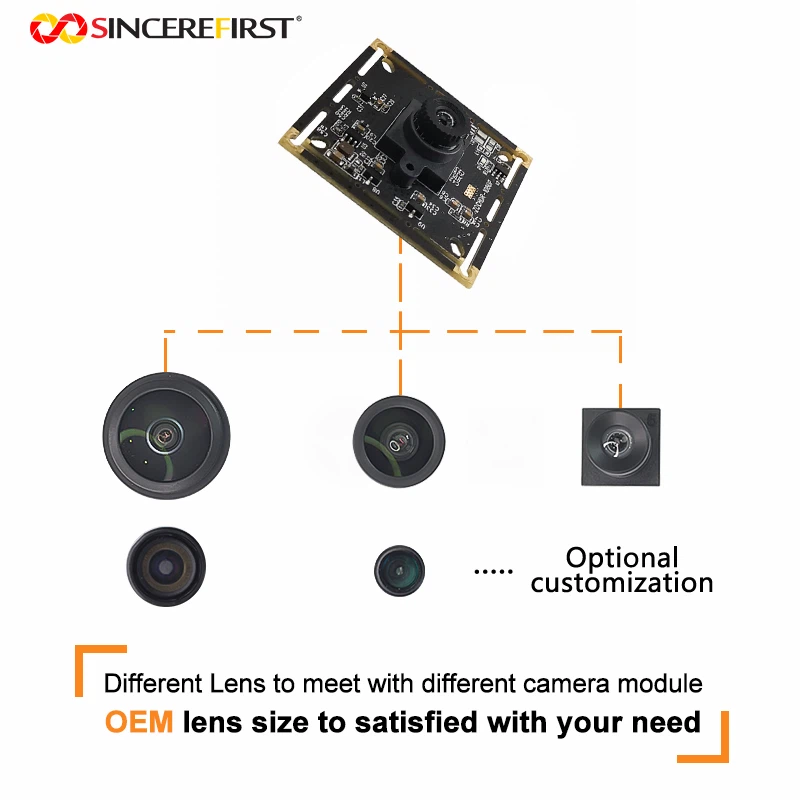
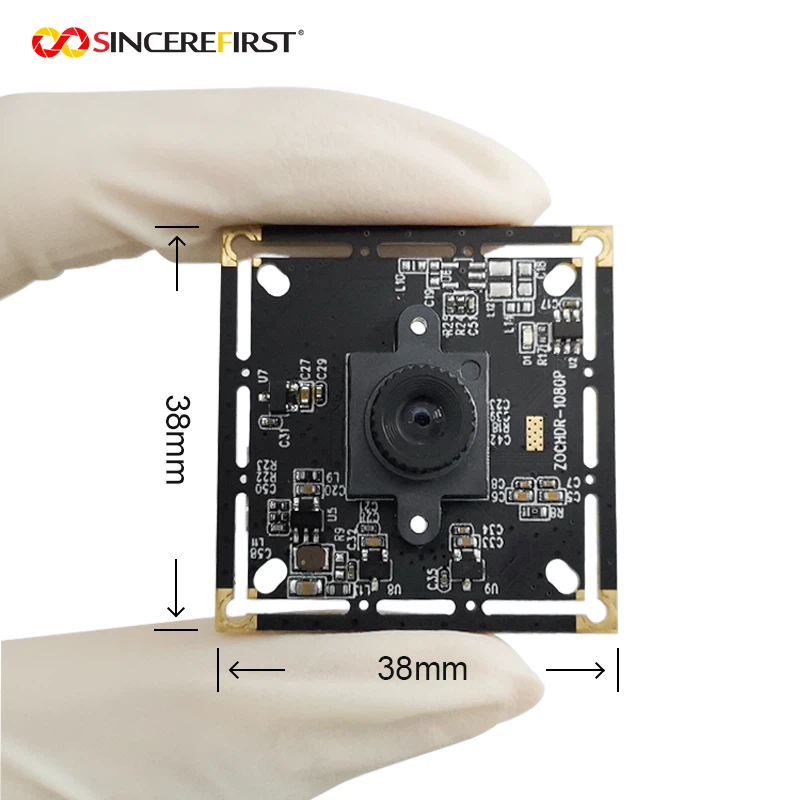
II. Compact Industrial Design and Wide Temperature Stability: Adapting to Demanding Vehicle Installation and Operating Environments
As an enforcement device, the breathalyzer must be carried in or permanently installed within police vehicles, enduring continuous vibration, significant temperature fluctuations, and potential physical impacts. Its internal components require compact dimensions for seamless integration while delivering exceptional physical reliability and environmental resilience.
This module adopts a standard 38mm x 38mm square industrial package, offering compact dimensions and a structured form factor that facilitates optimized space allocation and secure mounting within the tester. Its design complies with industrial product standards, delivering excellent vibration and shock resistance. With a wide operating temperature range, it adapts to extreme in-vehicle environments from frigid winters to scorching summers, ensuring stable and reliable imaging performance and electrical connections under harsh conditions from -20°C to 70°C. This rugged durability guarantees the NAM19 tester performs 24/7 missions in both high-latitude regions and tropical climates, with identity verification functions never "going offline."
III. Flexible Dual Data Interfaces and Real-Time Response Capabilities: Enabling Deep Integration with Host Systems and Evidence Binding
The system implements a precise collaborative workflow: The moment the driver exhales, the alcohol testing host triggers a signal. The camera must instantly capture the current frame, rapidly compare it against the locally stored facial database, and then transmit both the comparison result (driver ID or "unknown identity" alert) and the captured JPEG evidence photo back to the host. This process ultimately generates a comprehensive evidence report containing time, location, BAC value, driver facial photo, and ID information.
This module provides a highly flexible interaction architecture. Its core utilizes a standard USB interface for connecting to a PC for initial personnel database entry, management, and complex algorithm debugging. Simultaneously, the module reserves a universal asynchronous serial communication interface (such as UART) for real-time, low-latency command and data exchange with the alcohol tester's main control board. When the host sends a "breath trigger" signal via UART, the module responds within milliseconds to capture high-definition frames. Utilizing its built-in or associated processing unit, it rapidly completes facial feature extraction and comparison. Structured results (ID) and binary image data streams are then efficiently transmitted back through the same UART channel. This dual-channel design-USB for management and UART for real-time triggering and communication-perfectly aligns with the core operational logic of offline efficiency and real-time evidence generation for law enforcement devices.


IV. Local Processing and Evidence Integrity Assurance: Establishing a Technical Foundation for Non-repudiation
The authority of law enforcement demands evidence with inherent tamper-proofing. Instantly binding facial recognition with breath actions at the device level is crucial for preventing post-event disputes.
This module's solution enables facial feature extraction, storage, and comparison to be completed on the device itself (or a tightly coupled processing unit). This means the driver's facial feature template can be stored encrypted locally on the device. The comparison process does not rely on network connectivity, protecting privacy while ensuring functionality in offline environments. More importantly, the single-frame image captured upon receiving the breath trigger signal is synchronously packaged with the alcohol concentration value and timestamp. This data is then linked through methods like encrypted hashing. This hardware-implemented "face-breath action-time" triad evidence fixation mechanism ensures the integrity and uniqueness of the evidence chain from its technical source, granting the final report strong legal probative value.
In summary:
This high-precision industrial vision module delivers a critical identity verification and visual evidence collection solution for the NAM19 evidence-grade professional breathalyzer. It achieves this through: - High-definition wide-field imaging adapted to complex in-vehicle lighting conditions - Compact, rugged industrial design meeting stringent operational requirements - Flexible dual-interface architecture enabling precise coordination - On-device processing capabilities ensuring evidence integrity Its deep integration elevates alcohol detection from a simple numerical measurement to a comprehensive law enforcement evidence system featuring mandatory identity binding, process visualization, and tamper-proof evidence. This significantly enhances enforcement efficiency and credibility, establishing a robust technological defense for road traffic safety.


