The H.264 camera module has become a staple in the world of imaging technology, known for its efficient video compression and high - quality output. As a leading H.264 camera module supplier, we often receive inquiries about the potential use of our products in 3D imaging. In this blog post, we will explore whether the H.264 camera module can indeed be used for 3D imaging, analyzing the technology behind it, the challenges, and the possible applications.
Understanding H.264 Camera Modules
H.264, also known as MPEG - 4 AVC (Advanced Video Coding), is a widely used video compression standard. It offers a high compression ratio, which means it can reduce the size of video files without significant loss of quality. H.264 camera modules are designed to capture video and encode it using the H.264 standard. These modules are popular in various applications, such as surveillance systems, video conferencing, and industrial inspection, due to their ability to transmit and store video efficiently.
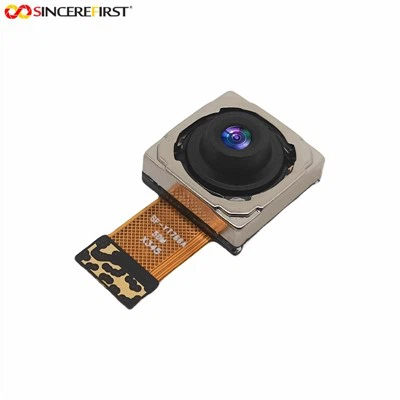
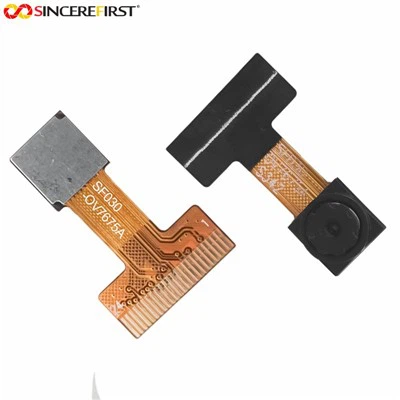
Our company offers a range of H.264 camera modules, including the Low Cost 4MP CMOS Infrared Image Sensor USB Inspection Camera Module For Android, 8mp External Trigger Webcam Android Waterproof Inspection USB2.0 Camera Module, and OV5640 5MP Fixed Focus USB Camera Module. These modules are equipped with high - quality sensors and advanced encoding chips, ensuring excellent video quality and performance.
The Basics of 3D Imaging
3D imaging aims to create a three - dimensional representation of an object or a scene. There are several methods to achieve 3D imaging, including stereo vision, time - of - flight (ToF), and structured light.
Stereo vision is similar to how human eyes perceive depth. It uses two or more cameras placed at different positions to capture slightly different views of the same scene. By comparing these views, the depth information can be calculated. Time - of - flight cameras measure the time it takes for light to travel from the camera to the object and back, which can be used to determine the distance between the camera and the object. Structured light systems project a known pattern of light onto the object, and the deformation of the pattern is analyzed to calculate the depth.
Can H.264 Camera Modules be Used for 3D Imaging?
The short answer is yes, but with some limitations. H.264 camera modules are primarily designed for 2D video capture and encoding. However, they can be adapted for 3D imaging in certain scenarios.
Stereo Vision
In a stereo vision setup, multiple H.264 camera modules can be used to capture different views of a scene. Each camera module captures a 2D video stream, and these streams can be processed to extract depth information. For example, in a surveillance system, two H.264 camera modules can be installed at different angles to monitor a large area. By analyzing the differences between the two video streams, it is possible to detect the movement of objects in 3D space and estimate their distances from the cameras.
However, there are some challenges. First, the synchronization of multiple camera modules is crucial. If the cameras do not capture frames at the same time, the depth calculation will be inaccurate. Second, the processing power required to analyze the video streams and calculate depth information is significant. Specialized algorithms and hardware are often needed to perform real - time 3D reconstruction.


Time - of - Flight and Structured Light
H.264 camera modules are not directly suitable for time - of - flight or structured light 3D imaging methods. These methods require specialized sensors and hardware to measure the time of light travel or project and analyze structured light patterns. However, H.264 camera modules can be used in combination with ToF or structured light sensors. For example, an H.264 camera module can be used to capture the color information of a scene, while a ToF sensor provides the depth information. The two data sources can be combined to create a full - color 3D image.
Applications of H.264 Camera Modules in 3D Imaging
Industrial Inspection
In industrial inspection, 3D imaging can be used to detect defects, measure dimensions, and ensure the quality of products. H.264 camera modules can be used in stereo vision setups to inspect large - scale objects or production lines. For example, in the automotive industry, multiple H.264 camera modules can be installed around a car body to detect surface defects and measure the dimensions of various components.
Virtual Reality (VR) and Augmented Reality (AR)
VR and AR applications require high - quality 3D imaging to create immersive experiences. H.264 camera modules can be used to capture real - world scenes, which can be integrated into VR or AR environments. For example, in an AR application for interior design, an H.264 camera module can be used to capture the layout of a room, and 3D models of furniture can be overlaid on the captured image.
Robotics
Robots need to perceive their environment in 3D to navigate and interact with objects. H.264 camera modules can be used in stereo vision systems on robots to provide depth information. This allows robots to avoid obstacles, pick up objects, and perform complex tasks in unstructured environments.
Advantages and Disadvantages
Advantages
- Cost - effective: H.264 camera modules are relatively inexpensive compared to specialized 3D imaging sensors. This makes them a cost - effective option for applications where budget is a concern.
- Wide availability: There is a large market for H.264 camera modules, and they are easy to obtain. This makes it convenient for developers to integrate them into their projects.
- Video Compression: The H.264 encoding standard allows for efficient storage and transmission of video data. In a 3D imaging system that also requires video recording or streaming, H.264 camera modules can reduce the bandwidth and storage requirements.
Disadvantages
- Limited Depth Accuracy: Compared to specialized 3D imaging sensors, the depth accuracy of H.264 camera modules in stereo vision setups is relatively low. This may not be suitable for applications that require high - precision 3D measurements.
- Complex Processing: As mentioned earlier, the processing required to extract depth information from multiple H.264 video streams is complex. This may require additional hardware and software resources, which can increase the cost and complexity of the system.
Conclusion
In conclusion, H.264 camera modules can be used for 3D imaging, especially in stereo vision setups. They offer a cost - effective and widely available solution for certain 3D imaging applications. However, they have limitations in terms of depth accuracy and processing requirements.
If you are interested in using H.264 camera modules for your 3D imaging projects, we are here to help. As a professional H.264 camera module supplier, we can provide you with high - quality products and technical support. Whether you need a single camera module or a complete 3D imaging system, we can work with you to find the best solution for your needs. Contact us today to start a discussion about your requirements and explore the possibilities of using our H.264 camera modules in your 3D imaging applications.
References
- "Digital Image Processing" by Rafael C. Gonzalez and Richard E. Woods
- "3D Computer Vision: A Mathematical Introduction" by Richard Hartley and Andrew Zisserman
- Technical documents of H.264 video compression standard