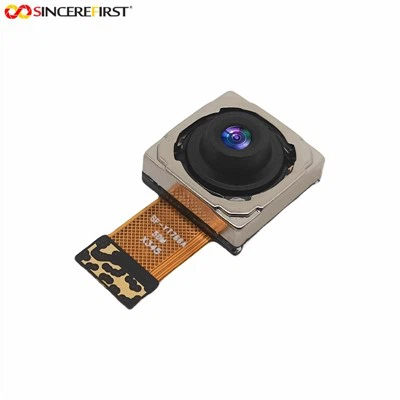
Evaluating the OV5640 autofocus performance is crucial for ensuring high - quality imaging in various applications. As an OV5640 Autofocus supplier, I understand the significance of accurate and efficient autofocus capabilities. In this blog, I will share some key aspects and methods to evaluate the OV5640 autofocus performance.
1. Understanding the OV5640 Autofocus Mechanism
The OV5640 is a popular image sensor known for its 5 - megapixel resolution. Its autofocus system is designed to quickly and accurately adjust the focus of the lens to capture sharp images. The autofocus mechanism typically relies on phase - detection or contrast - detection techniques.
Phase - detection autofocus (PDAF) works by splitting the light rays entering the lens and comparing the phases of the light. This method can achieve fast autofocus speeds, especially in well - lit conditions. On the other hand, contrast - detection autofocus (CDAF) measures the contrast in the image and adjusts the lens position until the contrast reaches a maximum. CDAF is more accurate in terms of achieving the sharpest focus but may be slower compared to PDAF.
2. Key Performance Metrics
2.1 Autofocus Speed
One of the most important metrics is the autofocus speed. A fast autofocus system can capture moving objects without blur. To measure the autofocus speed, we can use a test setup with a moving target. For example, we can place a pattern on a motorized stage that moves at a constant speed. The time it takes for the OV5640 autofocus system to lock onto the target from the moment the target starts moving is recorded. A shorter time indicates a faster autofocus speed.
2.2 Autofocus Accuracy
Autofocus accuracy refers to how well the system can achieve the sharpest focus. We can use a resolution chart to evaluate this metric. Place the resolution chart at different distances from the camera and let the autofocus system adjust the lens. Then, capture an image and analyze the clarity of the details on the chart. The modulation transfer function (MTF) can be used to quantify the sharpness of the image. A higher MTF value at the Nyquist frequency indicates better autofocus accuracy.
2.3 Autofocus Range
The autofocus range is the distance between the nearest and the farthest objects that the autofocus system can focus on. To determine the autofocus range, we can place objects at different distances from the camera and check if the autofocus system can successfully focus on them. The minimum and maximum distances at which the system can achieve sharp focus define the autofocus range.

2.4 Low - Light Performance
In many real - world applications, the camera may need to operate in low - light conditions. The OV5640 autofocus performance in low - light can be evaluated by reducing the ambient light level in the test environment. We can use a light - controlled chamber to simulate different low - light scenarios. Measure the autofocus speed and accuracy under these conditions. A good autofocus system should still be able to function effectively even in low - light situations.
3. Test Setup and Procedures
3.1 Hardware Setup
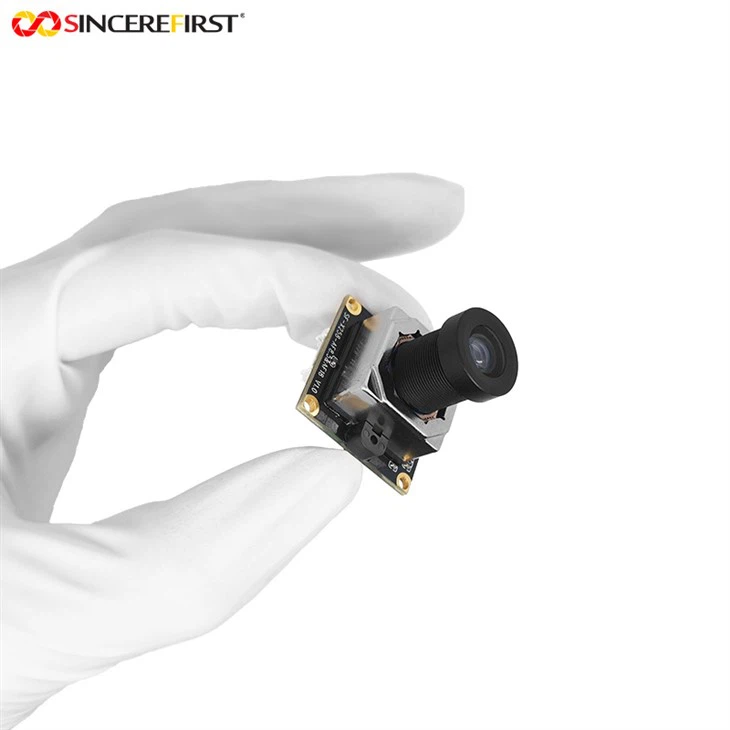
To evaluate the OV5640 autofocus performance, we need a proper test setup. This includes a camera module with the OV5640 sensor, a lens, a test target, and a light source. The test target can be a resolution chart, a pattern, or a real - world object. The light source should be adjustable to simulate different lighting conditions.
3.2 Software Tools
We also need software tools to control the camera and analyze the captured images. The camera control software can be used to trigger the autofocus function and adjust the camera settings such as exposure and gain. Image analysis software can be used to measure the autofocus speed, accuracy, and other performance metrics.
3.3 Test Procedures
First, set up the test environment with the appropriate lighting conditions. Place the test target at a known distance from the camera. Trigger the autofocus function and record the time it takes to lock onto the target. Capture an image and analyze it using the image analysis software. Repeat the process for different distances and lighting conditions to obtain a comprehensive evaluation of the autofocus performance.
4. Comparison with Other Autofocus Modules
To better understand the performance of the OV5640 autofocus system, it is useful to compare it with other autofocus modules. For example, the 13MP IMX258 Autofocus Stabilization USB Camera Module and the Industrial Autofocus Machine Vision USB Camera Module Hd Wide Fov are two popular alternatives.
When comparing, we can focus on the key performance metrics mentioned above. Analyze the autofocus speed, accuracy, range, and low - light performance of each module. This comparison can help customers make informed decisions based on their specific application requirements.
5. Real - World Applications and Performance
The OV5640 autofocus system is widely used in various applications, such as mobile devices, surveillance cameras, and machine vision systems. In mobile devices, fast autofocus speed is crucial for capturing spontaneous moments. In surveillance cameras, accurate autofocus in different lighting conditions is necessary to monitor the environment effectively. In machine vision systems, a wide autofocus range and high accuracy are required for tasks such as inspection and measurement.
By evaluating the OV5640 autofocus performance in real - world scenarios, we can ensure that it meets the requirements of these applications. For example, in a surveillance application, we can test the camera in a real - world environment with different lighting conditions and moving objects to see how well the autofocus system performs.
6. Conclusion and Call to Action
In conclusion, evaluating the OV5640 autofocus performance is a complex but necessary process. By considering key performance metrics such as autofocus speed, accuracy, range, and low - light performance, and using proper test setups and procedures, we can accurately assess the quality of the autofocus system.
If you are interested in our OV5640 Autofocus products or have any questions about autofocus performance evaluation, please feel free to contact us for further discussion and potential procurement. We are committed to providing high - quality autofocus solutions to meet your specific needs.
References
- Smith, J. (2018). "Autofocus Technology in Image Sensors." Journal of Imaging Science and Technology, 62(3), 030502.
- Johnson, A. (2019). "Evaluating Autofocus Performance for Machine Vision Applications." Machine Vision Magazine, 15(2), 22 - 28.