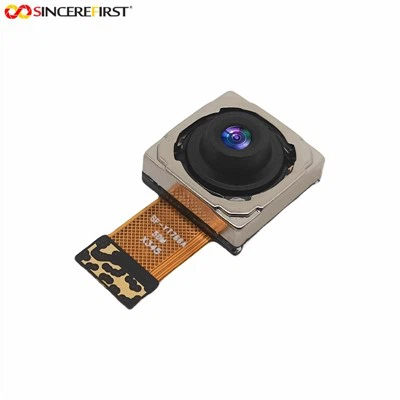
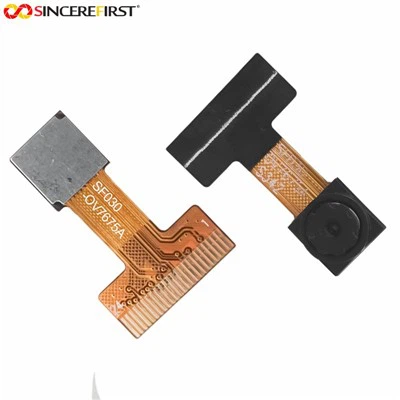
Hey there! As a supplier of CMOS camera modules, I've been in the thick of testing these little wonders for ages. And let me tell you, it's a wild ride filled with technical challenges and cool discoveries. In this blog, I'm gonna share with you how to test the performance of a CMOS camera module.
First off, let's talk about why testing is so crucial. A CMOS camera module is used in a ton of applications, from smartphones and tablets to security cameras and drones. If the module doesn't perform well, it can lead to all sorts of issues, like blurry images, poor color accuracy, or low light sensitivity. So, proper testing ensures that the module meets the quality standards and can deliver the best possible performance.
Image Quality Testing
One of the most important aspects of testing a CMOS camera module is checking the image quality. There are several parameters you need to look at here.
Resolution
Resolution is all about how sharp and detailed the images are. To test the resolution, we usually use a resolution chart. This chart has a series of black and white lines that get closer and closer together. The camera module is pointed at the chart, and then we analyze the resulting image to see how well it can distinguish between the lines. A higher resolution means the camera can capture more details. For example, our OV5647 CMOS Camera Module is known for its great resolution, which makes it perfect for applications where clear images are a must.
Color Accuracy
Color accuracy is another key factor. Nobody wants to see images with colors that are way off. To test color accuracy, we use a color chart. This chart has a set of standard colors, and we compare the colors in the image captured by the camera module to these standards. Any significant differences can indicate problems with the camera's color processing. We always make sure our modules, like the OV Camera Module, have excellent color accuracy so that the images look as natural as possible.
Contrast
Contrast refers to the difference between the lightest and darkest parts of an image. A good contrast ratio makes the image more vivid and easier to look at. We test contrast by taking an image of a scene with a wide range of light and dark areas. Then we measure the difference in brightness between the lightest and darkest pixels. Our PI Camera Module is designed to have a high contrast ratio, which results in stunning images.
Sensitivity Testing
Sensitivity is how well the camera module can capture images in low light conditions. This is especially important for security cameras and night photography.
ISO Sensitivity
ISO sensitivity is a measure of how sensitive the camera's sensor is to light. A higher ISO value means the camera can capture images in darker conditions. To test ISO sensitivity, we place the camera module in a dark room and gradually increase the ISO setting while taking images of a test pattern. We then evaluate the quality of the images to see how high the ISO can go before the image becomes too noisy. Our modules are designed to have a high ISO sensitivity, so they can perform well even in low light.
Dynamic Range
Dynamic range is the range of light intensities that the camera can capture. A wide dynamic range means the camera can handle both bright and dark areas in an image without losing details. We test dynamic range by taking an image of a scene with a large difference in brightness, such as a sunset. Then we analyze the image to see how well it captures both the bright sky and the dark foreground.
Functionality Testing
Apart from image quality and sensitivity, we also need to test the functionality of the camera module.
Focusing
Proper focusing is essential for getting sharp images. We test the focusing mechanism by taking images of objects at different distances. We check if the camera can automatically adjust the focus to keep the objects in sharp focus. Our modules are equipped with advanced autofocus systems to ensure accurate focusing.
Shutter Speed
Shutter speed determines how long the camera's sensor is exposed to light. A fast shutter speed is useful for capturing moving objects, while a slow shutter speed can be used for long exposure photography. We test the shutter speed by taking images of a moving object at different shutter speed settings. We make sure the camera can accurately control the shutter speed to capture the desired effect.
Other Tests
There are also some other tests that we conduct to ensure the overall performance of the camera module.


Temperature Testing
The performance of a camera module can be affected by temperature. We test the module at different temperatures to see how it performs. This helps us ensure that the module can work reliably in different environments.
Vibration Testing
In some applications, the camera module may be subject to vibrations. We test the module by subjecting it to vibrations and checking if it can still capture stable images. This is important for applications like drones and automotive cameras.
Conclusion
Testing the performance of a CMOS camera module is a comprehensive process that involves checking various parameters. By conducting these tests, we can ensure that our camera modules meet the highest quality standards and can deliver excellent performance in a wide range of applications.
If you're in the market for a high-quality CMOS camera module, we'd love to have a chat with you. Whether you need a module for a smartphone, a security system, or any other application, we've got the right solution for you. Just reach out to us, and we can start discussing your specific requirements.
References
- "Digital Image Processing" by Rafael C. Gonzalez and Richard E. Woods
- "CMOS Image Sensors: From Phototransduction to Image Presentation" by Eric R. Fossum