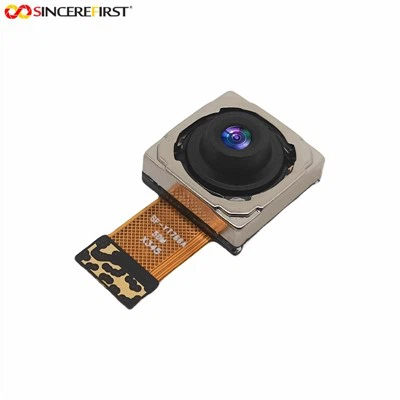
Hey there! As a supplier of CMOS camera modules, I often get asked about the bit depth of these nifty little devices. So, let's dive right in and break down what bit depth is all about in the context of CMOS camera modules.
First off, what exactly is bit depth? In simple terms, bit depth refers to the number of bits used to represent the color of each pixel in an image. Think of it like the amount of detail and color information that can be captured by the camera. The higher the bit depth, the more colors and shades the camera can distinguish, resulting in a more accurate and vibrant image.
Let's take a closer look at how bit depth works. A bit is the smallest unit of digital information, and it can have two values: 0 or 1. When we talk about bit depth, we're talking about how many of these bits are used to represent the color of each pixel. For example, an 8-bit image uses 8 bits per pixel, which means it can represent 2^8 (or 256) different colors. On the other hand, a 16-bit image uses 16 bits per pixel, allowing it to represent 2^16 (or 65,536) different colors.
So, why does bit depth matter? Well, it all comes down to image quality. A higher bit depth means more color information, which translates to smoother gradients, more accurate colors, and less visible banding or posterization in the image. This is especially important in applications where color accuracy is crucial, such as photography, videography, and scientific imaging.
Now, let's talk about how bit depth affects the performance of CMOS camera modules. CMOS (Complementary Metal-Oxide-Semiconductor) is a type of image sensor technology that is widely used in digital cameras and other imaging devices. CMOS sensors are known for their low power consumption, high speed, and excellent image quality.
The bit depth of a CMOS camera module determines the dynamic range of the sensor, which is the range of light intensities that the sensor can capture. A higher bit depth allows the sensor to capture a wider range of light intensities, resulting in better image quality in both bright and dark areas of the image. This is particularly important in high-contrast scenes, where a low bit depth can lead to loss of detail in the shadows or highlights.
In addition to dynamic range, bit depth also affects the signal-to-noise ratio (SNR) of the camera module. The SNR is a measure of the ratio of the signal (the image) to the noise (random variations in the image). A higher bit depth means more bits are available to represent the signal, which can help reduce the impact of noise on the image. This results in a cleaner, more detailed image with less visible noise.
Now that we understand what bit depth is and why it matters, let's take a look at some of the different bit depths available in CMOS camera modules. The most common bit depths for CMOS camera modules are 8-bit, 10-bit, 12-bit, and 16-bit.


- 8-bit: This is the most basic bit depth and is commonly used in consumer-grade cameras and mobile devices. While 8-bit images can still look good, they have a limited range of colors and may exhibit visible banding or posterization in high-contrast scenes.
- 10-bit: This bit depth offers a significant improvement over 8-bit, with a wider range of colors and better dynamic range. 10-bit images are commonly used in professional photography and videography.
- 12-bit: This bit depth provides even more color information and dynamic range than 10-bit, making it ideal for applications where color accuracy and detail are crucial, such as scientific imaging and industrial inspection.
- 16-bit: This is the highest bit depth available in CMOS camera modules and offers the most accurate and detailed color representation. 16-bit images are commonly used in high-end photography and scientific research.
As a supplier of CMOS camera modules, we offer a wide range of products with different bit depths to meet the needs of our customers. For example, our OV5647 CMOS Camera Module is a popular choice for consumer-grade applications, offering 8-bit bit depth and excellent image quality at an affordable price. On the other hand, our Sony IMX989 Large Cmos Inage Sensor Compact Camera Module is a high-end product that offers 16-bit bit depth and exceptional color accuracy and detail, making it ideal for professional photography and videography.
We also offer a 108mp Camera Module that combines high resolution with 10-bit bit depth, providing excellent image quality and detail for a wide range of applications.
In conclusion, bit depth is an important factor to consider when choosing a CMOS camera module. A higher bit depth offers better image quality, more accurate colors, and a wider dynamic range, but it also comes at a higher cost. As a supplier of CMOS camera modules, we can help you choose the right product for your needs based on your budget and application requirements.
If you're interested in learning more about our CMOS camera modules or have any questions about bit depth or other technical specifications, please don't hesitate to contact us. We're here to help you find the perfect solution for your imaging needs.
References
- "Digital Image Processing," by Rafael C. Gonzalez and Richard E. Woods.
- "CMOS Image Sensors: From Phototransduction to Image Presentation," by Eric R. Fossum.