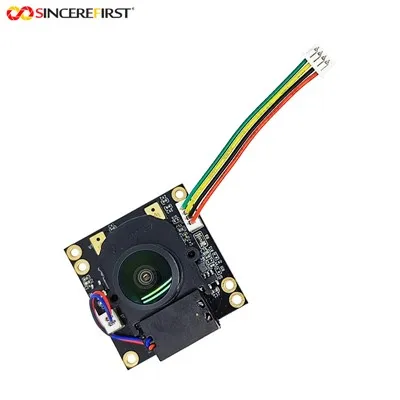
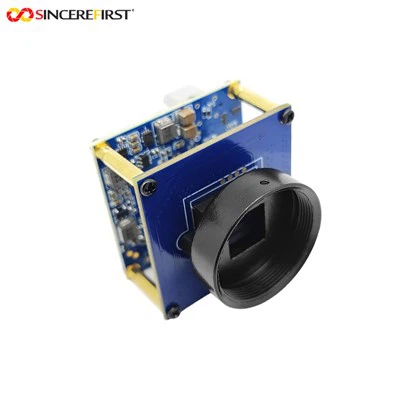
When it comes to the world of camera modules, the 2MP camera module holds a significant place. It's widely used in various applications, from security cameras to industrial inspection systems. One crucial factor that often gets overlooked but plays a vital role in the quality of the images taken by a 2MP camera module is the noise level.
Understanding Image Noise
Image noise can be defined as random variations of brightness or color information in images. It's often considered as an unwanted by - product of the image - capturing process. In the context of a 2MP camera module, noise can degrade the overall quality of the captured images, making them less sharp, and reducing the clarity of details.
There are several types of noise that can affect the images taken by a 2MP camera module. The most common ones are thermal noise, shot noise, and read noise.
Thermal noise is generated by the heat produced within the camera sensor. As the temperature of the sensor increases, the electrons in the semiconductor material start to move randomly. This random movement creates electrical signals that are interpreted as noise in the final image. In a 2MP camera module, the smaller the pixel size, the more susceptible it is to thermal noise. This is because smaller pixels have less area to collect light, and the thermal energy can have a relatively larger impact on the signal.
Shot noise, on the other hand, is related to the random nature of light. Light is composed of photons, and the number of photons hitting a pixel during an exposure is a random variable. This randomness in the photon count leads to fluctuations in the signal, which is manifested as noise in the image. The amount of shot noise is proportional to the square root of the signal level. In low - light conditions, the signal level is low, and shot noise becomes more prominent in the images taken by a 2MP camera module.
Read noise is introduced during the process of reading the electrical signals from the sensor pixels and converting them into digital values. The analog - to - digital converters (ADCs) and other electronic circuits in the camera module can add noise to the signal. The design and quality of these components play a crucial role in determining the level of read noise.
Measuring the Noise Level of 2MP Camera Module Images
To measure the noise level of the images taken by a 2MP camera module, several methods can be employed. One common approach is to calculate the signal - to - noise ratio (SNR). The SNR is defined as the ratio of the signal power to the noise power. A higher SNR indicates a lower noise level and better image quality.
To calculate the SNR, a uniform gray - scale image is typically captured. The mean pixel value of the image represents the signal, and the standard deviation of the pixel values represents the noise. The SNR can then be calculated using the formula: SNR = 20 * log10 (mean / standard deviation).
Another method is to use the peak signal - to - noise ratio (PSNR). The PSNR takes into account the maximum possible signal value (usually 255 for an 8 - bit image). It is defined as PSNR = 20 * log10 (255 / RMSE), where RMSE is the root - mean - square error between the original and the noisy image.
Factors Affecting the Noise Level in 2MP Camera Modules
The noise level in the images taken by a 2MP camera module is influenced by several factors. One of the most significant factors is the sensor technology. Different sensor manufacturers use different materials and manufacturing processes, which can result in different noise characteristics. For example, CMOS sensors are known for their lower power consumption but may have higher noise levels compared to CCD sensors. However, advancements in CMOS technology have significantly reduced the noise gap between the two types of sensors.
The pixel size of the 2MP camera module also plays a crucial role. Larger pixels can collect more light, which means a higher signal level and a better SNR. In a 2MP camera module, if the pixel size is too small, the signal will be weaker, and the noise will be relatively more prominent.
The exposure time is another factor. Longer exposure times can increase the amount of light collected by the pixels, which can improve the signal level. However, longer exposure times also increase the risk of thermal noise, as the sensor has more time to heat up.
The operating temperature of the camera module is also important. As mentioned earlier, thermal noise increases with temperature. Therefore, in high - temperature environments, the noise level in the images taken by a 2MP camera module is likely to be higher.
Our 2MP Camera Module Offerings
As a 2MP camera module supplier, we understand the importance of low noise levels in image quality. We offer a range of 2MP camera modules that are designed to minimize noise and deliver high - quality images.
Our Compact IR - CUT Switcher 1080P Sony IMX662 CMOS Sensor USB Camera Module is equipped with a high - performance Sony IMX662 CMOS sensor. This sensor is known for its low noise characteristics and excellent light - sensitivity. The IR - CUT switcher helps to improve the color accuracy of the images, especially in different lighting conditions.
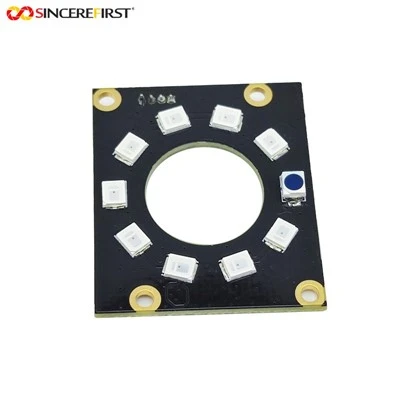
The IR Cut Swicth Light Board USB Camera Sensor Module is another great option. It features an IR cut switch that can effectively filter out infrared light, reducing the interference and noise in the images. The light board design ensures a more uniform illumination, which further improves the image quality.
Our OV9281 Camera Module is based on the OV9281 sensor. This sensor offers a good balance between cost and performance, with relatively low noise levels. It's suitable for a wide range of applications, from consumer electronics to industrial monitoring.
Importance of Low Noise in Different Applications
In security applications, low noise levels are crucial for clear identification of objects and people. A 2MP camera module with high noise levels may produce blurry or grainy images, making it difficult to recognize faces or license plates. In industrial inspection, accurate detection of defects requires high - quality images. Noise can mask small defects or create false positives, leading to inaccurate inspection results.

In consumer electronics, such as smartphones and tablets, users expect high - quality images. A 2MP camera module with low noise levels can provide sharper and clearer images, enhancing the user experience.
Contact Us for Procurement and Consultation
If you're in the market for high - quality 2MP camera modules with low noise levels, we're here to help. Our team of experts can provide you with detailed information about our products and help you choose the right camera module for your specific application. Whether you're a large - scale manufacturer or a small - business owner, we can offer you competitive prices and excellent customer service.
Don't hesitate to contact us to start a procurement discussion. We look forward to working with you and helping you achieve your imaging goals.
References
- "Digital Image Processing" by Rafael C. Gonzalez and Richard E. Woods
- "Image Sensors and Signal Processing for Digital Still Cameras" by Tsutomu Nakamura