


In the fields of consumer electronics, security monitoring, and smart devices, "OEM Camera" and "ODM Camera" are frequently used terms. Many people easily confuse the two, but they represent significant differences in cooperation models, intellectual property ownership, and product forms. To understand the supply chain logic of camera products, start with the basic definitions and differences between OEM and ODM, then focus on the specific application scenarios of camera products-this will help clarify the context clearly.
I. Foundational Understanding: Definitions of OEM and ODM

1. OEM (Original Equipment Manufacturer)
OEM refers to the "contract manufacturing" model. The brand owner completes the entire product design, including core technology, appearance structure, and functional parameters. The manufacturer only produces and manufactures according to the drawings and process standards provided by the brand owner, without participating in any design links.
Simply put, an OEM manufacturer is a "pure producer." For example, a mobile phone brand designs a camera module, specifying the sensor model, lens parameters, and interface specifications, and entrusts a manufacturer to only assemble and test it-ultimately producing a product that fully meets the brand owner's preset design.
2. ODM (Original Design Manufacturer)
ODM refers to the "private labeling" model. The manufacturer not only undertakes production but also completes the full design and R&D of the product in advance, including hardware solutions, software adaptation, and appearance molds, forming a standardized "off-the-shelf product." The brand owner does not need to invest in R&D; they only need to select a product that meets their needs and affix their own brand logo to launch it on the market.
Vividly speaking, an ODM manufacturer is an "integrated design + production service provider." For example, a security brand wanting to launch a surveillance camera can directly purchase an off-the-shelf camera solution from an ODM factory without independent R&D, and quickly launch it on the market by only modifying the brand logo and part of the software interface.

II. Core Differences Between OEM and ODM
OEM vs. ODM
| Comparison Dimension |
OEM
|
ODM
|
| Design Ownership | Fully controlled by the brand owner, which provides a complete design solution | Led by the manufacturer, which provides an off-the-shelf design solution |
| Intellectual Property (IP) Ownership | Product design and technical patents belong to the brand owner | Core design and technical patents belong to the manufacturer |
| Customization Level | High-degree customization to fully match the brand owner's needs | Limited customization, mostly partial modifications (e.g., logo, appearance details) |
| Cost & Cycle | High R&D costs and long production cycles | No R&D costs and short time-to-market |
| Core Value | The brand owner independently controls product differentiation | The manufacturer provides mature solutions to lower the brand owner's entry threshold |
The core difference can be summarized as "who designs" and "who owns the IP": OEM is "brand-owned design, manufacturer-owned production," while ODM is "manufacturer-owned design, brand-owned labeling."
III. Focus on Camera Products: Specific Differences Between OEM and ODM Cameras
When applied to the camera sector, these differences become more concrete:
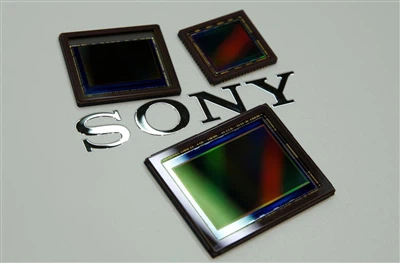
OEM Camera (Contract Manufacturing)
Scenario: The partnership between Apple and Foxconn is a classic OEM model. Apple independently designs iPhone camera specifications (sensor model, optical structure, algorithm framework), hands blueprints and requirements to Foxconn, which manufactures to exact standards. The result can only be called an "iPhone camera."
Characteristic: The brand has absolute control over core technologies like resolution, aperture, stabilization, and image processing algorithms. The manufacturer is purely a "production workshop."
Standards for Quality OEM Manufacturing: Not all contract manufacturers can handle high-end camera production. Truly excellent OEM partners require Class 10/100 COB dust-free workshops and advanced AA (Active Alignment) processes to ensure stable, reliable imaging quality in every camera module. These sophisticated manufacturing capabilities are the critical bridge between a brand's design blueprint and a premium final product.
ODM Camera (White-Label Manufacturing)
Scenario: A security brand wants to quickly launch a surveillance camera. They approach a professional camera module manufacturer who showcases several ready-made solutions (e.g., 2MP night vision version, 4MP AI recognition version). The brand selects one, customizes the housing and branding software, and brings it to market.
Characteristic: The module manufacturer provides the foundational design, driver solutions, and even some AI algorithms, allowing the brand to focus on branding and distribution channels.
IV. Selection Suggestions: How to Choose Between OEM and ODM Cameras?
Choose OEM Camera if you:
✅ Own core technology-seeking to implement proprietary optical designs or self-developed algorithms
✅ Pursue brand uniqueness-your product requires clear differentiation and competitive advantages
✅ Control the supply chain-need to specify critical components like sensors and lenses
✅ Think long-term-willing to invest R&D time and costs to build technical barriers
Trade-offs: Longer R&D cycles, larger capital investment, and need for specialized hardware and algorithm teams.
Partner Evaluation for OEM: When choosing the OEM path, manufacturer selection criteria go far beyond "can produce." Over 30 years of experience in optical devices signifies deep technical accumulation and process maturity. A track record of long-term cooperation with Fortune 500 companies serves as powerful proof of quality stability and delivery reliability. These hard capabilities directly determine whether your designs can be perfectly realized.
Choose ODM Camera if you:
✅ Need rapid market entry-aiming to launch products within 3-6 months
✅ Have limited resources-lack camera R&D teams but excel at branding and marketing
✅ Control costs-want to avoid high R&D and tooling expenses
✅ Require flexibility-can quickly switch module solutions based on market feedback
Risks: Severe product homogenization, IP not owned by you, difficulty building technical moats.
Risk Mitigation for ODM: While ODM emphasizes speed, after-sales service is equally crucial. Manufacturers offering a 1-year replacement service and 10-year warranty not only demonstrate confidence in product lifespan but also provide solid support for your long-term market operations, preventing customer churn due to quality issues.
Conclusion: No Absolute Superiority, Only Fitness for Purpose
In the camera sector-a technology-intensive field-OEM and ODM are not opposites but two rational models of industry division. Tech giants like Huawei and Apple choose OEM because they have strong R&D capabilities and need full control over imaging systems. Meanwhile, numerous small-to-medium brands and emerging IoT companies favor ODM because it allows them to enter markets nimbly and respond quickly.
The core criterion lies in technical ownership and brand positioning. Want to create a unique imaging experience? Go OEM. Looking to quickly launch cost-effective smart devices? ODM is the pragmatic choice. Understanding these differences not only helps you make better purchasing decisions but also reveals the operational logic of the entire electronics manufacturing industry-in this era, being able to "manufacture" doesn't guarantee victory. Knowing how to "select" and "sell" can be equally successful.
SincereFirst: A Trusted Partner Deeply Rooted in Optics
When discussing practitioners who seamlessly blend OEM and ODM advantages, SincereFirst stands out as an industry benchmark worth noting. With over 30 years of experience in optical devices and camera modules, this company possesses the OEM mass-production strength to serve Fortune 500 clients-its Class 10/100 COB dust-free workshops and AA active alignment processes ensure top-tier manufacturing precision-while offering flexible ODM solutions supported by comprehensive customization from design to after-sales. What truly distinguishes SincereFirst is its commitment to a "1-year replacement, 10-year warranty" , transforming product confidence into long-term customer assurance. Whether you're a technology-driven innovator or a market-oriented brand, such a partner with both depth and breadth can provide the critical competitive edge in the imaging era.


