


Quick Answer
When a distant target appears too small in the image, increasing resolution alone may not solve the problem.
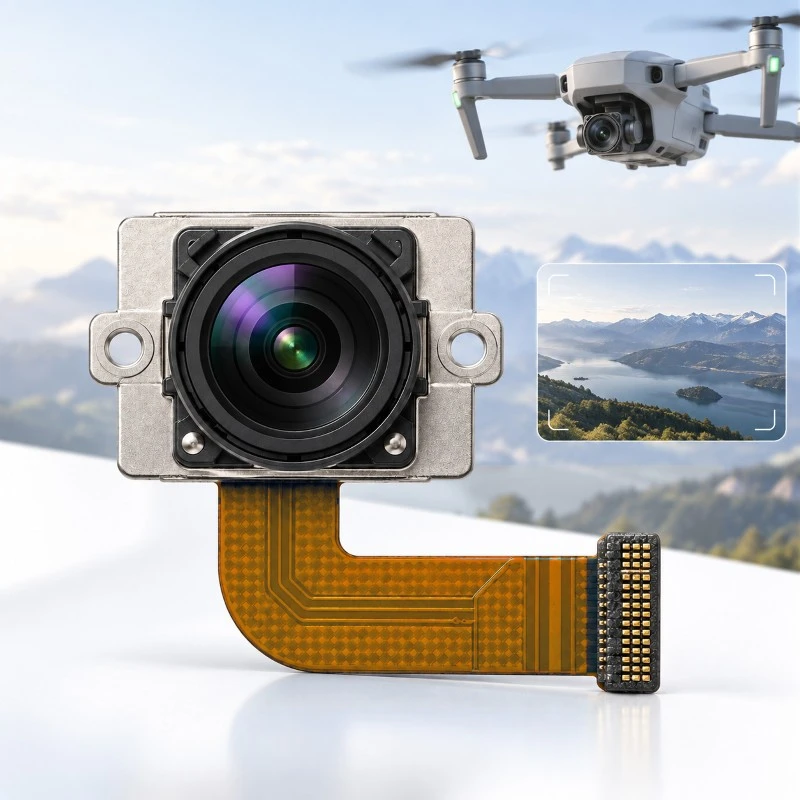
The SF-SC586-AERORA03 combines 48MP imaging with a 25mm telephoto lens and narrow field of view, helping embedded vision systems capture distant targets at a larger proportion of the frame.
Why Telephoto Matters for Distant Targets
When a camera uses a wide field of view, it captures more of the surrounding scene.
That can be useful for environmental monitoring, but it also means a distant target may occupy only a small area of the image.
Even with a high-resolution sensor, the system may still be using many pixels to capture background information that is not important to the actual task.
A telephoto optical design changes this relationship.
The SF-SC586-AERORA03 uses a 25mm focal-length lens with a 14° horizontal field of view, allowing the camera to concentrate more of the image on a narrower target area.
For applications that already know where the target is located and need to see it more clearly from a distance, this can be more useful than simply selecting a wider or higher-resolution camera.
Key Advantages of the SF-SC586-AERORA03
1. Narrow Field of View Makes Distant Targets Larger in the Frame
The module provides a 17.5° diagonal, 14° horizontal and 10.6° vertical field of view.
Compared with a wide-angle camera, this narrower view captures less unnecessary surrounding area.
For the customer, this is useful when:
The target is relatively far from the camera
The target appears too small with a standard lens
The system needs to concentrate on a defined observation area
Wide environmental coverage is not the main requirement
The benefit is not simply "zoom."
It is about allowing the important target to occupy more of the available image area.
2. 48MP Imaging Retains More Detail on the Target
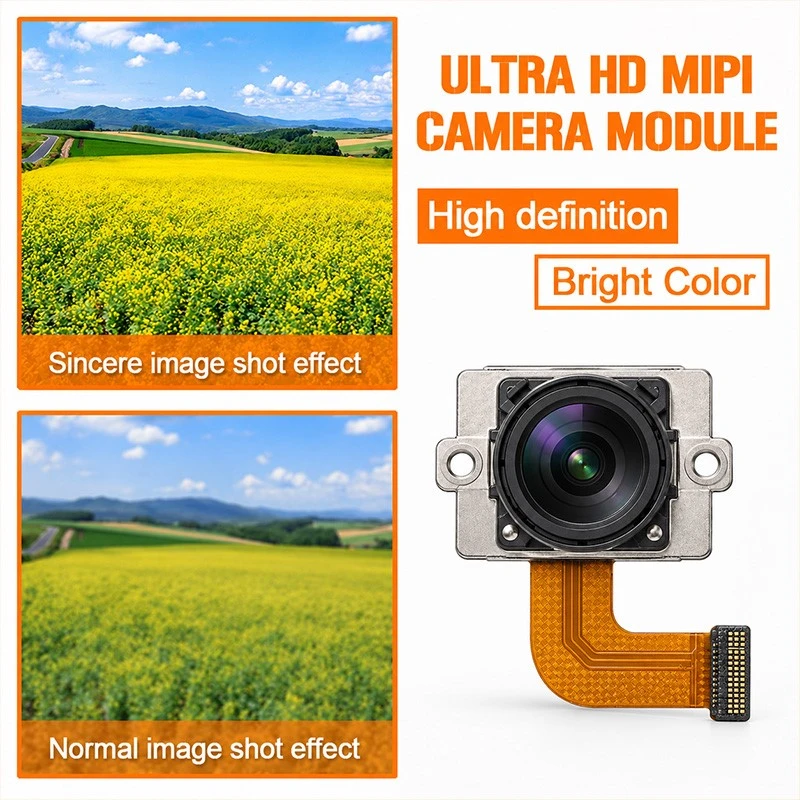
Once the optical design makes the distant target larger in the frame, resolution becomes more useful.
The IMX586 sensor provides an 8000 × 6000 image array, giving the system more image information for observation, recognition or further processing.
This combination is especially relevant when the application needs to examine:
Object features
Product or equipment status
Identification information
Small visual differences at a distance
In other words:
Telephoto optics determine how much of the frame is used for the target, while high resolution determines how much information can be captured from that target.
3. Low Distortion for More Controlled Target Imaging
The lens distortion is specified at 0.5%.
For applications focused on a relatively narrow target area, lower distortion helps maintain a more controlled image geometry.
This can be useful when the captured image is used not only for viewing, but also for recognition, comparison or image analysis.
4. Fixed-Focus Design for Defined Observation Areas
This module uses a fixed-focus optical design.
It is better suited to applications where:
The observation direction is predetermined
The target distance is relatively stable
The camera does not need to continuously switch between near and far objects
The specification also indicates focusing verification using a setup that simulates a 5-meter distance, supporting its positioning toward longer-distance observation rather than close-range imaging.
Typical Applications
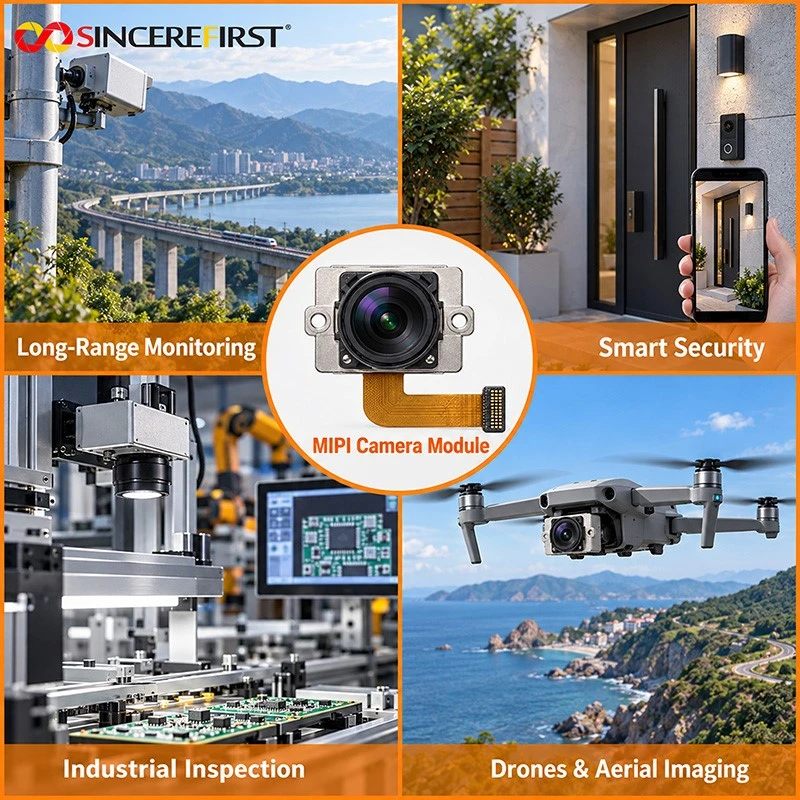
Long-Distance Equipment Monitoring
Some devices need to observe a specific machine, component or status area from a distance.
A telephoto camera helps concentrate the image on that target instead of capturing a large amount of unnecessary surrounding space.
Industrial Inspection From a Fixed Position
In some production or inspection systems, the camera cannot be installed close to the target.
The combination of narrow FOV and high-resolution imaging provides another option when the system needs more target detail from a fixed observation position.
Robotics and Remote Observation Systems
A robot may sometimes need a dedicated camera for observing a specific distant target rather than general environmental awareness.
In this case, a telephoto camera can complement a wide-angle perception camera by handling the more focused visual task.
Embedded Vision Devices for Target Recognition
For systems that already know approximately where the target will appear, narrowing the viewing area can allow more of the available image to be used for the target itself.
This can provide more useful image information for recognition or analysis.
When Should You Consider This Camera Module?
The SF-SC586-AERORA03 is more relevant when:
Your target is relatively far from the camera
The target appears too small with a normal or wide-angle lens
You do not need to capture a large surrounding scene
The observation direction and working distance are relatively stable
More target detail is important for recognition or analysis
If your application instead needs to monitor a large environment or objects frequently move across a wide area, a wider-FOV camera may be more suitable.
FAQ
1. Why not simply use a higher-resolution wide-angle camera?
Higher resolution adds more pixels, but it does not change how much of the scene the target occupies.
If the target is too small because the field of view is too wide, a telephoto lens can help the target occupy a larger proportion of the frame.
2. When should I choose a telephoto camera module?
A telephoto module is more suitable when the target is relatively distant and the system needs to focus on a defined area rather than capture the entire surrounding environment.
3. Is this camera suitable for close-range imaging?
This module is designed around a narrow-FOV telephoto configuration and is more relevant to longer-distance observation.
For close-range or large-area imaging, another lens configuration may be more appropriate.
4. Why does distortion matter for a telephoto camera?
Lower distortion helps maintain more consistent image geometry, which can be useful when the image is used for recognition, comparison or analysis rather than simple viewing.
5. What information should I provide before evaluating this camera?
It is helpful to provide:
Target size
Camera-to-target distance
Required target size in the image
Available installation space
Host platform
Image output requirement
With this information, we can evaluate whether this telephoto configuration provides enough target coverage and image detail for the project.
Need to Make a Distant Target Larger in the Image?
If your target is visible but still too small in the frame, increasing resolution may not be the first thing to change.
Share your target size, working distance and required image coverage with us. We can help evaluate whether the SF-SC586-AERORA03 telephoto camera module or another lens configuration better matches your imaging requirement.


