


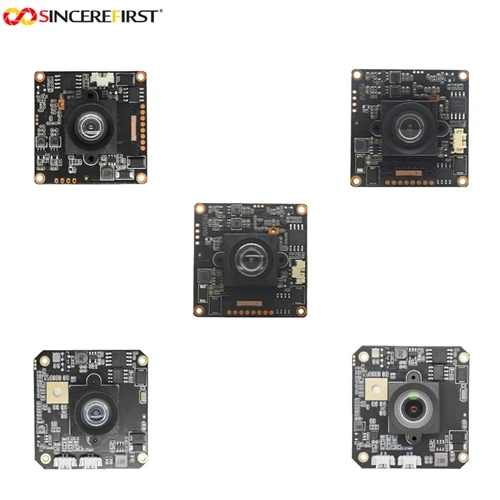
Start with the Movement Area
For markerless full-body tracking, the camera supplies images to a system that estimates body position without relying on attached tracking markers. The practical question is whether those images contain the body information your algorithm needs throughout the intended movements.
A person standing still may fit comfortably in the frame. Reaching sideways, crouching or stepping closer can place hands and feet outside it.
A wider view can help, but the person also occupies a smaller share of the image at a given output resolution. Coverage and useful body detail must therefore be assessed together.
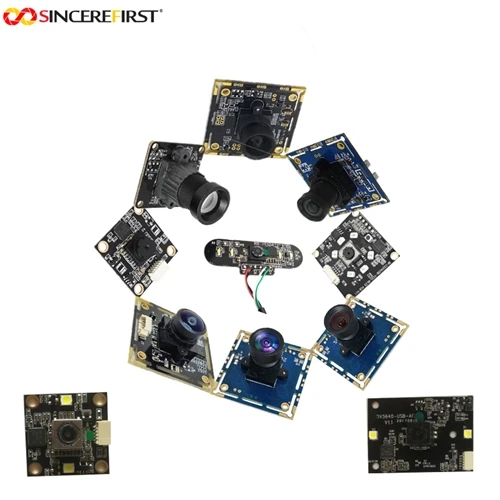
Three Configuration Choices That Matter
Wide Coverage for Full-Body Movement
The configuration discussed here pairs a 189° diagonal and 136° horizontal field of view with an F1.6 lens. The horizontal angle is particularly relevant when evaluating whether extended arms and lateral movement remain in view.
For developers with limited camera placement options, this provides a configuration worth evaluating before adding cameras or changing the enclosure.
However, 189° is the diagonal angle, not the horizontal coverage. Full-body coverage at a particular distance also depends on vertical field of view, camera orientation and installation height.
Edge-image quality and lens calibration matter because limbs may move into the outer image area. The selection goal is usable tracking coverage, rather than the largest angle on paper.
Monochrome Imaging When Color Is Not Required
The requested version uses an IMX676 monochrome sensor. This is relevant when the tracking pipeline uses intensity and body-shape information rather than clothing color or other color cues.
Choose monochrome around the algorithm's input requirements. Changing from color to monochrome does not automatically improve every tracking model: preprocessing, training data and lighting must match the intended input.
The F1.6 aperture is relevant when balancing exposure and available illumination. Whether the setup preserves fast hand or leg movement needs checking at the required frame rate and exposure. Aperture alone does not establish tracking accuracy or low-light performance.
Filter Selection Must Follow the Lighting Plan
The D189°/H136°, F1.6 lens configuration currently supports only the 650IR filter. Other filters require customization for this configuration and are not standard interchangeable options.
For VR tracking developers, confirming the filter requirement early helps avoid selecting a camera configuration that does not match the intended lighting setup.
If your project uses dedicated illumination, provide the illumination wavelength and required filter transmission before finalizing the optical configuration. A monochrome sensor alone does not confirm compatibility with a particular infrared lighting system.
Where This Configuration Is Worth Evaluating
Compact VR Tracking Installations
Where camera placement is restricted, evaluate whether the wide view captures the required body area from the available mounting position. Include the closest expected user distance, where hands and feet are more likely to approach the image boundaries.
Interactive Movement and Fitness Systems
Test reaching, squatting and lateral steps rather than relying on an upright pose. These movements reveal whether the selected view preserves enough hand, foot and body detail for the tracking software.
Prototypes with Controlled Illumination
For installations using dedicated lighting, assess the sensor, filter and illuminator as one imaging setup. Resolve filter requirements before commissioning a customized configuration.
These are evaluation directions, rather than claims of validated compatibility with a specific VR platform.
IMX676 or IMX415: Which Direction Fits the Budget?
Based on SincereFirst's current selection guidance, IMX415 monochrome is the more cost-effective direction compared with IMX676 monochrome.
For a cost-sensitive project, include IMX415 in the initial evaluation rather than assuming IMX676 is necessary. Compare both against the same requirements:
Coverage throughout the intended movements.
Useful body detail across the image.
Required resolution, frame rate and exposure.
Host integration requirements and total project cost.
This cost guidance does not establish equal tracking performance or interchangeable modules. The appropriate choice is the configuration that meets the tracking requirement at an acceptable integration cost.
Frequently Asked Questions
Will a 189° View Guarantee Full-Body Coverage?
No. It is the diagonal angle. Vertical coverage, distance, mounting position and the movement area determine whether the complete body remains visible.
Does This Module Perform Body Tracking by Itself?
The camera provides image input. Pose estimation, calibration, latency and occlusion handling depend on the complete tracking system.
Can I Specify Another Filter?
Yes, through customization. The D189°/H136°, F1.6 configuration currently supports only the 650IR filter. If your project needs another filter, share the required wavelength or transmission curve so we can review the customization requirements.
Which Sensor Should I Evaluate First?
Start with IMX415 monochrome if cost is the priority. Evaluate IMX676 monochrome against a defined imaging requirement, rather than assuming it will automatically improve tracking.
Discuss Your Tracking Camera Requirements
Share your camera position, user-distance range, movement area, lighting conditions, host platform and required resolution and frame rate with SincereFirst.
Include your filter requirements, target cost and expected volume so we can review the SF5X676FA-IRC V1.0 configuration and an IMX415 monochrome alternative against the same project needs.
Article Preview
Your camera sees the user standing still-but does it keep hands and feet in view during movement? Explore the lens, monochrome sensor and filter choices that matter before selecting a camera for markerless full-body VR tracking.


