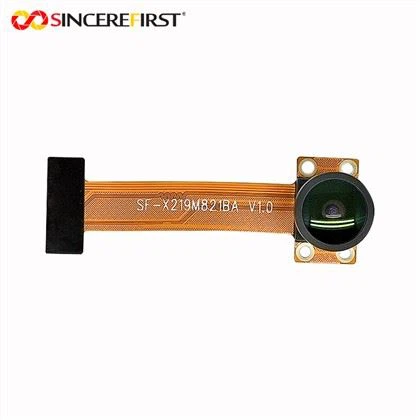
Hey there, fellow photography enthusiasts! I'm a supplier of CMOS camera modules, and I've been getting a lot of questions lately about whether our CMOS camera modules can be used for astronomy photography. So, I thought I'd write this blog post to share my thoughts and experiences on the topic.
First off, let's talk about what CMOS camera modules are. CMOS stands for Complementary Metal-Oxide-Semiconductor, which is a type of image sensor technology used in digital cameras. CMOS sensors are known for their low power consumption, high speed, and excellent image quality. They're commonly used in a wide range of applications, from smartphones and digital cameras to security cameras and industrial imaging systems.
Now, when it comes to astronomy photography, there are a few key factors to consider. These include sensitivity to light, noise levels, dynamic range, and resolution. Let's take a closer look at how CMOS camera modules stack up in each of these areas.
Sensitivity to Light
One of the most important factors in astronomy photography is the ability to capture faint objects in the night sky. This requires a camera sensor that's highly sensitive to light. CMOS sensors have come a long way in recent years in terms of their light sensitivity. Many modern CMOS sensors are capable of capturing a significant amount of light, even in low-light conditions.
For example, our Low Light 8mp Sony IMX585 Sensor Starvis HDR Camera Module is specifically designed for low-light applications. It features a high-sensitivity Sony IMX585 sensor that can capture detailed images even in extremely dark environments. This makes it a great option for astronomy photography, as it can pick up faint stars, galaxies, and nebulae that might otherwise be invisible to the naked eye.

Noise Levels
Another important consideration in astronomy photography is noise levels. Noise refers to the random variations in the image that can make it look grainy or blotchy. In low-light conditions, noise can be a particular problem, as the camera has to amplify the signal to capture enough light.
CMOS sensors have made significant improvements in reducing noise levels over the years. Many modern CMOS sensors use advanced noise reduction algorithms to minimize the appearance of noise in the image. Additionally, some CMOS sensors are designed with larger pixels, which can capture more light and reduce the need for signal amplification.
Our OEM Sony IMX 363 Sensor OIS Camera Module is a great example of a CMOS camera module with low noise levels. It features a high-quality Sony IMX363 sensor that's known for its excellent noise performance. This makes it a great choice for astronomy photography, as it can produce clean, sharp images even in low-light conditions.
Dynamic Range
Dynamic range refers to the range of brightness levels that a camera sensor can capture. In astronomy photography, this is important because the night sky can contain a wide range of brightness levels, from the very bright stars to the very faint nebulae.
CMOS sensors generally have a good dynamic range, which means they can capture a wide range of brightness levels in a single image. This is important for astronomy photography, as it allows you to capture both the bright stars and the faint details in the nebulae without overexposing or underexposing the image.
Our Sony IMX989 Large Cmos Inage Sensor Compact Camera Module is a great example of a CMOS camera module with a high dynamic range. It features a large-format Sony IMX989 sensor that can capture a wide range of brightness levels in a single image. This makes it a great option for astronomy photography, as it can produce detailed images of the night sky with excellent contrast and color accuracy.
Resolution
Resolution refers to the number of pixels in the image. In astronomy photography, a high resolution can be important for capturing fine details in the stars and galaxies.
CMOS sensors are available in a wide range of resolutions, from low-resolution sensors for basic imaging applications to high-resolution sensors for professional photography. When choosing a CMOS camera module for astronomy photography, it's important to consider the resolution that you need based on your specific needs and the type of objects that you want to capture.
For example, if you're interested in capturing detailed images of the planets and the moon, a high-resolution CMOS camera module might be a good choice. On the other hand, if you're more interested in capturing wide-field images of the night sky, a lower-resolution CMOS camera module might be sufficient.
Conclusion
So, can a CMOS camera module be used for astronomy photography? The answer is a resounding yes! CMOS camera modules have come a long way in recent years in terms of their performance, and many modern CMOS sensors are well-suited for astronomy photography.
When choosing a CMOS camera module for astronomy photography, it's important to consider the key factors that we discussed earlier, such as sensitivity to light, noise levels, dynamic range, and resolution. By choosing a high-quality CMOS camera module that's designed for low-light applications, you can capture stunning images of the night sky that will leave you and your friends in awe.
If you're interested in learning more about our CMOS camera modules or have any questions about using them for astronomy photography, please don't hesitate to contact us. We'd be happy to help you find the right camera module for your needs and answer any questions that you might have.
References
- "Astronomy Photography with Digital Cameras" by Michael Covington
- "The Astrophotography Manual" by Steve Richards