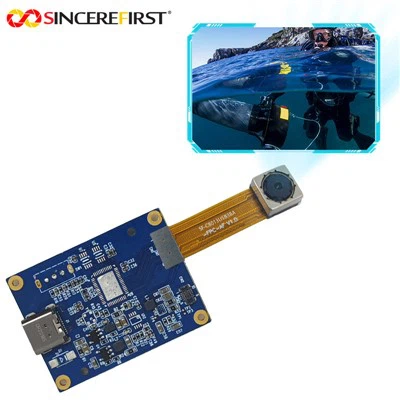
Hey there! As a supplier of USB camera modules, I often get asked if our products can be used for underwater photography. It's a really interesting question, and in this blog post, I'm gonna dive deep (pun intended!) into whether a USB camera module is a good fit for capturing those amazing underwater scenes.
Basics of USB Camera Modules
First off, let's talk a bit about what USB camera modules are. They're small, compact cameras that connect to a device via a USB port. They're super versatile and can be used in a whole bunch of applications, from video conferencing to security systems.
Our company offers a wide range of USB camera modules, like the USB PCB CMOS Sensor Sony IMX378 Auto Focus Macro Camera Module. This module comes with some pretty cool features, such as auto - focus and a high - quality Sony IMX378 sensor. It's designed to capture sharp and clear images in various lighting conditions.
Challenges of Underwater Photography
Underwater photography is a whole different ballgame compared to regular photography. There are several challenges that you need to overcome.
Water Resistance
The most obvious challenge is water. Cameras need to be protected from water damage. Water can short - circuit the electronics inside a camera module, rendering it useless. So, if you're thinking of using a USB camera module underwater, it has to be properly protected.
Light Absorption
Water absorbs light, especially as you go deeper. Different wavelengths of light are absorbed at different rates. Red light is absorbed first, followed by orange, yellow, and so on. This means that colors can look very different underwater compared to on the surface. You might end up with images that are mostly blue or green.
Pressure
As you go deeper underwater, the pressure increases. This can put stress on the camera module and its housing. If the housing isn't strong enough, it can crack or leak, which is a disaster for the camera.
Using USB Camera Modules Underwater
So, can a USB camera module be used for underwater photography? The answer is yes, but with some conditions.
Waterproof Housing
The first thing you need is a good waterproof housing. There are many aftermarket waterproof housings available in the market. These housings are designed to protect the camera from water while still allowing it to function properly. You can find housings that are specifically made for USB camera modules. Just make sure that the housing is rated for the depth you plan to dive to.
Lighting
To deal with the light absorption issue, you'll need additional lighting. You can use underwater lights that are designed to emit a wide spectrum of light. This will help to restore the natural colors in your images. Some USB camera modules come with adjustable exposure settings, which can also be useful in compensating for the low light conditions underwater.
Pressure Resistance
When choosing a waterproof housing, make sure it's built to withstand the pressure at the depth you'll be diving. Most housings are rated for a certain maximum depth. If you're planning to go really deep, you'll need a more heavy - duty housing.
Our Products and Underwater Use
Our Camera Sensor Ov5648 is a great option for underwater photography when used with the right setup. It has a decent resolution and can capture good - quality images. The sensor is sensitive enough to work in low - light conditions, which is an advantage underwater.
Another product that can be useful is our Wifi Board. It allows you to connect the USB camera module to a smartphone or a tablet wirelessly. This can be really handy when you're underwater, as you can view the images or videos in real - time on your device without having to be physically connected to the camera.
Tips for Underwater Photography with USB Camera Modules
If you're planning to use a USB camera module for underwater photography, here are some tips:


- Test the Setup: Before you go on a big dive, test your camera module and the waterproof housing in a shallow pool. Make sure everything is working properly and there are no leaks.
- Get Close: Since water scatters light, it's best to get as close as possible to your subject. This will ensure that the image is sharp and the colors are more accurate.
- Use Manual Settings: In some cases, the automatic settings on the camera module might not work well underwater. Try using manual focus and exposure settings to get the best results.
Conclusion
In conclusion, a USB camera module can definitely be used for underwater photography, but it requires the right setup and some knowledge of underwater photography techniques. With a good waterproof housing, additional lighting, and the right choice of camera module, you can capture some amazing underwater images.
If you're interested in our USB camera modules for underwater photography or any other applications, feel free to reach out to us. We're always happy to help you find the right product for your needs and answer any questions you might have. Let's start a conversation and see how we can work together to get you the perfect camera solution!
References
- "Underwater Photography Basics" - Photography Magazines
- "Waterproofing Electronics for Underwater Use" - Electronics Engineering Journals