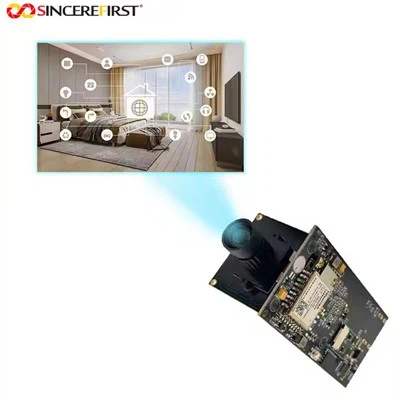
In the realm of surveillance and imaging technology, the H264 Camera Module has emerged as a powerful and versatile tool, offering high - quality video encoding and transmission capabilities. As a supplier of H264 Camera Modules, one question that frequently arises from our customers is whether these modules can be used in a dusty environment. This blog post aims to delve into this topic and provide a comprehensive analysis.
Understanding the H264 Camera Module
Before we discuss its suitability for dusty environments, let's first understand what an H264 Camera Module is. The H264 Camera Module is a compact and integrated device that captures video and encodes it using the H.264 codec. This codec is well - known for its high compression efficiency, which allows for high - quality video to be transmitted and stored with relatively low bandwidth requirements.
Our company offers a range of H264 Camera Modules, such as the H264 Camera Module. These modules are designed with advanced features to meet various application needs, including surveillance, industrial inspection, and more.
Challenges Posed by Dusty Environments
Dusty environments present several challenges for camera modules. Dust particles can accumulate on the camera lens, which can significantly degrade the image quality. A layer of dust on the lens can scatter light, causing blurry images, reduced contrast, and loss of detail. Moreover, in some cases, the dust may be abrasive, and over time, it can scratch the lens surface, further deteriorating the optical performance of the camera.
Another issue is the impact on the internal components of the camera module. Dust can penetrate into the camera housing and settle on sensitive electronic components. This can lead to overheating, short - circuits, and other malfunctions, potentially shortening the lifespan of the camera module.
Factors Affecting the Suitability of H264 Camera Modules in Dusty Environments
1. Lens Design and Protection
The design of the camera lens plays a crucial role in its ability to withstand dusty environments. Some of our H264 Camera Modules are equipped with anti - dust coatings on the lens. These coatings can prevent dust from adhering to the lens surface, making it easier for the dust to be removed by natural forces such as wind or vibration. Additionally, a well - sealed lens housing can prevent dust from entering the internal optical components.


2. Enclosure and Sealing
The overall enclosure of the camera module is also important. A robust and well - sealed enclosure can protect the internal components from dust ingress. Our H264 Camera Modules are designed with high - quality enclosures that provide a certain level of dust protection. For example, some modules have IP ratings, which indicate their degree of protection against dust and water. An IP rating consists of two digits, where the first digit represents the level of protection against solid objects (including dust). A higher first digit means better dust protection.
3. Airflow and Cooling Design
Proper airflow and cooling design are essential to prevent overheating in dusty environments. If the camera module generates a lot of heat and the dust blocks the airflow, it can lead to thermal issues. Our H264 Camera Modules are engineered with efficient cooling mechanisms to ensure stable operation even in dusty conditions.
Case Studies: H264 Camera Modules in Dusty Environments
To illustrate the performance of our H264 Camera Modules in dusty environments, let's look at some real - world case studies.
In a large industrial mining site, where dust is a constant problem, our Night Vision VGA Omnivision Ov7720 CSI High Speed Usb2.0 Camera Module was installed for surveillance purposes. Despite the high levels of dust in the air, the camera module continued to operate effectively. The anti - dust coating on the lens prevented excessive dust accumulation, and the well - sealed enclosure protected the internal components. As a result, the security team was able to monitor the site continuously and obtain clear video footage.
Another example is a construction site. Our OV5640 5MP Fixed Focus USB Camera Module was used to monitor the construction progress. The camera module's robust enclosure and efficient cooling design allowed it to function properly in the dusty environment. The high - resolution images captured by the module provided valuable information for project management.
Maintenance and Cleaning in Dusty Environments
Even with the best - designed camera modules, regular maintenance and cleaning are still necessary in dusty environments. Here are some tips for maintaining our H264 Camera Modules:
- Lens Cleaning: Use a soft, lint - free cloth to gently wipe the lens surface. Avoid using abrasive materials that could scratch the lens. If the dust is stubborn, you can use a small amount of lens cleaning solution.
- Enclosure Inspection: Regularly inspect the enclosure for any signs of damage or dust ingress. If there are any gaps or cracks, seal them immediately to prevent further dust entry.
- Internal Component Cleaning: In some cases, it may be necessary to open the enclosure and clean the internal components. However, this should only be done by trained personnel to avoid damaging the camera module.
Conclusion
In conclusion, while dusty environments pose challenges for camera modules, our H264 Camera Modules are designed to be suitable for such conditions. Through advanced lens design, robust enclosures, and efficient cooling mechanisms, these modules can provide reliable performance and high - quality image capture in dusty environments.
If you are considering using an H264 Camera Module in a dusty environment, we encourage you to contact us for more information. Our team of experts can help you select the most suitable module for your specific needs and provide guidance on installation, maintenance, and cleaning. We are committed to providing you with the best - in - class camera solutions and ensuring your satisfaction.
References
- "Camera Technology in Harsh Environments" - Industry Research Report
- "Optical Lens Design and Dust Resistance" - Journal of Optical Engineering