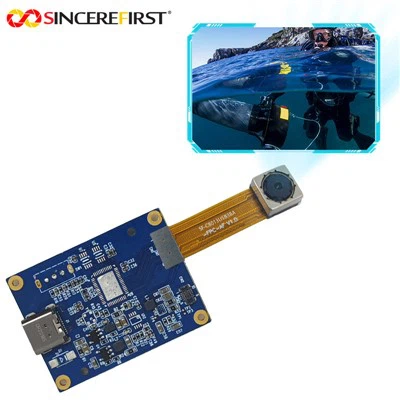
In the realm of educational technology, the selection of appropriate tools is crucial for fostering effective learning experiences. One such tool that has gained attention in recent years is the OV7725 Camera Module. As a supplier of this module, I am often asked whether it is suitable for educational purposes. In this blog post, I will delve into the various aspects of the OV7725 Camera Module to determine its viability in an educational setting.
Technical Specifications and Features
The OV7725 Camera Module is a compact and cost - effective imaging solution. It is based on the OmniVision OV7725 image sensor, which offers a resolution of up to 640x480 pixels (VGA). This resolution, while not as high as some of the latest high - end cameras, is more than sufficient for many educational applications.
One of the key features of the OV7725 is its low power consumption. In an educational environment, where multiple devices may be in use simultaneously, power efficiency is a significant advantage. It can operate on a relatively low voltage, making it suitable for battery - powered projects, such as robotics or portable sensor systems.
The module also supports a variety of output formats, including YUV and RGB. This flexibility allows students and educators to easily interface the camera with different microcontrollers and development boards, such as Arduino or Raspberry Pi. The ability to integrate with these popular platforms is a major plus, as they are widely used in educational institutions for teaching programming, electronics, and robotics.
Applications in Education
Computer Vision Education
The OV7725 Camera Module is an excellent tool for teaching computer vision concepts. Computer vision is a field that involves teaching machines to understand and interpret visual data. With the OV7725, students can learn about image processing techniques such as edge detection, color filtering, and object recognition.
For example, students can write code to detect the edges of objects in an image captured by the OV7725. This can be done using simple algorithms like the Sobel operator or the Canny edge detector. By experimenting with these algorithms, students can gain a deeper understanding of how computers analyze visual information.
Robotics and Automation
In robotics, vision plays a crucial role. The OV7725 can be used as the "eyes" of a robot, allowing it to navigate its environment, detect obstacles, and interact with objects. Students can build robots that use the camera module to follow a line, recognize specific colors, or even play a game of soccer.
For instance, a robot equipped with an OV7725 can be programmed to follow a black line on a white surface. The camera captures the image of the ground, and the robot's microcontroller analyzes the image to determine the position of the line. Based on this analysis, the robot can adjust its movement to stay on the line.
Science Experiments
The OV7725 Camera Module can also be used in science experiments. For example, in biology, it can be used to observe small organisms or cells. By attaching the camera to a microscope, students can capture images of specimens and analyze them using image processing software.
In physics, the camera can be used to study motion. Students can set up an experiment to record the motion of a falling object or a pendulum. The captured images can then be analyzed to calculate parameters such as velocity and acceleration.
Comparison with Other Camera Modules
While the OV7725 has many advantages, it is important to compare it with other camera modules available in the market. For example, the 0.3MP OV7725 VGA Sensor USB Camera Module offers a convenient USB interface, which makes it easy to connect to a computer. This can be beneficial for educational projects that require quick and easy setup.
On the other hand, the IR Cut Swicth Light Board USB Camera Sensor Module has an IR cut switch, which can improve the image quality in different lighting conditions. This may be more suitable for applications where image quality is of utmost importance.
The Free Drive Snoy 8MP IMX415 Wifi Board CMOS Machine Vision System Camera Module offers a much higher resolution of 8MP. This can be useful for applications that require detailed image capture, such as high - precision object recognition or large - scale mapping. However, the higher resolution also comes with a higher cost and potentially more complex integration requirements.
Considerations for Educational Use
When using the OV7725 Camera Module in an educational setting, there are a few considerations to keep in mind. Firstly, the relatively low resolution may limit its use in applications that require high - quality image capture. For example, in some advanced computer vision tasks or scientific research, a higher - resolution camera may be necessary.
Secondly, the module's performance may be affected by lighting conditions. In low - light environments, the image quality may degrade, and additional lighting may be required. However, this can also be an opportunity for students to learn about the impact of lighting on image quality and how to compensate for it.
Another consideration is the learning curve associated with the module. While it is relatively easy to interface with common development boards, students may still need to learn some programming concepts and image processing algorithms. Educators should provide appropriate guidance and support to help students overcome these challenges.
Conclusion
In conclusion, the OV7725 Camera Module is a highly suitable tool for educational purposes. Its low cost, low power consumption, and easy integration with popular development boards make it an attractive option for a wide range of educational applications, including computer vision education, robotics, and science experiments.


While it has some limitations, such as relatively low resolution and sensitivity to lighting conditions, these can be outweighed by its many advantages. By using the OV7725, students can gain hands - on experience in important fields such as computer vision, robotics, and electronics.
If you are an educator or an institution looking to incorporate the OV7725 Camera Module into your curriculum or projects, I encourage you to reach out for procurement and further discussions. We can provide you with detailed product information, technical support, and competitive pricing options.
References
- “Introduction to Computer Vision.” Various academic textbooks.
- “Robotics: Vision - Based Control.” IEEE Transactions on Robotics and Automation.
- OmniVision OV7725 Product Datasheet.