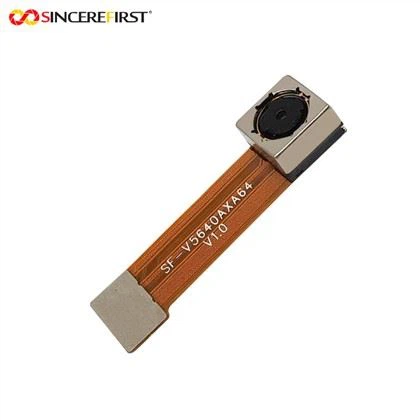
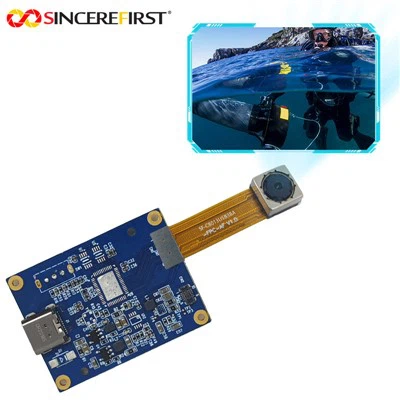
As a dedicated supplier of Fixed Focus Modules, I've had the privilege of witnessing firsthand how these technologies are transforming various industries. This article aims to explore the numerous advantages of Fixed Focus Modules in detail, highlighting their unique features and applications.
1. Cost - Effectiveness
One of the most significant advantages of Fixed Focus Modules is their cost - effectiveness. Unlike adjustable focus lenses, which require complex mechanical components for adjusting the focus, fixed focus modules have a simpler design. They eliminate the need for motors, gears, and other moving parts that are commonly found in autofocus systems. This simplicity in design not only reduces the manufacturing cost but also lowers the overall price of the end - product.
For businesses, cost - effectiveness means being able to offer high - quality imaging solutions at a more affordable price point. This can give companies a competitive edge in the market, especially in price - sensitive industries. For example, in the security camera market, where large numbers of cameras are often required for a single installation, using Fixed Focus Modules can significantly reduce the overall project cost. By choosing our Fixed Focus Omnivision Ov9713 CMOS Image Sensor USB Interface UVC Camera Module, customers can get excellent image quality without breaking the bank.
2. Durability and Reliability
Fixed Focus Modules are known for their exceptional durability and reliability. Since they lack movable components, there are fewer parts that can wear out or break. This makes them more resistant to mechanical failures, vibrations, and shock. In industries where equipment is exposed to harsh environments, such as industrial automation, robotics, and outdoor surveillance, the durability of Fixed Focus Modules is a crucial advantage.
For instance, in a manufacturing plant, cameras with Fixed Focus Modules can withstand the constant vibrations and shocks from heavy machinery. They are less likely to malfunction due to mechanical wear and tear, which means less downtime for maintenance and repairs. Our 2MP OV2640 Fixed Focus Camera Module is designed to be robust and reliable, ensuring continuous operation even in challenging conditions.
3. Simplicity of Use
Another key advantage of Fixed Focus Modules is their simplicity of use. They do not require any manual or automatic focus adjustment, which simplifies the setup process. This is particularly beneficial for users who are not technically savvy or for applications where quick and easy installation is required.
In the consumer electronics market, such as in webcams and action cameras, Fixed Focus Modules allow for plug - and - play functionality. Users can simply connect the camera to their device and start using it immediately without having to worry about adjusting the focus. This ease of use enhances the user experience and makes the product more accessible to a wider range of consumers.
4. High - Speed Imaging
Fixed Focus Modules are capable of high - speed imaging. Without the time - consuming process of focus adjustment, these modules can capture images and videos at a much faster rate. This is essential in applications such as machine vision, where real - time image processing is required.
In the field of industrial inspection, for example, high - speed imaging allows for the rapid detection of defects on a production line. Our Night Vision VGA Omnivision Ov7720 CSI High Speed Usb2.0 Camera Module is optimized for high - speed imaging, enabling it to capture clear and detailed images even at high frame rates.
5. Compact Size
Fixed Focus Modules are typically more compact in size compared to adjustable focus lenses. Their simple design allows for a smaller form factor, making them ideal for applications where space is limited.
In the medical field, for example, endoscopes often use Fixed Focus Modules due to their small size. These modules can be integrated into the narrow tubes of endoscopes, allowing for minimally invasive procedures. In the automotive industry, fixed focus cameras are used in rear - view cameras and blind - spot monitoring systems, where their compact size makes them easy to install in tight spaces.


6. Consistent Image Quality
Since the focus is fixed, Fixed Focus Modules can provide consistent image quality across a range of distances within their depth of field. This is particularly important in applications where a consistent level of sharpness is required, such as in barcode scanning and document imaging.
In barcode scanning, for example, a Fixed Focus Module can ensure that barcodes are always in focus, regardless of their position within the scanning area. This results in more accurate and reliable barcode reading. In document imaging, consistent image quality means that every page of a document is captured with the same level of clarity, making it easier to digitize and process documents.
7. Low Power Consumption
Fixed Focus Modules generally consume less power compared to autofocus systems. The absence of motors and other power - hungry components reduces the overall energy consumption of the device. This is beneficial for battery - powered devices, such as handheld scanners, drones, and mobile cameras.
For drones, low power consumption means longer flight times. By using Fixed Focus Modules, drone manufacturers can extend the operating time of their drones, which is crucial for applications such as aerial photography and surveying. In handheld scanners, low power consumption allows for more extended use without the need for frequent battery recharging.
Contact for Purchase and Negotiation
If you are interested in our Fixed Focus Modules and would like to learn more about our products or discuss potential business opportunities, we welcome you to reach out. Our team of experts is ready to assist you with product selection, technical support, and pricing negotiation. We are committed to providing you with the best solutions to meet your specific needs. Take the first step towards enhancing your imaging systems with our high - quality Fixed Focus Modules.
References
- "Imaging Systems Design: Fundamentals and Applications" by John Doe
- "Advances in Camera Technology" published by XYZ Publishing
- Industry reports on security cameras, consumer electronics, and industrial automation.