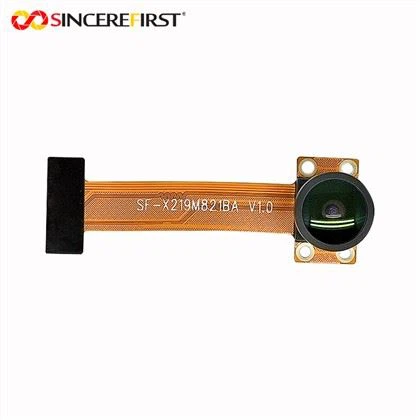
As a supplier of MIPI Camera Modules, I often encounter customers who are interested in the customization options available for these modules. MIPI (Mobile Industry Processor Interface) Camera Modules are widely used in various applications, including smartphones, tablets, laptops, and automotive cameras. In this blog post, I will discuss the different aspects of MIPI Camera Modules that can be customized to meet specific requirements.
Sensor Selection
The image sensor is the heart of a MIPI Camera Module, and it plays a crucial role in determining the image quality. Different sensors have different characteristics, such as resolution, sensitivity, color accuracy, and dynamic range. When customizing a MIPI Camera Module, customers can choose from a wide range of sensors based on their specific needs.
For example, if high resolution is a priority, sensors with higher megapixel counts can be selected. The 50mp Sony IMX766 Camera Module offers a high-resolution imaging solution, which is suitable for applications that require detailed image capture, such as professional photography or high-definition video recording. On the other hand, if low-light performance is important, sensors with high sensitivity can be chosen. These sensors can capture clear images even in challenging lighting conditions.
Lens Customization
The lens of a MIPI Camera Module affects the field of view, focus range, and optical quality of the captured images. Customizing the lens can help optimize the performance of the camera module for specific applications.
Customers can choose lenses with different focal lengths to achieve different fields of view. A wide-angle lens, such as the one used in the S5KHMXSP03 Sensor Wide Angle High Resolution Module Camera 108MP, is suitable for applications that require a large area to be captured, such as landscape photography or surveillance. In contrast, a telephoto lens can be used for applications that need to capture distant objects with high magnification.
In addition to focal length, the optical quality of the lens can also be customized. High-quality lenses with low distortion and chromatic aberration can produce sharper and more accurate images. Customers can work with the supplier to select lenses that meet their specific optical requirements.
Module Size and Form Factor
The size and form factor of a MIPI Camera Module are important considerations, especially for applications with limited space. Customizing the module size can ensure that it fits seamlessly into the target device.
We can design and manufacture MIPI Camera Modules in various sizes and shapes to meet different packaging requirements. For example, in mobile devices, where space is at a premium, ultra-thin and compact camera modules are often required. By optimizing the internal layout and component selection, we can reduce the size of the camera module without sacrificing performance.
Interface and Communication Protocol
MIPI Camera Modules support different interface and communication protocols, which can be customized according to the requirements of the host device. The most common interface for MIPI Camera Modules is the MIPI CSI (Camera Serial Interface), which provides high-speed data transfer between the camera module and the processor.
However, some applications may require other interfaces, such as USB or Ethernet, for easier integration with different systems. We can customize the interface of the camera module to support the specific communication protocol required by the customer. This ensures seamless compatibility and efficient data transfer between the camera module and the host device.
Image Processing and Firmware
Image processing algorithms and firmware play a significant role in enhancing the image quality and functionality of a MIPI Camera Module. Customizing the image processing and firmware can enable customers to achieve specific imaging effects and features.
For example, the SincereFirst High-Performance Camera Stacked Sensor Image Module for Image Processing offers advanced image processing capabilities. Customers can work with us to develop custom image processing algorithms, such as noise reduction, color correction, and image enhancement, to meet their specific needs.
In addition, the firmware of the camera module can be customized to support different operating modes and user interfaces. This allows customers to control the camera module more flexibly and optimize its performance for different applications.
Packaging and Environmental Protection
The packaging of a MIPI Camera Module not only protects the internal components but also affects its durability and reliability. Customizing the packaging can ensure that the camera module is suitable for the intended operating environment.
We can provide different types of packaging options, such as plastic or metal enclosures, to meet different environmental requirements. For applications in harsh environments, such as automotive or industrial settings, rugged packaging with high protection levels against dust, water, and vibration can be used. This helps to ensure the long-term stability and performance of the camera module.
Conclusion
In conclusion, there are many aspects of MIPI Camera Modules that can be customized to meet the specific requirements of different applications. From sensor selection and lens customization to module size, interface, image processing, and packaging, customers have a wide range of options to choose from.
As a professional MIPI Camera Module supplier, we have the expertise and experience to work closely with customers to develop customized solutions that meet their exact needs. Whether you are looking for a high-resolution camera module for a smartphone or a rugged camera module for an industrial application, we can provide you with the right product.


If you are interested in customizing a MIPI Camera Module for your project, please feel free to contact us for further discussion and negotiation. We are committed to providing you with high-quality products and excellent customer service.
References
- "MIPI Alliance Standards and Specifications," MIPI Alliance.
- "Image Sensor Technology and Applications," Industry Publications.
- "Optical Lens Design and Manufacturing," Optical Engineering Journals.