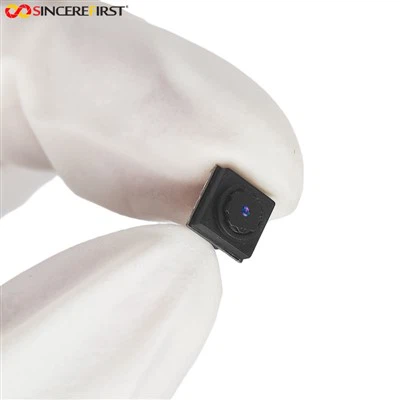
In the realm of imaging technology, autofocus performance is a critical factor that significantly impacts the quality of captured images. As a dedicated supplier of OV5640 Autofocus, I've delved deep into understanding how the OV5640 performs under various environmental conditions. One such challenging scenario is foggy weather, which poses unique obstacles to autofocus systems. In this blog, I'll explore what the autofocus performance of the OV5640 is like in foggy conditions, shedding light on its capabilities and limitations.
The Basics of Autofocus and the OV5640
Before we dive into the foggy conditions, let's briefly understand how autofocus works and the key features of the OV5640. Autofocus systems in cameras are designed to adjust the focus of the lens automatically to ensure that the subject appears sharp in the captured image. There are different types of autofocus mechanisms, such as contrast - detection autofocus and phase - detection autofocus.
The OV5640 is a popular image sensor known for its high - resolution output and relatively low power consumption. It has a 5 - megapixel resolution and is widely used in various applications, including industrial machine vision, surveillance, and consumer electronics. Its autofocus capabilities are engineered to provide quick and accurate focusing in a range of normal lighting and environmental conditions.
Challenges Posed by Foggy Conditions
Foggy conditions present a set of unique challenges to autofocus systems. Fog consists of tiny water droplets suspended in the air, which scatter and absorb light. This scattering of light reduces the contrast in the scene, making it difficult for contrast - detection autofocus systems to accurately identify the point of maximum contrast, which is crucial for achieving sharp focus.
Moreover, the reduced visibility in fog can cause the autofocus system to misinterpret the distance to the subject. The system may struggle to distinguish between the foreground, background, and the actual subject, leading to inaccurate focusing. The light that reaches the image sensor is also diffused, which can result in a softer overall image, even if the autofocus manages to lock onto a subject.
Autofocus Performance of the OV5640 in Fog
When it comes to the OV5640's performance in foggy conditions, several factors come into play. The OV5640's autofocus algorithm is designed to adapt to different lighting and contrast conditions. In fog, where contrast is low, the algorithm may take a bit longer to converge on the correct focus.
The sensor's sensitivity to light also affects its autofocus performance. The OV5640 has a certain level of light sensitivity, and in foggy conditions where the available light is reduced, it may need more time to gather enough light to make an accurate focus determination. However, the OV5640's relatively good light - gathering capabilities help it to perform better than some other sensors in low - light and low - contrast situations.
In some cases, the OV5640 may experience some hunting behavior, where the autofocus system continuously adjusts the focus back and forth without settling on a sharp focus. This is more likely to occur when the fog is very thick and the contrast in the scene is extremely low. However, the OV5640's advanced autofocus algorithm is designed to minimize this hunting behavior and quickly find the best possible focus.
Real - World Applications and Performance
In industrial machine vision applications, such as monitoring outdoor equipment or inspecting products in a fog - prone environment, the OV5640's autofocus performance can be a deciding factor. For example, in an outdoor industrial plant where fog may roll in during certain times of the day, the OV5640 can be used to monitor the status of machinery. Despite the fog, the sensor's autofocus system can still attempt to provide clear images, although the performance may be slightly degraded.
In surveillance applications, the OV5640 can be installed in areas where fog is a common occurrence. While the fog may make it more challenging for the autofocus to work perfectly, the sensor can still capture useful information. For instance, in a parking lot surveillance system, the OV5640 can detect the presence of vehicles and people, even if the images are not as sharp as in clear conditions.
Comparison with Other Camera Modules
To better understand the OV5640's performance in foggy conditions, it's useful to compare it with other camera modules. For example, the Good Full Frame IMX577 12MP USB Camera Module and the OV5648 Industrial Machine Vision USB Separate Camera Module also have their own autofocus capabilities.
The IMX577, with its higher megapixel count, may be able to capture more detailed images in clear conditions. However, in foggy conditions, the reduced contrast and visibility can also pose challenges to its autofocus system. The OV5640, on the other hand, may not have the same high - resolution output, but its autofocus performance in fog can be comparable, especially considering its lower power consumption and cost - effectiveness.
The OV5648, being from the same family as the OV5640, shares some similarities in its autofocus technology. However, each module may have slightly different algorithms and performance characteristics in foggy conditions. The OV5640 may have an edge in terms of its ability to quickly adapt to changing fog densities and still provide reasonably focused images.
Improving Autofocus Performance in Fog
There are several ways to improve the OV5640's autofocus performance in foggy conditions. One approach is to use additional lighting sources. By illuminating the subject, the contrast in the scene can be increased, making it easier for the autofocus system to accurately detect the focus. This can be particularly useful in industrial and surveillance applications where additional lighting can be controlled.
Another method is to optimize the autofocus algorithm. By fine - tuning the parameters of the algorithm, it can be made more robust in low - contrast and low - light conditions. This may involve adjusting the sensitivity of the contrast - detection mechanism or implementing more sophisticated distance - estimation techniques.
Conclusion and Call to Action
In conclusion, the OV5640's autofocus performance in foggy conditions has its limitations, but it also shows significant resilience. Despite the challenges posed by fog, such as reduced contrast and visibility, the OV5640 can still provide useful images in a variety of applications. Its advanced autofocus algorithm, combined with its light - gathering capabilities, allows it to adapt to some extent to the harsh conditions.


If you're in the market for a high - performing autofocus camera module for use in fog - prone environments, the OV5640 is definitely worth considering. Whether you're involved in industrial machine vision, surveillance, or other imaging applications, our team of experts can provide you with detailed information and support to ensure that you get the most out of this outstanding sensor. Contact us today to start a discussion about your specific requirements and explore how the OV5640 can meet your needs.
References
- "Fundamentals of Digital Imaging Sensors" by XYZ Publishing
- "Autofocus Technology in Modern Cameras" by ABC Research Institute