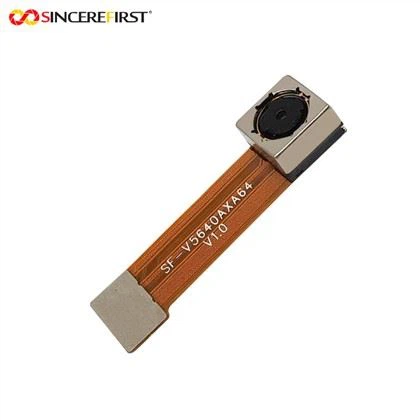
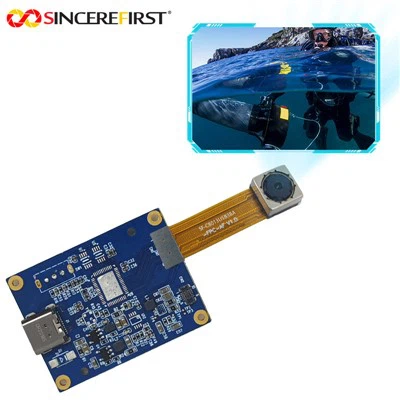
Hey there! As a supplier of CMOS camera modules, I often get asked about the depth of field of these nifty little devices. So, I thought I'd sit down and write a blog post to explain what it is, why it matters, and how it affects the performance of our CMOS camera modules.
First off, let's break down what depth of field actually means. In simple terms, depth of field refers to the range of distance in a scene that appears acceptably sharp in a photograph or video. Think of it like this: when you take a picture, there's a certain area in front of and behind your subject that will look clear and focused, while the rest will gradually start to blur. That area of sharpness is your depth of field.


Now, you might be wondering, why does depth of field matter? Well, it plays a crucial role in determining the overall look and feel of your images. A shallow depth of field, where only a small portion of the scene is in focus and the rest is blurred, can create a beautiful, artistic effect that draws the viewer's attention to the subject. This is often used in portrait photography to make the subject stand out from the background. On the other hand, a deep depth of field, where most or all of the scene is in focus, is great for landscape photography or situations where you want everything in the frame to be sharp and clear.
So, how does this relate to our CMOS camera modules? Well, the depth of field of a camera module is influenced by several factors, including the aperture, focal length, and distance to the subject. Let's take a closer look at each of these factors.
Aperture
The aperture is the opening in the lens that allows light to pass through and reach the camera's sensor. It's measured in f-stops, with smaller f-stop numbers indicating a larger aperture and vice versa. A larger aperture (smaller f-stop number) will result in a shallower depth of field, while a smaller aperture (larger f-stop number) will give you a deeper depth of field.
For example, if you're using a CMOS camera module with a large aperture lens, like an f/1.8 or f/2.0, you'll be able to achieve a shallow depth of field effect, which is perfect for capturing portraits or close-up shots with a blurred background. On the other hand, if you need a deeper depth of field, say for landscape photography or when you want everything in the frame to be in focus, you can stop down the aperture to a higher f-stop number, like f/8 or f/11.
Focal Length
The focal length of a lens refers to the distance between the lens and the camera's sensor when the subject is in focus. It's measured in millimeters and determines the field of view and magnification of the lens. A shorter focal length lens (wide-angle lens) will have a wider field of view and a deeper depth of field, while a longer focal length lens (telephoto lens) will have a narrower field of view and a shallower depth of field.
For instance, if you're using a CMOS camera module with a wide-angle lens, like a 24mm or 35mm lens, you'll get a wider field of view and a deeper depth of field, making it suitable for landscape photography or group shots. On the other hand, if you're using a telephoto lens, like a 70mm or 200mm lens, you'll get a narrower field of view and a shallower depth of field, which is great for capturing distant subjects or creating a more compressed perspective.
Distance to the Subject
The distance between the camera and the subject also plays a role in determining the depth of field. The closer you are to the subject, the shallower the depth of field will be, and the farther away you are, the deeper the depth of field will be.
For example, if you're taking a portrait shot and you're standing very close to the subject, you'll be able to achieve a shallow depth of field effect with a blurred background. However, if you step back and increase the distance between the camera and the subject, the depth of field will increase, and more of the scene will be in focus.
At our company, we offer a wide range of CMOS camera modules with different aperture, focal length, and sensor size options to meet the diverse needs of our customers. Whether you're looking for a Global Shutter Camera Module for high-speed applications, a 108mp Camera Module for high-resolution imaging, or a Smart Camera Module for intelligent vision systems, we've got you covered.
Our team of experts is always on hand to help you choose the right camera module for your specific application and to provide you with technical support and guidance. We understand that every project is unique, and we're committed to working with you to find the best solution that meets your requirements and budget.
So, if you're in the market for a high-quality CMOS camera module and want to learn more about depth of field and how it can affect your images, don't hesitate to get in touch with us. We'd love to hear from you and help you take your photography or imaging project to the next level.
References
- "Understanding Depth of Field." Photography Life.
- "Depth of Field Explained." Digital Photography School.
- "How Aperture Affects Depth of Field." B&H Photo Video.