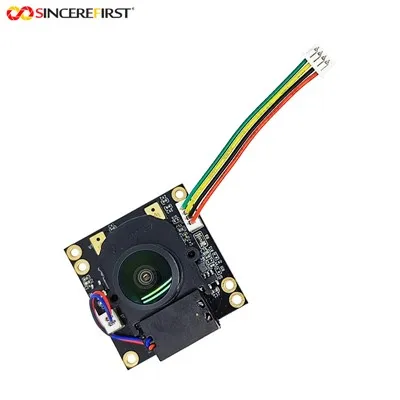
Hey there! As a supplier of Fixed Focus Modules, I often get asked about the depth of field of these modules. So, let's dive right into it and explore what the depth of field of a Fixed Focus Module really is.
First off, what's a Fixed Focus Module? Well, it's a type of camera module that has a fixed focal length. Unlike adjustable focus cameras, you can't change the focus on a Fixed Focus Module. It's set at a specific distance, and that's it. These modules are super popular because they're simple, cost - effective, and reliable. You'll find them in all sorts of devices, from security cameras to industrial inspection equipment.
Now, let's talk about depth of field. Depth of field (DOF) is the range of distance in a scene that appears acceptably sharp in a photograph or video. In simpler terms, it's the area in front of and behind the point of focus that still looks clear. For example, when you take a portrait photo, the person's face might be in sharp focus, but the background is blurry. The area that's in focus, including parts of the face and maybe some of the clothes, is the depth of field.
In a Fixed Focus Module, the depth of field is determined by several factors. One of the main factors is the aperture. The aperture is the opening in the lens that allows light to pass through. A smaller aperture (a higher f - number, like f/8 or f/11) will result in a larger depth of field. This means that more of the scene, both in front of and behind the point of focus, will be in focus. On the other hand, a larger aperture (a lower f - number, like f/1.8 or f/2.8) will give you a shallower depth of field, with only a small area in focus and the rest blurred.
Another factor that affects the depth of field in a Fixed Focus Module is the focal length. Generally, a shorter focal length will result in a larger depth of field. For instance, a wide - angle lens on a Fixed Focus Module will have a greater depth of field compared to a telephoto lens. This is why wide - angle lenses are often used in landscape photography, where you want most of the scene to be in focus.
The distance between the camera and the subject also plays a role. The closer the camera is to the subject, the shallower the depth of field. So, if you're using a Fixed Focus Module to take a close - up photo of a flower, you'll have a smaller area in focus compared to when you're taking a photo of a building from a distance.
Let's take a look at some of the Fixed Focus Modules we offer. We have the Compact IR - CUT Switcher 1080P Sony IMX662 CMOS Sensor USB Camera Module. This module is great for applications where you need high - quality video with a decent depth of field. The Sony IMX662 CMOS sensor provides excellent image quality, and the IR - CUT switcher helps in both day and night conditions.
Our Free Drive Snoy 8MP IMX415 Wifi Board CMOS Machine Vision System Camera Module is another popular choice. It's designed for machine vision systems, where accurate focus and a good depth of field are crucial. With 8MP resolution and Wi - Fi connectivity, it's a versatile module that can be used in various industrial and inspection applications.
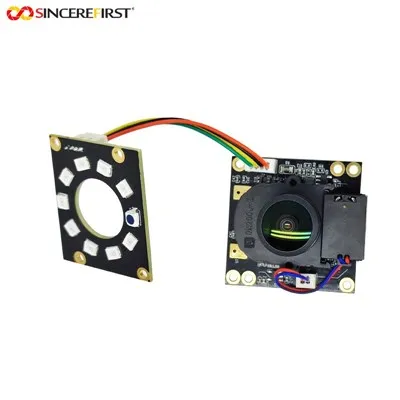

And then there's the USB3.0 High Speed Sensor IMX385 Security Night Vision Device Star Light Camera Module. This module is perfect for security applications. It has a high - speed USB3.0 interface and the IMX385 sensor, which offers great night vision capabilities. The depth of field on this module is optimized to cover a wide area, making it ideal for monitoring large spaces.
When it comes to choosing the right Fixed Focus Module for your needs, understanding the depth of field is essential. If you're working on a project where you need a large area in focus, like a surveillance system for a warehouse, you'll want a module with a large depth of field. On the other hand, if you're doing some macro photography or close - up inspection work, a shallower depth of field might be more suitable.
So, how can you determine the depth of field of a particular Fixed Focus Module? Well, most manufacturers, including us, provide technical specifications that include information about the depth of field. You can also do some practical tests. Set up a scene with objects at different distances and take photos or videos using the module. Then, review the results to see how much of the scene is in focus.
In conclusion, the depth of field of a Fixed Focus Module is an important characteristic that can greatly impact the quality and usability of your camera system. By considering factors like aperture, focal length, and subject distance, you can choose the right module for your specific application.
If you're interested in our Fixed Focus Modules or have any questions about depth of field or our products in general, don't hesitate to reach out. We're here to help you find the perfect solution for your needs. Whether you're a small - scale hobbyist or a large - scale industrial client, we've got the right module for you. Let's start a conversation and see how we can work together to meet your camera module requirements.
References
- "Understanding Depth of Field" by Photography Life
- "Camera Lens Fundamentals" by B&H Photo Video