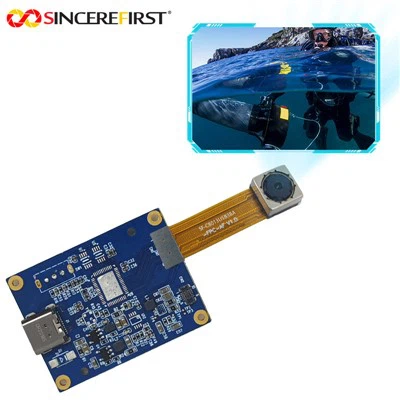
Hey there, folks! As a supplier of USB 2.0 camera modules, I get asked a ton of questions about these nifty little devices. One of the most common queries is about the signal-to-noise ratio (SNR) of a USB 2.0 camera module. So, let's dive right in and break it down.
First off, what exactly is the signal-to-noise ratio? In simple terms, it's a measure of the quality of the signal from a camera module compared to the background noise. The signal is the actual image or video data that the camera captures. Meanwhile, noise is all the unwanted stuff that can mess up that signal, like random electrical interference or pixel errors.
A high SNR means that the signal is strong and clear, while the noise is relatively low. This translates to a better-looking image or video with more details, less graininess, and more accurate colors. On the flip side, a low SNR means that the noise is competing with the signal, resulting in a blurry, fuzzy, or distorted image.
Now, let's talk about USB 2.0 camera modules specifically. USB 2.0 is an older but still widely used standard for connecting devices to a computer. It has a maximum data transfer rate of 480 Mbps, which is fast enough for many applications, but it also has its limitations.
When it comes to the SNR of USB 2.0 camera modules, several factors can affect it. One of the most important is the sensor. The sensor is the part of the camera that captures the light and converts it into an electrical signal. Different sensors have different levels of sensitivity and noise performance.
For example, our 8mp USB Camera Module uses a high-quality sensor that's designed to minimize noise and maximize the signal. This results in sharp, clear images with a high SNR, even in low-light conditions.
Another factor that can affect the SNR is the lens. A good lens can help to focus the light onto the sensor more effectively, reducing the amount of noise and improving the overall image quality. Our 4k Sony IMX415 Machine Vision AI Camera Sensor Module comes with a high-quality lens that's optimized for the sensor, providing excellent image quality and a high SNR.
The electronics inside the camera module also play a role in the SNR. The circuit board and other components can introduce noise if they're not designed properly. That's why we use high-quality components and advanced manufacturing techniques to ensure that our USB 2.0 camera modules have a low noise level and a high SNR.
The environmental conditions can also affect the SNR. For example, if the camera is used in a noisy electrical environment, there may be more interference that can increase the noise level. Temperature can also have an impact on the performance of the sensor and other components, potentially affecting the SNR.
So, how do you measure the SNR of a USB 2.0 camera module? There are several ways to do this, but one of the most common is to use a test chart. A test chart is a target with a known pattern that can be used to evaluate the image quality of the camera. By analyzing the image of the test chart, you can calculate the SNR.


Another way to measure the SNR is to use specialized software. There are several software programs available that can analyze the image data from the camera module and calculate the SNR. These programs can provide more accurate and detailed results than using a test chart.
It's important to note that the SNR is just one factor to consider when choosing a USB 2.0 camera module. Other factors, such as resolution, frame rate, and color accuracy, are also important. For example, our 5MP 1080P 70FPS Wide Angle USB Camera Module offers a high frame rate and a wide-angle lens, making it ideal for applications where fast action needs to be captured.
In conclusion, the signal-to-noise ratio is an important measure of the quality of a USB 2.0 camera module. A high SNR means that the camera will produce better-looking images and videos with more detail and less noise. At our company, we're committed to providing high-quality USB 2.0 camera modules with a high SNR and other excellent features.
If you're in the market for a USB 2.0 camera module and want to learn more about our products, we'd love to hear from you. Contact us to discuss your specific requirements and get a quote. We're here to help you find the perfect camera module for your needs.
References:
- Various textbooks on digital imaging and camera technology.
- Industry whitepapers on USB camera module performance.