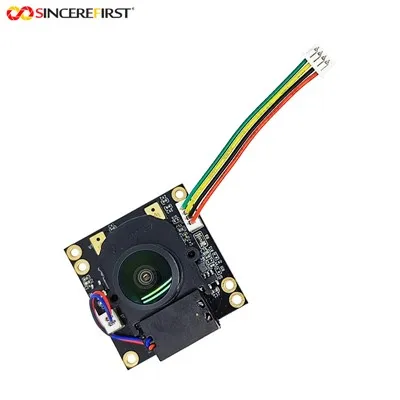
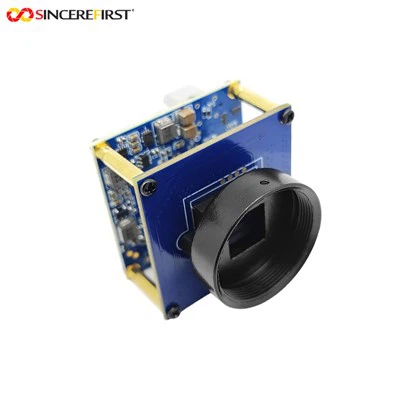
In the realm of digital imaging, the H264 camera module stands as a cornerstone technology, powering a wide array of applications from surveillance systems to industrial inspection devices. One of the most critical aspects that users often inquire about is the video compression ratio of the H264 camera module. As a trusted supplier of H264 camera modules, I am here to shed light on this topic and provide you with comprehensive insights.
Understanding Video Compression Ratio
Before delving into the specifics of the H264 camera module's compression ratio, it's essential to understand what video compression ratio means. In simple terms, the video compression ratio is the ratio of the size of the original uncompressed video data to the size of the compressed video data. A higher compression ratio indicates that more data has been removed during the compression process, resulting in a smaller file size. However, it's a delicate balance, as excessive compression can lead to a loss of video quality.
How H264 Compression Works
The H264, also known as MPEG - 4 AVC (Advanced Video Coding), is a widely adopted video compression standard. It employs a variety of techniques to reduce the amount of data needed to represent a video sequence without significant loss of quality. These techniques include motion compensation, discrete cosine transform (DCT), and entropy coding.
Motion compensation is a key technique in H264 compression. It analyzes the movement of objects between frames and only encodes the differences (residuals) between consecutive frames. This significantly reduces the amount of redundant data that needs to be stored. Discrete cosine transform converts the spatial domain data into the frequency domain, allowing for more efficient quantization of the data. Entropy coding, such as variable - length coding, further reduces the size of the compressed data by assigning shorter codes to more frequently occurring symbols.
Compression Ratio of H264 Camera Modules
The compression ratio of an H264 camera module can vary depending on several factors, including the video resolution, frame rate, and the level of quality settings. In general, H264 can achieve compression ratios ranging from 10:1 to 100:1 or even higher in some cases.
For example, in a surveillance application where high - resolution video is not always necessary, a compression ratio of 20:1 to 50:1 can be used to reduce storage requirements while maintaining acceptable video quality. On the other hand, for applications that demand high - quality video, such as video conferencing or professional video production, a lower compression ratio (e.g., 10:1 - 20:1) may be preferred to preserve the details and clarity of the video.
Let's take a look at some real - world scenarios. Consider a video with a resolution of 1920x1080 (Full HD) and a frame rate of 30 frames per second. Without compression, the raw video data rate would be extremely high. However, when compressed using H264, the data rate can be reduced significantly. With a compression ratio of 20:1, the file size of the compressed video would be one - twentieth of the uncompressed video.
Factors Affecting the Compression Ratio
- Video Resolution: Higher resolution videos contain more pixels and thus more data. As a result, achieving a high compression ratio while maintaining good quality can be more challenging. For instance, a 4K video will require more careful compression settings compared to a 720p video to avoid significant quality degradation.
- Frame Rate: A higher frame rate means more frames need to be processed and stored per second. This can increase the amount of data and may require a lower compression ratio to ensure smooth video playback.
- Scene Complexity: Videos with complex scenes, such as fast - moving objects, a large number of details, or high - contrast lighting, are more difficult to compress. In such cases, the compression ratio may need to be adjusted to maintain an acceptable level of quality.
Our H264 Camera Module Offerings
As a supplier of H264 camera modules, we offer a diverse range of products to meet different customer needs. Our Night Vision VGA Omnivision Ov7720 CSI High Speed Usb2.0 Camera Module is an excellent choice for applications that require night vision capabilities. It can provide clear and sharp images even in low - light conditions, and the H264 compression ensures efficient data storage.
The OV7725 Camera Module is another popular option. It offers a good balance between cost and performance, with reliable H264 compression for various video recording applications.


For those who need high - resolution imaging, our 16MP IMX298 Fixed Focus USB Camera Modue is a top - notch solution. Despite its high resolution, the H264 compression technology allows for effective data reduction without sacrificing too much quality.
Benefits of Using Our H264 Camera Modules
- Cost - effectiveness: By achieving high compression ratios, our camera modules reduce the storage requirements, which in turn lowers the cost associated with data storage and transmission.
- Quality Preservation: We have fine - tuned our H264 compression algorithms to ensure that the video quality remains high even at relatively high compression ratios. This means you can enjoy clear and detailed videos without having to worry about excessive file sizes.
- Versatility: Our camera modules are suitable for a wide range of applications, from home surveillance to industrial automation. Whether you need to monitor a small area or a large - scale production facility, our H264 camera modules can meet your requirements.
Contact Us for Procurement
If you are interested in our H264 camera modules and want to learn more about their compression ratios, features, or pricing, we encourage you to contact us. Our team of experts is ready to assist you in finding the best solution for your specific needs. We can provide detailed product information, technical support, and even samples for you to test. Don't hesitate to reach out and start a procurement discussion with us.
References
- Richardson, I. E. G. (2010). H.264 and MPEG - 4 Video Compression: Video Coding for Next - Generation Multimedia. Wiley.
- Wiegand, T., Sullivan, G. J., Bjøntegaard, G., & Luthra, A. (2003). Overview of the H.264/AVC video coding standard. IEEE Transactions on Circuits and Systems for Video Technology, 13(7), 560 - 576.