


What Does an Automated Scoring Camera Need to Capture?
A general venue camera may provide an acceptable overview of the action. A camera for automated sports scoring needs to supply images that the scoring software can use to examine movement and relevant interactions.
The difficult moment is often a fast punch, kick or change of position. Extending exposure can brighten a dark image, but it can also blur the moving target.
The practical requirement is therefore usable detail at an exposure short enough for the action, rather than a bright image of a stationary athlete.
Why Consider IMX485 for Low-Light Sports Imaging?
A Large-Format Sensor for a Light-Limited Installation
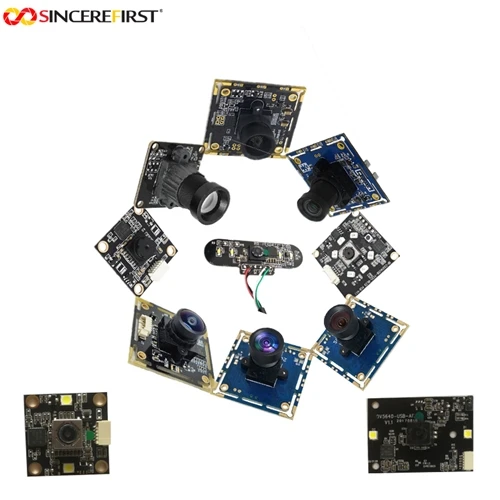
Sony's IMX485 combines a 1/1.2-type sensor, 2.9 μm pixels and STARVIS back-illuminated technology. These characteristics make it a relevant candidate for a low-light camera module.
For a combat sports installation, the evaluation should focus on whether the camera provides sufficient image quality at the exposure required by the scoring task.
The lens matters too. It must cover the sensor and provide the required view of the ring or mat. A large sensor alone does not establish the final low-light result. Sony IMX485 product information
4K Image Capture for Coverage and Target Detail
IMX485 supports a recommended recording size of 3840 × 2160. This provides an option when the camera must cover a competition area while retaining image information for analysis.
However, the athlete's size in the frame remains important. A very wide view can leave a glove, foot or scoring area too small for the algorithm.
For an AI sports tracking camera, lens selection and mounting distance should follow the smallest detail the software needs to evaluate.
Sensor Frame Rates That Need a Complete Camera Pipeline
Sony lists IMX485 full-pixel readout at up to 90 fps in 10-bit mode or 60 fps in 12-bit mode.
These are sensor capabilities, rather than confirmed outputs of every camera module. The selected interface, processor and software must support the required stream.
Higher frame rates provide more temporal samples, while short exposure helps control motion blur. Both should be specified when discussing a high-frame-rate camera for sports analysis. Sony IMX485 specifications
IMX485 or IMX585 for the Same Venue?
Both sensors use a 1/1.2-type format and 2.9 μm pixels. The choice is not a comparison between a larger IMX485 and a smaller IMX585.
Where an IMX485-based module is quoted below a comparable IMX585 configuration, IMX485 may offer a useful cost option-provided it meets the required motion and low-light tests.
IMX585 deserves particular attention when the installation has strong lighting contrast or uses infrared illumination. Sony documents wider single-exposure dynamic range and approximately 1.7 times the sensitivity at 850 nm compared with IMX485.
That infrared improvement does not establish the same gain under visible venue lighting. Filters, lenses and illumination must also match the intended imaging setup. Sony IMX585 announcement
Test the Conditions That Affect Scoring Images
Fast Exchanges Under Normal Venue Lighting
Record representative punches, kicks and defensive movements at the intended camera distance. Inspect individual frames at the required exposure, rather than judging video brightness alone.
Athletes Moving Across the Competition Area
Check target detail near the center and boundaries. Confirm that camera placement provides the necessary view when athletes turn or partially obscure one another.
Dark Areas Beside Bright Lights or Displays
Evaluate whether the athlete remains usable to the software as the background changes. This helps determine whether the project needs stronger HDR performance.
FAQ
Does a Larger Sensor Guarantee Accurate Scoring?
No. It supports the imaging design; scoring also depends on visibility, timing, calibration and the algorithm.
Is IMX485 Always Cheaper Than IMX585?
Pricing depends on the complete module configuration, quantity and quotation date.
Does 90 fps Automatically Prevent Motion Blur?
No. Frame rate and exposure time address different requirements.
Can a Single Camera Resolve Every Scoring Event?
Occlusion may limit the available information. The required camera layout depends on the scoring task.
Discuss Your Combat Sports Camera Requirements
Share your competition-area dimensions, mounting positions, sample venue footage, required frame rate, host platform and target budget with SincereFirst.
Tell us what the scoring software needs to distinguish and how quickly the target moves. We can use these requirements to discuss an IMX485 or IMX585 camera-module direction and define the imaging tests needed for your project.
Article Preview
A bright image can still miss the movement that matters for scoring. Discover what to evaluate when choosing a low-light camera for combat sports-and when IMX485 may offer a practical alternative to IMX585.


