


For buyers, the decision starts with the scene: what must remain visible, under what lighting, and within what device constraints?

Low-Light Indoor Monitoring
What Does the Customer Need?
In indoor monitoring, lighting may be reduced after business hours or limited by the installation. Customers need useful subject detail without relying on exposure settings that make moving people appear blurred.
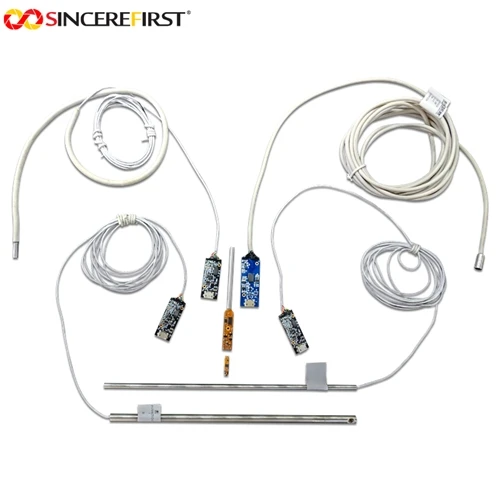
PS5268: A Candidate When Dim-Light Detail Comes First
PS5268 uses 3.0 μm pixels. Based on SincereFirst's selection feedback, the PS5268 solution provides better low-light performance than the previously recommended OV2740 solution.
This makes PS5268 worth evaluating when the main problem is poor image quality under limited illumination. The comparison should include noise, subject detail and movement at the required exposure time.
Its 1/2.7-inch optical format also needs an appropriate lens. Developers must check whether the resulting optical assembly fits the available space.
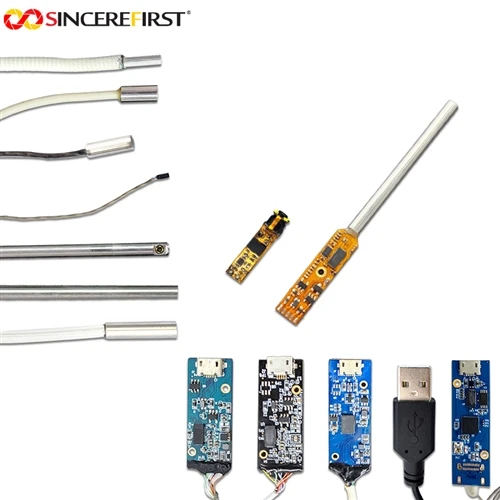
OV2740: Relevant When Lighting Can Be Controlled
OV2740's 1/6-inch optical format is relevant to compact camera designs. Where installed lighting provides sufficient illumination, it may satisfy the imaging requirement within a smaller optical configuration.
However, based on our selection feedback, it would not be the first direction to prioritize when improving dim-light performance is the main objective. Test it under the lowest expected illumination, rather than normal room lighting alone.
Backlit Entrances and Video Door-Phone Cameras
What Does the Customer Need?
A visitor may stand in shadow while daylight fills the background. The camera must preserve useful subject detail without losing the bright part of the scene.
PS5268: HDR Processing Inside the Sensor
PS5268 uses single-exposure, dual-sensitivity capture with on-chip HDR combination and local tone mapping.
For developers, this provides an HDR pipeline in which combination and tone mapping can occur before data reaches the backend. It is relevant when evaluating how to handle strong scene contrast on the selected platform.
The trade-off is the required operating mode: the datasheet lists 1080p HDR plus local tone mapping at up to 30 fps, compared with 60 fps in linear mode. A project requiring higher-frame-rate HDR needs further evaluation.
Single-exposure HDR also does not eliminate exposure blur or rolling-shutter effects.
OV2740: HDR with a Different Integration Requirement
OV2740 supports staggered HDR RAW and interleaved-row HDR output. It remains an option when the host platform supports the required HDR processing and a compact camera is important.
Its product brief does not establish the HDR frame rate for every output configuration. Developers should confirm the complete HDR path, including backend processing, rather than assuming that its listed 1080p/60 maximum applies to HDR.
Compact Video Terminals and Portable Devices
What Does the Customer Need?
In a small video terminal or portable device, the camera must fit the enclosure and operate within the power budget while delivering acceptable video under expected lighting.
OV2740: A Starting Point for Compact, Low-Power Designs
OV2740 is positioned for compact, low-power front-facing cameras and supports Full HD output at up to 60 fps.
It is a relevant starting point when space and power are restrictive and lighting is reasonably controlled. Its limitation in this comparison is the low-light requirement: a compact design still needs testing in the darkest intended environment.
PS5268: Worth Considering When Lighting Is Less Predictable
If the same device must also work in dim locations or strongly backlit positions, PS5268 deserves evaluation.
The larger optical format and the power requirements of the selected HDR mode must be included in the design review. It should not be chosen on image quality alone without checking mechanical fit and system consumption.
Frequently Asked Questions
Which Should We Evaluate First for Dim Indoor Monitoring?
PS5268, based on our low-light selection feedback.
Which Is More Relevant to a Small Video Terminal?
OV2740 is a relevant starting point when compactness, power and controlled lighting guide the design.
Does HDR Make Either Sensor Better in Every Dark Scene?
No. HDR addresses scene contrast; low-light detail also depends on exposure, noise, optics and processing.
Can Sensor Specifications Confirm Finished-Camera Performance?
No. Module configuration and system integration determine the available output and final result.
Discuss Your Application with SincereFirst
Share a representative scene image, minimum lighting conditions, subject movement, HDR and frame-rate requirements, host platform and available camera space.
We can use these details to discuss whether a PS5268 or OV2740 camera-module direction better matches your application.
Article Preview
A dim monitoring area, a backlit entrance and a compact video terminal need different camera priorities. Discover where PS5268 and OV2740 each offer value-and which trade-offs matter in your application.


