


The Birth of the Microscopic Eye: How Ultra-Thin Endoscopes Illuminate the Invisible World
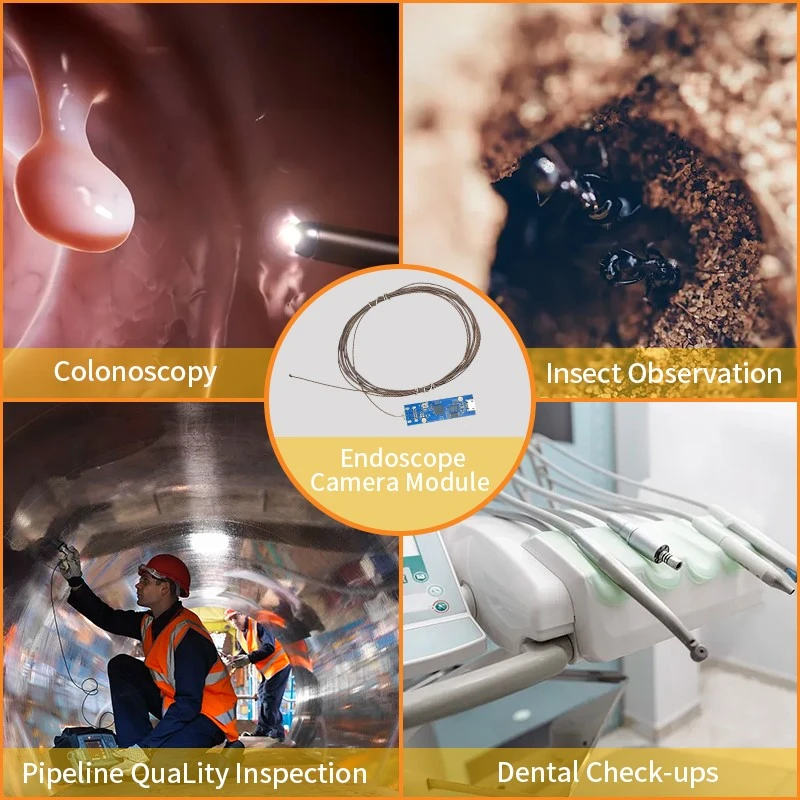
Beneath the macroscopic world we inhabit lies a vast microscopic realm, inaccessible to the naked eye: the mesmerizing interlocking gears of precision watches, the intricate inner walls of aircraft engine fuel lines, the complex branching networks of human blood vessels. Exploring these realms is like navigating a mapless labyrinth. The "searchlight" guiding us is the ultra-thin endoscope, measuring less than a millimeter in diameter. Its creation and evolution tell a remarkable story blending optics, electronics, and materials science.
I. Redirecting Light: The Physics of Side-View Design
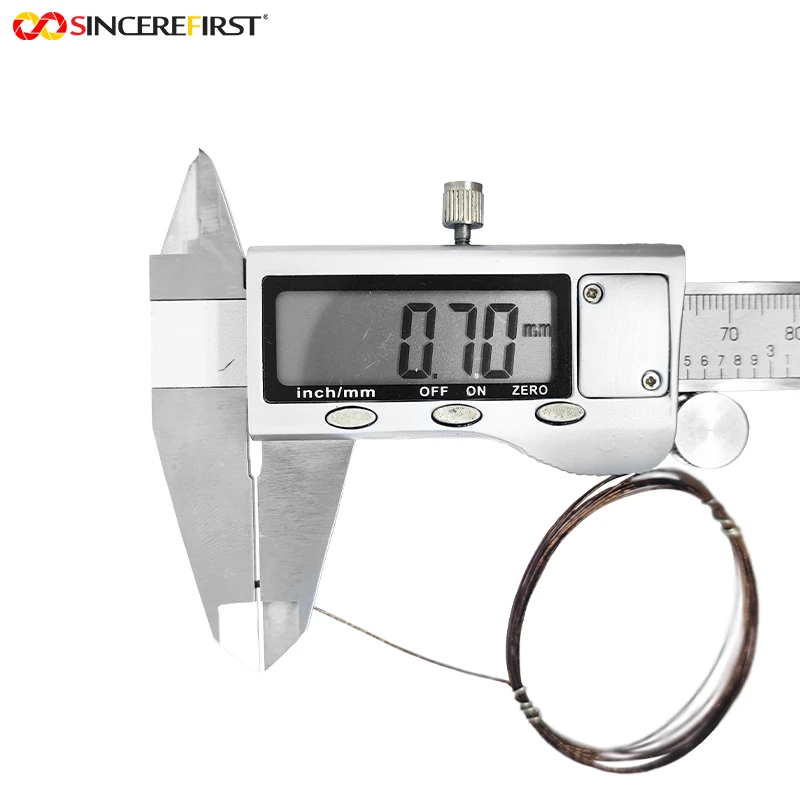
Imagine a super-thin straw. How could you see marks on its side wall? If a miniature camera at the tip only looks forward, it sees only the front wall. Only by turning the "eye" sideways can the surrounding environment be observed. This is the core concept behind side-view lens design. Within a cylindrical space just 0.9 millimeters in diameter, engineers use a tiny right-angle prism or mirror to redirect light from the side by 90 degrees, guiding it toward a miniature image sensor at the front.
This optical path deflection appears simple yet presents immense challenges. First, any reflective interface causes partial light loss, reducing imaging brightness. Second, the deflected light path must precisely align perpendicular to the sensor plane-even a fraction of a degree of error can blur image edges. Consequently, the prism's cutting angle, the coating process on the reflective surface, and the alignment precision with the sensor all require micrometer-level control. This "ballet of light" performed within spaces as fine as a human hair epitomizes modern precision manufacturing capabilities.

II. The Limits of Miniaturization: When Sensors Shrink to Grain-of-Sand Size
The "retina" of an endoscope is an image sensor that may measure less than one square millimeter. Within this tiny area, hundreds of thousands of independent photodiodes (pixels) must be arranged. Take a 400×400 resolution sensor as an example: its pixel size measures approximately 1 micrometer square-just one-seventieth the diameter of a human hair.
How do such minuscule pixels capture light? The key lies in the micro-lens array coating their surface. Each micro-lens acts like a miniature condenser, concentrating incident light onto the tiny photosensitive area beneath it. To enhance light-gathering efficiency, especially for light entering at large angles from the side (common in side-view designs), these microlenses are not flat-topped but specially designed with asymmetrical curved surfaces. Additionally, sensors employing a back-illuminated structure relocate the circuit layer beneath the photosensitive layer, eliminating obstruction by metal wires and further improving imaging performance in low-light conditions.
III. The Depth of Field Dilemma: The Boundary Between Sharpness and Blur
All optical systems face depth-of-field constraints-the range of subject distances that can be rendered sharply in a single image. For ultra-thin endoscopes with working distances calibrated between 3 and 30 millimeters, the depth of field may be as narrow as 1 to 2 millimeters. This is a characteristic that users must deeply understand and adapt to.
The shallow depth of field stems from its large aperture (F2.8) and short physical focal length. While a large aperture gathers more light to improve low-illumination imaging, optical principles dictate that a larger aperture results in a shallower depth of field. The short focal length makes the image distance extremely sensitive to changes in object distance; even minor adjustments cause significant shifts in image distance, rapidly causing the image to lose focus.
Consequently, operating such endoscopes resembles a surgeon performing microsurgery, demanding exceptionally stable and precise advancement control. When observing image blurring, the operator often needs to retract or advance the probe by less than a millimeter to regain sharpness. This requirement for operational precision is the critical link in transforming technical tools into effective productivity.

IV. The Journey of Information: From Photons to Pixels to Screen
Light reflected or emitted by the observed object is gathered by the lens, redirected by the prism, and ultimately forms a minute optical image on the sensor. The sensor's function is to convert this light image into an electrical charge image-each pixel generates a corresponding number of electrons based on the received light intensity. These charges are then sequentially detected, amplified, and converted into voltage signals by readout circuits.
The subsequent journey involves digitization. Analog-to-digital converters (ADCs) transform the analog voltage signals into a series of digital codes representing the brightness value of each pixel. For color imaging, the sensor surface is covered with a Bayer filter array (a patterned grid of red, green, and blue micro-filters). Thus, the raw data is monochrome, with different pixels corresponding to different colors. Through a complex algorithm called "demosaicing," the processor interpolates the full RGB color value for each pixel based on color information from surrounding pixels.
Ultimately, this digitized image data travels through hair-thin wires via a Micro USB interface, adhering to the standardized "language" of the UVC protocol, to be reliably transmitted to a computer or mobile device. The UVC protocol's appeal lies in its universality-operating systems recognize it as a standard video device, enabling real-time image decoding and display without requiring specific drivers, achieving true plug-and-play functionality.
V. Beyond Vision: The Engineering Philosophy Behind the Structure
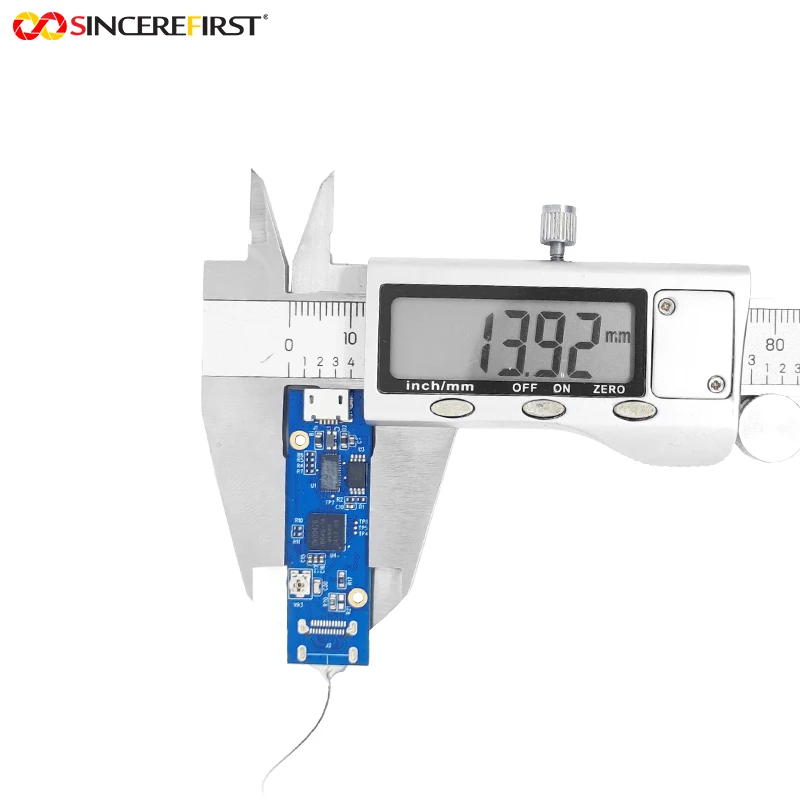
Examining an ultra-thin endoscope module reveals its value extends far beyond spec sheets. 0.1-millimeter dimensional tolerance control ensures seamless integration with precision drive mechanisms; reserved LED driver pins provide expansion interfaces for fully dark environments; and RoHS-compliant material selection reflects consideration for product lifecycle and environmental impact.
These design details collectively point to a core engineering philosophy: achieving functional reliability and system openness under extreme constraints. Constraints stem from physical space, power consumption, and cost; reliability demands stable operation under vibration, temperature fluctuations, and repeated bending; openness means seamless integration into larger inspection systems to adapt to diverse application needs. Every successful super-thin endoscope embodies this philosophy in practice.


VI. The Significance of the Microscopic Eye: Expanding the Frontiers of Cognition
The profound significance of ultra-thin endoscope technology lies in its continuous expansion of human cognition and practical capabilities. In industrial settings, it enables preventive maintenance by detecting minute hazards before failures occur, ensuring the safety and continuous operation of complex systems. In scientific research, it allows scientists to directly observe the dynamics of microscopic processes and validate theoretical models. Even in household settings, it assists people in inspecting clogged drainage pipes and solving everyday problems.
This slender probe acts as a bridge connecting the macroscopic and microscopic worlds. What it conveys is not merely pixels and colors, but the very possibility of penetrating inward and discerning essence. Each time it renders the invisible visible, it reminds us: the true value of technology lies in empowering humanity to transcend sensory limitations, thereby gaining deeper understanding of our world and caring for it more effectively. Within this beam illuminating the microscopic realm, we witness not only technological ingenuity but also the eternal radiance of human curiosity and creativity.


