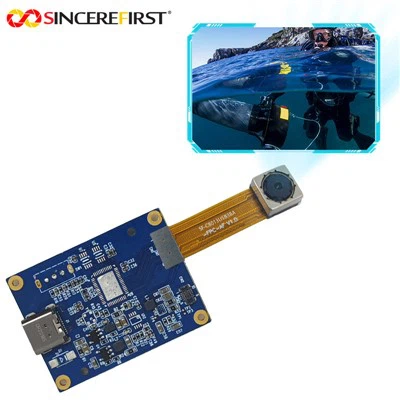
Hey there! As a supplier of USB 3.0 camera modules, I've been getting a lot of questions lately about whether these nifty gadgets can be used for archaeological research. Well, let's dive right in and explore this topic together.
First off, what makes USB 3.0 camera modules so special? USB 3.0 offers significantly faster data transfer speeds compared to its predecessors. This means that you can capture high - resolution images and videos in a jiffy and transfer them to your computer without having to wait ages. For archaeologists working in the field, time is of the essence, and this speed can be a real game - changer.
Let's talk about the kind of features that are crucial for archaeological research. Resolution is one of the most important factors. Archaeologists need to be able to capture every little detail of artifacts, inscriptions, and excavation sites. High - resolution images can help in identifying small markings, patterns, and even the material composition of the objects. Our 1 Inch Sensor Global Shutter Machine Vision Smart Camera Module offers an excellent resolution that can capture fine details with great clarity. The global shutter technology ensures that there is no distortion in the image, even when the object or the camera is in motion. This is super useful when you're trying to document a large excavation site or a moving artifact during the cleaning process.
Another aspect is the ability to work in different lighting conditions. Archaeological sites can be indoors or outdoors, and the lighting can vary from bright sunlight to dimly lit caves. A good USB 3.0 camera module should be able to adjust to these different lighting scenarios. Our 8MP IMX578 IMX415 IMX577 USB3.0 HDMI WIFI Camera Module has excellent low - light performance. It can capture clear images even in low - light environments, thanks to its advanced sensor technology. The Wi - Fi connectivity also allows archaeologists to transfer the images to their devices wirelessly, which is really convenient when you're on the go.
Now, let's think about the practicality of using USB 3.0 camera modules in the field. They are generally compact and lightweight, which makes them easy to carry around. Archaeologists often have to move from one site to another, sometimes in difficult terrains. A bulky and heavy camera can be a real hassle. USB 3.0 camera modules can be easily attached to tripods, drones, or other equipment, giving archaeologists the flexibility to capture images from different angles. For example, using a drone with a USB 3.0 camera module can provide a bird's - eye view of a large archaeological site, helping in mapping and surveying.
In addition to capturing images of artifacts, USB 3.0 camera modules can also be used for documenting the excavation process. Time - lapse photography can be used to record the progress of an excavation over days, weeks, or even months. This can be a valuable tool for researchers to analyze how the site changes over time and to understand the sequence of events. Our 4K Image Sony IMX283 Sensor USB3.0 High - Speed Camera Module is capable of high - speed video recording, which is perfect for time - lapse photography.
But it's not all sunshine and rainbows. There are a few challenges that archaeologists might face when using USB 3.0 camera modules. One of the main issues is power consumption. In the field, access to a reliable power source can be limited. USB 3.0 camera modules can consume a fair amount of power, especially when used for extended periods. However, some of our camera modules are designed to be energy - efficient, which can help mitigate this problem.
Another challenge is the durability of the camera module. Archaeological sites can be harsh environments, with dust, dirt, and sometimes even water. The camera module needs to be able to withstand these conditions. We offer camera modules that are built with rugged materials and have a certain level of water and dust resistance, ensuring that they can survive in the field.
To sum it up, USB 3.0 camera modules have a lot of potential in archaeological research. Their high - speed data transfer, excellent resolution, and flexibility make them a great tool for archaeologists. Whether it's capturing detailed images of artifacts, documenting excavation sites, or using time - lapse photography, these camera modules can provide valuable data for research.


If you're an archaeologist or part of an archaeological research team and are interested in using our USB 3.0 camera modules, I'd love to hear from you. We can have a chat about your specific needs and see which of our products would be the best fit for your research. Just reach out, and we can start the conversation about how our camera modules can enhance your archaeological work.
References
- General knowledge about archaeological research requirements
- Product specifications of our USB 3.0 camera modules