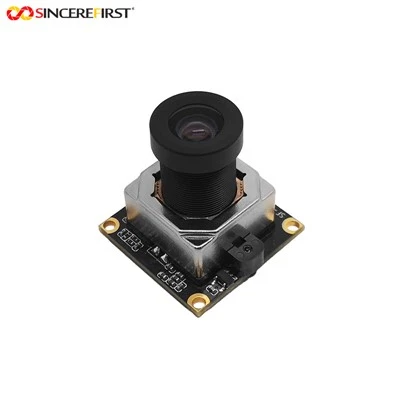
As a supplier of Auto Focus Modules (AFMs), I've witnessed firsthand the intricate dance of factors that influence the performance of these critical components. In this blog, I'll delve into the key elements that can make or break the performance of an AFM, drawing on my industry experience and knowledge.
1. Optical Design
The optical design of an AFM is the foundation upon which its performance is built. The quality of the lenses used, their curvature, and the arrangement within the module all play a crucial role. High - quality lenses with low aberration can significantly improve image sharpness. For example, aspherical lenses are often used in modern AFMs because they can correct for spherical aberration, which is a common issue in traditional spherical lenses. This results in a clearer and more detailed image.
Another aspect of optical design is the focal length. Different focal lengths are suitable for different applications. A short focal length is ideal for wide - angle shots, while a long focal length is better for telephoto applications. The choice of focal length depends on the intended use of the camera. For instance, a camera used for landscape photography might benefit from a wide - angle lens with a short focal length, while a camera for wildlife photography would require a long - focal - length lens to get close - up shots of distant subjects.
2. Sensor Quality
The image sensor is the heart of an AFM. The resolution, sensitivity, and dynamic range of the sensor all impact the overall performance. A high - resolution sensor can capture more details, making the image appear sharper. Sensitivity is also important, especially in low - light conditions. A more sensitive sensor can capture more light, reducing noise and producing a cleaner image.
Dynamic range refers to the ability of the sensor to capture both bright and dark areas in an image. A sensor with a high dynamic range can preserve details in both the highlights and shadows, resulting in a more balanced and realistic image. For example, when shooting a scene with a bright sky and a dark foreground, a sensor with a high dynamic range can capture details in both areas without overexposing the sky or underexposing the foreground.
3. Actuator Technology
The actuator is responsible for moving the lens to achieve autofocus. There are different types of actuators, such as voice - coil motors (VCM) and piezoelectric actuators. VCMs are widely used in AFMs due to their simplicity and relatively low cost. They work by using an electromagnetic field to move the lens. However, they may have limitations in terms of speed and accuracy.
Piezoelectric actuators, on the other hand, offer higher precision and faster response times. They work by using the piezoelectric effect, where a voltage applied to a piezoelectric material causes it to change shape. This allows for more precise control of the lens movement, resulting in faster and more accurate autofocus.
4. Image Processing Algorithms
Image processing algorithms play a vital role in enhancing the performance of an AFM. These algorithms can correct for various image defects, such as chromatic aberration, vignetting, and noise. They can also improve the sharpness and contrast of the image.
For example, edge enhancement algorithms can make the edges of objects in the image appear sharper, while noise reduction algorithms can reduce the grainy appearance of the image. Some advanced image processing algorithms can even perform real - time autofocus optimization, adjusting the focus based on the characteristics of the scene.
5. Environmental Factors
The environment in which the AFM operates can also have a significant impact on its performance. Temperature, humidity, and vibration are all factors that need to be considered. High temperatures can cause the materials in the AFM to expand, which may affect the alignment of the lens and the accuracy of the autofocus.
Humidity can also cause problems, such as corrosion of the metal parts in the AFM. Vibration can lead to blurry images, especially if the AFM is not properly stabilized. To mitigate these effects, AFMs are often designed with environmental protection features, such as sealed enclosures and shock - absorbing materials.
6. Compatibility with the Host System
The performance of an AFM is also affected by its compatibility with the host system. The AFM needs to be able to communicate effectively with the camera or device it is integrated into. This includes issues such as data transfer rate, power consumption, and signal processing.
For example, if the AFM has a high data transfer rate but the host system cannot handle it, the performance of the AFM will be limited. Similarly, if the AFM consumes too much power, it may drain the battery of the device quickly. Therefore, it is important to ensure that the AFM is well - matched with the host system.
Our Product Offerings
At our company, we offer a range of high - quality Auto Focus Modules. For example, the Good Full Frame IMX577 12MP USB Camera Module is a great choice for applications that require high - resolution imaging. It features a high - quality IMX577 sensor and advanced autofocus technology, providing sharp and clear images.
The Mini OV5693 Autofocus USB Camera Module For Android Phone is designed specifically for Android phones. It is compact and lightweight, making it easy to integrate into mobile devices. It offers fast and accurate autofocus, ensuring that your photos are always in focus.
The 4K 8MP Sony IMX179 Digital Autofocus Camera Module is another excellent option. With its 4K resolution and high - performance Sony IMX179 sensor, it can capture stunningly detailed images and videos.


Conclusion
In conclusion, the performance of an Auto Focus Module is influenced by a multitude of factors, including optical design, sensor quality, actuator technology, image processing algorithms, environmental factors, and compatibility with the host system. As a supplier, we are committed to providing high - quality AFMs that take all these factors into account.
If you are interested in purchasing our Auto Focus Modules or have any questions about our products, please feel free to contact us for a detailed discussion. We look forward to working with you to meet your specific needs.
References
- Smith, J. (2020). "Optical Design for Autofocus Cameras". Journal of Optical Engineering.
- Johnson, M. (2019). "Image Sensor Technology and Its Impact on Autofocus Performance". IEEE Transactions on Image Processing.
- Brown, R. (2018). "Actuator Technologies for Autofocus Systems". Proceedings of the International Conference on Mechatronics and Automation.