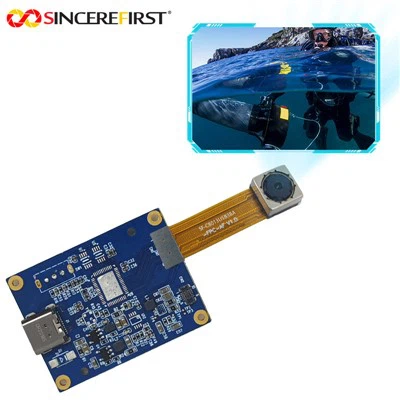
In the world of modern photography and imaging, Auto Focus Modules (AFMs) have revolutionized how we capture images. As an Auto Focus Module supplier, I've had the privilege of diving deep into the technology behind these modules. One of the most critical components of an AFM is the motor. So, let's talk about what role the motor plays in an Auto Focus Module.
The Basics of Auto Focus
Before we get into the motor's role, let's quickly go over how auto focus works. In simple terms, auto focus is the ability of a camera to automatically adjust the focus of the lens to ensure that the subject in the frame is sharp and clear. This is a game - changer compared to manual focus, which requires the user to adjust the lens position themselves.
Auto Focus Modules use a combination of sensors, algorithms, and mechanical components to achieve this. The sensors detect how out - of - focus the image is, and then the system calculates the amount and direction of adjustment needed to bring the subject into focus. And this is where the motor steps in.
The Motor: The Muscle of the Auto Focus System
The motor in an Auto Focus Module is like the muscle in our body that moves our limbs. It's responsible for physically adjusting the position of the lens elements within the module. When the auto - focus system determines that the lens needs to be moved, it sends a signal to the motor.
There are different types of motors used in AFMs. One of the most common types is the Voice Coil Motor (VCM). VCMs are simple, reliable, and have a fast response time. They work based on the principle of magnetic fields. Inside a VCM, there's a coil of wire placed in a magnetic field. When an electric current is passed through the coil, a force is generated according to the right - hand rule. This force moves the lens carriage, which holds the lens elements, either forward or backward along the optical axis.
Another type you might come across is the Stepper Motor. Stepper motors move in discrete steps, which gives them very precise control over the lens position. They are often used in more high - end applications where extremely accurate focusing is required. For example, in professional photography equipment where capturing the perfect shot with razor - sharp focus is crucial.
Precise Focus Adjustment
The primary function of the motor is to make precise focus adjustments. The auto - focus system can detect even the slightest amount of blur in the image, and the motor needs to move the lens by just the right amount to correct it. This precision is vital because even a tiny misalignment can result in an out - of - focus image.
For instance, in a smartphone camera with an Auto Focus Module, when you point the camera at a nearby object, the motor will move the lens elements forward to adjust the focus. If you then suddenly switch to a distant object, the motor quickly moves the lens elements back to focus on the new subject. These adjustments happen in a split - second, allowing you to capture sharp images without any noticeable lag.
Speed and Responsiveness
In today's fast - paced world, speed matters. Whether you're taking pictures of moving objects like a running athlete or a flying bird, or you're filming a fast - action video, the auto - focus system needs to be able to keep up. The motor plays a crucial role in determining the speed and responsiveness of the auto - focus.


A high - quality motor can move the lens elements quickly, allowing the camera to refocus in an instant. This is especially important in continuous shooting modes, where the camera takes multiple shots in rapid succession. The motor needs to be able to adjust the focus for each shot, ensuring that every frame is sharp.
Impact on Image Quality
The performance of the motor directly impacts the overall image quality. A smooth and precise motor can ensure that the focus is always accurate, resulting in sharp, clear images. On the other hand, a poor - quality motor may cause issues such as focus hunting, where the camera keeps trying to find the correct focus but can't seem to settle on it. This can lead to blurry images and a frustrating user experience.
Moreover, a motor that can move the lens elements smoothly without any jerks or vibrations is essential. Any movement irregularities during the focusing process can cause blurring in the image. High - end Auto Focus Modules are designed with motors that are engineered to provide the smoothest possible movement for the best image quality.
Our Offerings
As an Auto Focus Module supplier, we offer a range of products that are equipped with top - notch motors. For example, our IMX298 Auto Focus USB Camera Module uses a high - performance VCM that provides fast and accurate focus adjustment. This makes it perfect for a variety of applications, from video conferencing to security surveillance.
Our Sony IMX415 Sensor 8MP 4K Auto Focus USB Camera Module is another great option. It combines the excellent Sony IMX415 sensor with a motor that delivers precise focusing even in challenging lighting conditions. Whether you're shooting in low - light environments or need to capture high - resolution 4K video, this module has got you covered.
And if you're looking for a high - megapixel solution, our Best 13MP Sony IMX258 Autofocus USB Camera Sensor Module is a fantastic choice. The motor in this module works in harmony with the Sony IMX258 sensor to provide sharp and clear images with accurate focus.
Get in Touch
So, if you're in the market for high - quality Auto Focus Modules, we'd love to hear from you. Whether you're a manufacturer looking to integrate our modules into your products, a developer working on a new imaging application, or just an enthusiast who wants the best camera experience, we can provide the solutions you need. Let's have a chat about your requirements and find the perfect Auto Focus Module for you.
References
- "Optical Imaging Systems: Design and Analysis" by Michael V. R. Krupka.
- "Digital Photography Handbook" by Tom Ang.