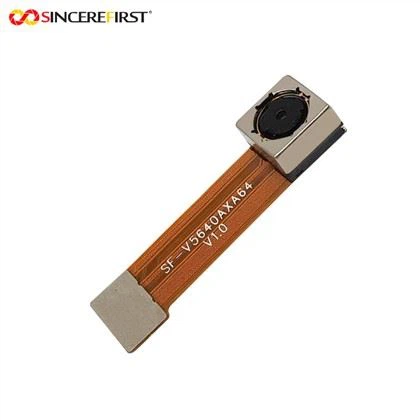
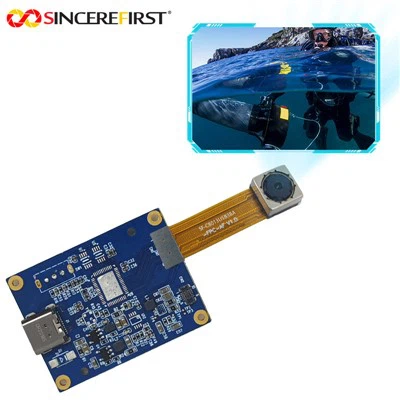
In the dynamic landscape of scientific research, the quest for high - performance, reliable, and cost - effective imaging solutions is perpetual. USB 3.0 camera modules have emerged as a potential answer to many of the imaging requirements in various scientific fields. As a USB 3.0 camera module supplier, I am excited to explore the viability and advantages of using these modules in scientific research.
Technical Features of USB 3.0 Camera Modules
High - Speed Data Transfer
One of the most significant features of USB 3.0 camera modules is their high - speed data transfer capability. USB 3.0 offers a theoretical maximum data transfer rate of 5 Gbps, which is much faster than its predecessors like USB 2.0 (480 Mbps). This high - speed transfer allows for real - time capture and transmission of high - resolution images and videos. For example, in time - sensitive scientific experiments, such as studying the rapid movement of cells or the dynamics of chemical reactions, the ability to transfer large amounts of data quickly is crucial. A USB 3.0 camera can capture high - resolution frames at a high frame rate and transfer them to a computer without significant lag, enabling researchers to analyze the data in real - time.


Compatibility and Ease of Use
USB 3.0 camera modules are highly compatible with a wide range of operating systems, including Windows, macOS, and Linux. This cross - platform compatibility makes them accessible to a large number of researchers using different computer systems. Additionally, these modules are relatively easy to install and use. They can be simply plugged into a USB 3.0 port on a computer, and with the appropriate software drivers, they can be up and running in no time. This simplicity reduces the technical barriers for researchers, allowing them to focus more on their experiments rather than dealing with complex installation procedures.
High - Resolution Imaging
Many USB 3.0 camera modules are equipped with high - resolution image sensors. For instance, the RGB CMOS Active Pixel IMX577 Camera Sensor 12MP Digital USB Camera Module offers a resolution of 12 megapixels. High - resolution imaging is essential in scientific research, especially in fields such as microscopy, astronomy, and environmental science. In microscopy, a high - resolution camera can capture detailed images of cells, tissues, and microorganisms, allowing researchers to study their structures and functions more accurately. In astronomy, a high - resolution camera can capture clear images of celestial objects, helping astronomers to observe and analyze their characteristics.
Applications in Scientific Research
Biology and Medicine
In the field of biology and medicine, USB 3.0 camera modules have numerous applications. In microscopy, they can be used for both bright - field and fluorescence imaging. For example, in fluorescence microscopy, a USB 3.0 camera can capture the fluorescence signals emitted by labeled cells or molecules. The high - speed data transfer and high - resolution imaging capabilities of the USB 3.0 camera allow for the real - time observation of cellular processes, such as cell division, migration, and signal transduction.
In medical diagnosis, USB 3.0 camera modules can be used in endoscopy. Endoscopes equipped with USB 3.0 cameras can provide high - resolution images of internal organs, helping doctors to detect diseases such as tumors and ulcers at an early stage. The real - time video transmission feature enables doctors to make immediate diagnoses and decisions during endoscopic procedures.
Environmental Science
In environmental science, USB 3.0 camera modules can be used for monitoring environmental changes. For example, in wildlife monitoring, cameras can be set up in natural habitats to capture images and videos of animals. The high - resolution imaging allows researchers to identify different species, study their behaviors, and monitor their populations.
In environmental monitoring of air and water quality, USB 3.0 cameras can be used in conjunction with sensors to capture images of pollutants or changes in the environment. For instance, in water quality monitoring, a camera can capture the color and turbidity of water samples, which can be used as indicators of water pollution.
Physics and Engineering
In physics and engineering, USB 3.0 camera modules are used in experiments related to optics, mechanics, and materials science. In optics experiments, cameras can be used to capture the interference patterns and diffraction patterns of light. The high - speed data transfer allows for the real - time analysis of these patterns, which is important for understanding the properties of light and developing optical devices.
In materials science, cameras can be used to observe the deformation and fracture of materials under stress. The high - resolution imaging capability enables researchers to study the micro - structure and defects of materials, which is crucial for improving the performance and reliability of materials.
Advantages over Traditional Imaging Systems
Cost - Effectiveness
Traditional scientific imaging systems, such as high - end CCD cameras and specialized microscopy systems, are often very expensive. USB 3.0 camera modules, on the other hand, offer a more cost - effective alternative. They provide high - quality imaging at a fraction of the cost of traditional systems. This makes them accessible to a wider range of research institutions, especially those with limited budgets.
Portability
USB 3.0 camera modules are generally small and lightweight, making them highly portable. They can be easily carried to different locations for field research. For example, in wildlife monitoring or environmental field surveys, researchers can easily transport the camera modules to remote areas and set them up quickly. In contrast, traditional imaging systems are often large and bulky, which makes them difficult to transport and set up in the field.
Challenges and Limitations
Limited Sensitivity in Low - Light Conditions
Although USB 3.0 camera modules have made significant progress in terms of imaging performance, they may still have limited sensitivity in low - light conditions compared to some specialized scientific cameras. In some scientific experiments, such as astronomy or fluorescence microscopy with weak signals, the low - light performance of the camera can be a limiting factor. However, some advanced USB 3.0 camera modules, such as the Usb3.0 Mini SONY Imx385 2mp Drone Camera Module, are designed to have better low - light sensitivity, which can partially address this issue.
Software and Calibration
The performance of USB 3.0 camera modules can be affected by the quality of the software and calibration. In some cases, the default software provided with the camera may not be optimized for specific scientific applications. Researchers may need to develop or use third - party software to achieve the best results. Additionally, proper calibration is essential for accurate imaging. Incorrect calibration can lead to issues such as color distortion, uneven illumination, and inaccurate measurements.
Conclusion
In conclusion, USB 3.0 camera modules have great potential for use in scientific research. Their high - speed data transfer, compatibility, high - resolution imaging, cost - effectiveness, and portability make them suitable for a wide range of applications in various scientific fields. Although they have some challenges and limitations, such as limited low - light sensitivity and software - related issues, these can be addressed through technological advancements and proper calibration.
As a USB 3.0 camera module supplier, we offer a variety of high - quality camera modules, such as the Usb3.0 Mini SONY Imx385 2mp Drone Camera Module, RGB CMOS Active Pixel IMX577 Camera Sensor 12MP Digital USB Camera Module, and Sony IMX290 Manual Focus Industrial Computer Vision USB3.0 Camera Module. These modules are designed to meet the diverse needs of scientific research. If you are interested in using USB 3.0 camera modules for your scientific research, please feel free to contact us for more information and to discuss your specific requirements. We are committed to providing you with the best imaging solutions for your research projects.
References
- "USB 3.0 Technology Overview", USB Implementers Forum.
- "Introduction to Scientific Imaging", various scientific textbooks on imaging techniques.
- "Advances in Camera Sensor Technology", research papers on image sensor development.