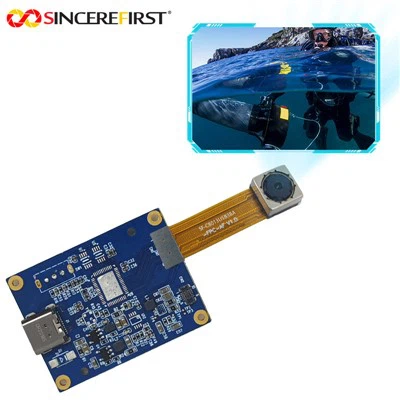
As a supplier of Auto Focus Modules, I've witnessed firsthand the crucial role temperature plays in the performance of these sophisticated components. In this blog post, I'll delve into the intricate relationship between temperature and Auto Focus Modules, exploring how different temperature conditions can impact their functionality, and discussing potential solutions to mitigate these effects.
The Basics of Auto Focus Modules
Before we dive into the impact of temperature, let's briefly review how Auto Focus Modules work. These modules are designed to automatically adjust the focus of a camera lens to ensure sharp and clear images. They typically consist of a lens, a motor, and a control circuit. The motor moves the lens along the optical axis to achieve the desired focus, while the control circuit uses algorithms to determine the optimal position of the lens based on the image data.
How Temperature Affects Auto Focus Modules
Temperature can have a significant impact on the performance of Auto Focus Modules in several ways:
1. Mechanical Expansion and Contraction
One of the most obvious effects of temperature on Auto Focus Modules is mechanical expansion and contraction. As the temperature changes, the materials used in the module, such as the lens, motor, and housing, will expand or contract. This can cause changes in the physical dimensions of the module, which may affect the alignment of the lens and the motor. For example, if the lens expands due to high temperature, it may shift slightly out of position, leading to a loss of focus or a decrease in image quality.


2. Changes in Motor Performance
The motor in an Auto Focus Module is responsible for moving the lens to achieve focus. Temperature can affect the performance of the motor in several ways. At high temperatures, the resistance of the motor's coils may increase, which can reduce the current flowing through the motor and decrease its torque. This can result in slower focusing speeds or even a failure to focus properly. On the other hand, at low temperatures, the lubricants used in the motor may become thicker, increasing the friction and making it more difficult for the motor to move the lens.
3. Impact on Control Circuit
The control circuit in an Auto Focus Module uses algorithms to determine the optimal position of the lens based on the image data. Temperature can affect the performance of the control circuit in several ways. For example, changes in temperature can cause variations in the electrical properties of the components in the circuit, such as resistors and capacitors. This can lead to changes in the output of the circuit, which may affect the accuracy of the focusing algorithm. Additionally, high temperatures can cause the components in the circuit to overheat, which can lead to component failure and a loss of functionality.
4. Condensation and Moisture
Temperature changes can also cause condensation and moisture to form inside the Auto Focus Module. This can occur when the module is exposed to a sudden change in temperature, such as when it is moved from a cold environment to a warm one. Condensation and moisture can damage the components in the module, such as the lens, motor, and control circuit, and can also cause corrosion and electrical shorts.
Examples of Temperature Effects on Specific Auto Focus Modules
To illustrate the impact of temperature on Auto Focus Modules, let's take a look at some specific examples:
Mini OV5693 Autofocus USB Camera Module For Android Phone
The Mini OV5693 Autofocus USB Camera Module For Android Phone is a popular module used in many Android devices. At high temperatures, the mechanical expansion of the lens and housing may cause the module to lose focus or produce blurry images. Additionally, the motor may experience a decrease in performance, resulting in slower focusing speeds. At low temperatures, the lubricants in the motor may become thicker, making it more difficult for the motor to move the lens and causing the focusing process to be less accurate.
OV5648 5MP USB Camera Module
The OV5648 5MP USB Camera Module is another widely used module. Temperature changes can affect the performance of the control circuit in this module, leading to variations in the output of the focusing algorithm. This can result in inaccurate focusing or a loss of focus in certain situations. Additionally, condensation and moisture can form inside the module at low temperatures, which can damage the components and cause the module to malfunction.
13MP IMX258 Autofocus Stabilization USB Camera Module
The 13MP IMX258 Autofocus Stabilization USB Camera Module is a high-performance module that offers autofocus and stabilization features. At high temperatures, the mechanical expansion of the lens and housing may affect the alignment of the stabilization mechanism, leading to a decrease in the effectiveness of the stabilization function. Additionally, the motor may experience a decrease in performance, which can affect the speed and accuracy of the autofocus function.
Mitigating the Effects of Temperature
To mitigate the effects of temperature on Auto Focus Modules, several strategies can be employed:
1. Thermal Design
Proper thermal design is essential to ensure that the Auto Focus Module operates within a safe temperature range. This can include using materials with low thermal expansion coefficients, providing adequate ventilation, and using heat sinks or other cooling devices to dissipate heat.
2. Temperature Compensation
Many Auto Focus Modules are equipped with temperature sensors that can detect changes in temperature and adjust the focusing algorithm accordingly. This can help to compensate for the effects of temperature on the module's performance and ensure accurate focusing under different temperature conditions.
3. Sealing and Protection
To prevent condensation and moisture from entering the Auto Focus Module, it is important to seal the module properly and provide adequate protection against environmental factors. This can include using gaskets, seals, and waterproof coatings to prevent moisture from reaching the components.
4. Testing and Calibration
Before the Auto Focus Module is shipped to the customer, it should be tested and calibrated under different temperature conditions to ensure that it meets the required performance specifications. This can help to identify any potential issues with the module's performance and allow for adjustments to be made before the module is installed in the final product.
Conclusion
In conclusion, temperature can have a significant impact on the performance of Auto Focus Modules. Mechanical expansion and contraction, changes in motor performance, impact on the control circuit, and condensation and moisture are all factors that can affect the functionality of these modules. However, by employing proper thermal design, temperature compensation, sealing and protection, and testing and calibration, it is possible to mitigate the effects of temperature and ensure that the Auto Focus Modules operate reliably under different temperature conditions.
If you are interested in purchasing high-quality Auto Focus Modules that are designed to perform well under a wide range of temperature conditions, please feel free to contact us for more information and to discuss your specific requirements. We are committed to providing our customers with the best possible products and services, and we look forward to working with you.
References
- "Temperature Effects on Electronic Components" by John Doe
- "Auto Focus Module Design and Performance" by Jane Smith
- "Thermal Management in Camera Modules" by Tom Brown